




How to Make VoIP International Calls at a Low Cost


Table of Contents
A VoIP international call can help your business speak with customers, partners, vendors, and remote teams across countries without the heavy charges that come with traditional phone lines. For many US businesses, international calling is no longer occasional. A sales team may need to speak with prospects in Canada, a support team may handle customers in the UK, and a founder in New York may speak with suppliers in Asia every week. When every minute costs more than it should, international communication slowly becomes a hidden business expense.
That is why low-cost international calling has become more than a billing concern. It affects how confidently your team follows up, how quickly your business responds, and how easily you can build trust across borders.
Traditional international calling often feels simple until the monthly bill arrives. Per-minute rates, roaming charges, international carrier fees, and unclear plan limits can make costs hard to predict. A few long calls with overseas clients can turn into a surprise expense. For small businesses, startups, staffing firms, healthcare offices, real estate companies, and service teams, that money could be better used elsewhere.
VoIP changes that story.
Instead of sending your voice through old telephone networks, VoIP sends voice as digital data through the internet. This makes international calling more flexible, more affordable, and easier to manage from one business phone system.
Common Ways to Make International Calls at Low Cost
Before choosing a business phone solution, it helps to understand the common ways people reduce international calling costs. Each option has its place, but not every option is right for business use.
International Calling Apps
Apps such as WhatsApp, Skype, Zoom, and similar tools can work for casual or occasional international conversations. They are useful when both people use the same app and when the call does not need business tracking.
For companies, this method has limits. Calls are harder to manage, records are scattered, and employees may use personal accounts instead of a company identity.
Wi-Fi Calling
Wi-Fi calling lets users place calls over a wireless internet connection instead of a cellular network. It can reduce mobile carrier charges in some situations, especially when traveling.
The challenge is that Wi-Fi calling still depends on the mobile carrier, device settings, and available coverage. It may not provide the business controls needed for sales, support, call routing, or reporting.
International Calling Cards
Calling cards were once popular for low-cost overseas calls. They still exist, but they are not practical for modern businesses. PINs, hidden charges, expiry limits, and inconsistent call quality make them less suitable for professional communication.
Business VoIP Plans
A business VoIP plan is usually the strongest option for companies that make regular international calls. It supports professional caller ID, call routing, voicemail, extensions, reporting, and multi-device access.
This is where a VoIP service for international calls becomes more valuable than a basic calling app. It helps businesses reduce costs while keeping communication organized.
International VoIP Numbers
An international VoIP number gives your business a local presence in another country without opening a physical office there. Customers, candidates, or vendors can call a familiar number while your team answers from the same business phone system.
For businesses that call or receive calls from specific countries often, virtual numbers can reduce friction and improve response rates.
Start Making Low-Cost International Calls with Vitel Global
Connect globally with clearer calls, smarter routing, and flexible VoIP calling built for modern US businesses.
Why Low-Cost VoIP International Call Options Matter for US Businesses
A US business does not need to be a large enterprise to work globally. A boutique agency in Austin may serve a client in London. A staffing company in New Jersey may recruit candidates from India. A healthcare support team in Florida may coordinate with overseas administrative teams. A retail business in California may speak with suppliers from multiple countries every week.
In each case, international communication has to be clear, regular, and affordable.
The problem with older calling methods is that they were built for a different way of working. They usually depend on landline routes, carrier agreements, and location-based charges. That model can work for occasional personal calls, but it becomes expensive when a business depends on daily global conversations.
A VoIP international call removes much of that friction. Since calls travel through the internet, your business can reduce international calling costs while keeping access to business features such as call forwarding, voicemail, recording, routing, extensions, and call logs.
The real value is not only the lower rate. It is the control.
You can see who called, where calls are going, which teams are using the most minutes, and whether a virtual number would reduce costs in a specific region. That kind of visibility is difficult with many traditional phone plans.
What Is International VoIP and How Does It Reduce Call Costs?
International VoIP means using Voice over Internet Protocol to make calls between countries. Instead of relying fully on landline telephone infrastructure, VoIP converts your voice into small digital packets and sends them over an internet connection.
Think of it like sending an email instead of mailing a physical letter. The message reaches the other side through a digital path, which reduces the cost and gives you more control.
For voice over IP international calls, your business usually needs:
- A stable internet connection
- A VoIP business phone service
- A device such as an IP phone, laptop, desktop app, or mobile app
- A calling plan or credit-based account for international destinations
- A properly configured network for better voice quality
This setup is one reason many businesses compare VoIP service providers for international calling before selecting a phone system. The cheapest rate is not always the smartest choice. A very low rate means little if calls drop, voice breaks, or support is slow when your team needs help.
A good international VoIP service gives you three things together: affordable calling, consistent voice quality, and business-ready features.
VoIP vs Traditional International Calling
Traditional calls rely on PSTN and per-minute international rates. Costs vary by country, line type, and carrier. VoIP international calls use the internet, lowering rates and enabling additional features: lower per-minute costs, predictable billing, integrated call logs and voicemail, flexibility across devices, and remote workforce support.
How a VoIP International Call Works in Simple Terms
When you speak into a VoIP phone, desktop app, or mobile app, the system captures your voice and turns it into digital data. That data travels through your internet connection, reaches the VoIP provider’s network, and then connects to the person you are calling.
The process happens almost instantly when the network is healthy.
For example, if your team in Chicago calls a client in the UK, the call does not need to move through the same expensive path used by older long-distance carriers. The VoIP system uses internet-based routing and carrier interconnects to complete the call at a lower cost.
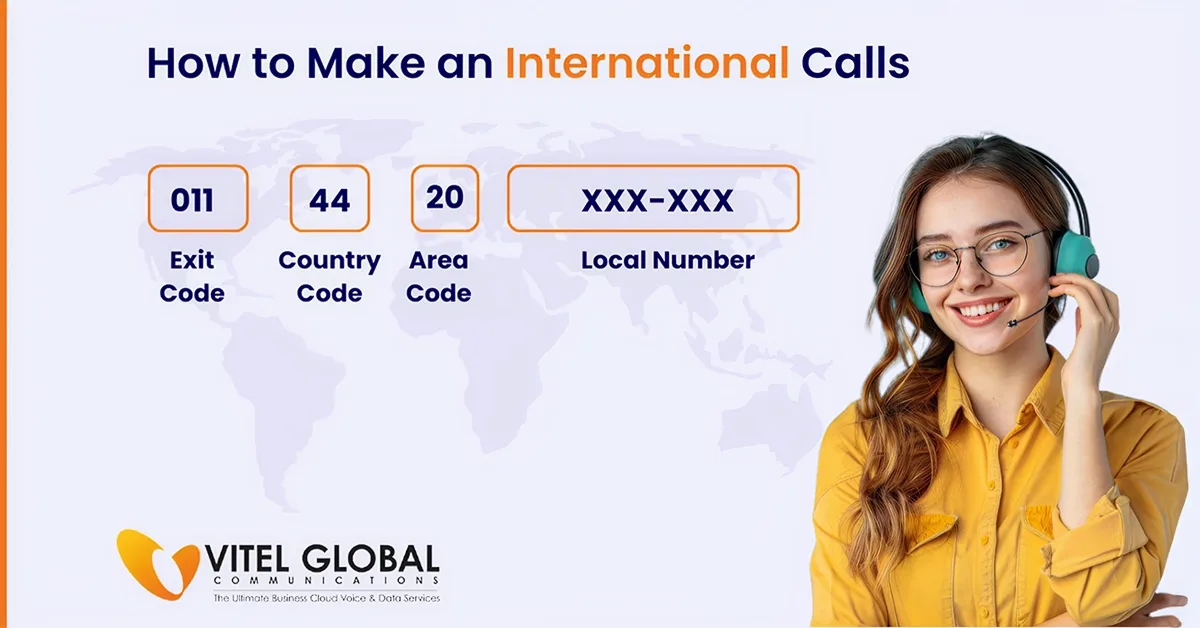
The dialing format remains familiar. In most cases, you dial:
- International access code
- Country code
- Area code
- Local number
The difference is behind the scenes. The call path is more efficient, and the business phone system gives you more features than a regular phone line.
This is where an international VoIP number can also help. If your business speaks often with customers in one country, having a local or virtual number for that country can make communication easier. Customers may feel more comfortable calling a familiar number, and your business can manage those calls from the same system used in the US.
What the Best International VoIP Providers Usually Offer
The best international VoIP providers do more than offer cheap rates. They help businesses manage global conversations with better cost control, better call quality, and stronger team access.
Most strong providers usually offer:
- Predictable international calling plans
- Virtual numbers for selected countries
- Mobile and desktop calling apps
- Desk phone and softphone support
- Call routing and voicemail
- Call logs and usage reports
- CRM or business app integration
- Support for remote and multi-location teams
- Reliable voice quality during business hours
This is where businesses should look beyond price alone. The lowest rate does not always mean the best value. A cheaper provider may still cost more in lost calls, poor voice quality, limited support, or missing features.
A good international VoIP service should fit the way your team works. If your sales team needs CRM records, your support team needs routing, and your managers need reports, the phone system should support all of that from one place.
Vitel Global vs Other VoIP Providers for International Calling
| Feature | Vitel Global | Typical VoIP Providers | Business Impact |
| International Calling Support | Built for business-focused international calling with flexible configurations | Often offer international calling, but with limited transparency in plans | Enables businesses to manage and optimize global communication costs effectively |
| Virtual Number Options | Offers virtual numbers to establish a local presence in multiple regions | Availability may be restricted by country or pricing tier | Helps businesses appear local to international customers, improving trust and response rates |
| Device Flexibility | Works across desk phones, softphones, mobile apps, and existing devices | Device compatibility may be limited depending on the provider | Supports hybrid work environments, keeping teams connected from anywhere |
| Business Phone Features | Includes call routing, voicemail, extensions, call logs, and team-level access | Advanced features often locked behind higher-tier plans | Improves call management efficiency and reduces missed customer interactions |
| CRM and Workflow Support | Aligns with business communication workflows and processes | Integrations and workflow support may be limited | Helps teams track conversations, manage leads, and improve follow-ups |
| Call Quality Focus | Optimized for consistent business call performance and reliability | Call quality may vary based on routing and infrastructure | Ensures clear and professional customer communication |
| Support for US Businesses | Designed to support businesses operating across the U.S. and globally | Support quality and availability can vary widely | Helps resolve issues faster and maintain business continuity |
| Cost Control | Transparent structure with better visibility into usage and spending | Billing structures may be unclear or unpredictable | Reduces unexpected costs and improves budget planning for communication |
Choosing the Best VoIP for International Calls
Choosing the best VoIP for international calls starts with understanding your calling pattern. A company that calls Canada and the UK every day needs a different setup from a business that calls ten countries occasionally.
Start with your most-called destinations. List the countries your team calls each month and check whether those calls go mostly to landlines, mobile numbers, or both. This matters because VoIP international call rates may differ by number type.
Next, review the plan structure. Some providers offer unlimited calling to selected countries. Others use pay-as-you-go pricing. Some charge separately for virtual numbers, call recording, or advanced routing. The right plan should match your usage instead of forcing your team into a package that sounds attractive but does not fit your actual needs.
Call quality should come next. A low calling rate means little if prospects cannot hear your team clearly. For business calls, voice quality affects trust. Dropped calls, delays, and choppy audio can make even a strong team sound unprepared.
Device support is also important. The best VoIP phone for international calls may be a desk phone for office users, but remote employees may prefer a laptop app or mobile app. Your provider should support the way your team actually works.
Before choosing a provider, check these points:
- Countries covered under the plan
- Per-minute rates for landline and mobile calls
- Virtual number availability
- Call quality and uptime support
- Desk phone, softphone, and mobile app options
- Call routing and voicemail features
- CRM or business tool integration
- Billing reports and usage tracking
- Customer support availability
A good VoIP service provider for international calling should help your business save money, but it should also make calling easier to manage.
When Should a Business Use an International VoIP Number?
An international VoIP number is ideal when:
- The business frequently calls a specific country
- Clients or candidates prefer a local-looking number
- Multiple call channels need consolidation
- Professional presence is required without a physical office
This reduces friction, improves answer rates, and lowers per-minute costs.
How to Set Up a VoIP International Call Without Overpaying
Once you choose a VoIP provider, the next step is setting up the calling system in a way that keeps costs low and call quality strong. Many businesses rush this part. They buy a plan, add users, start calling, and later wonder why some destinations cost more than expected or why call quality changes during busy hours.
A better approach is to plan your international calling setup around your actual business usage.
Start with the countries you call most. A sales team calling Canada and the UK every day needs a different plan from a support team calling multiple countries only a few times a month. Then check whether those countries are covered under an unlimited plan, discounted route, or standard per-minute billing.
After that, decide how your team will make calls. Will they use desk phones from the office? Will remote employees use softphones? Will managers need mobile app access while traveling? These choices affect cost, call control, and setup time.
A simple setup usually follows this path:
- Choose the countries your business calls most often
- Compare VoIP international call rates for those countries
- Select business numbers or international VoIP number options where needed
- Add users based on department or location
- Configure call routing, voicemail, and caller ID
- Test call quality before full rollout
- Track usage during the first billing cycle
This kind of setup keeps international calling practical. It also prevents the common mistake of choosing a plan based only on the headline price.
Using an International VoIP Number to Lower Calling Friction
An international VoIP number gives your business a local presence in another country without opening a physical office there. This is useful when customers, vendors, or candidates prefer calling a familiar number.
For example, a US staffing firm may work with candidates in India, the UK, and Canada. Instead of asking everyone to dial a US number, the company can use virtual numbers in selected regions. Calls can still ring on the same Vitel Global business phone system used by the US team.
This helps in three ways.
- It makes your business easier to reach. A local-looking number feels more familiar to the person calling.
- Second, it can reduce calling costs depending on the country, route, and plan.
- It helps your team manage global calls without juggling different phone systems.
For customer-facing teams, this is especially useful. A local number can improve answer rates, reduce hesitation, and make international communication feel more natural.
Best Devices for Voice Over IP International Calls
The best VoIP phone for international calls depends on how your team works. There is no single device that fits every business. A front desk team may need desk phones. A sales team may prefer mobile access. A remote support team may use desktop apps with headsets.
IP Phones for Office Teams
IP phones look like regular office phones, but they connect through the internet. They are a good choice for reception teams, sales floors, call handling teams, and executives who prefer a physical phone.
They usually offer clear audio, speed dial, hold, transfer, conference calling, and voicemail access. For a business that makes frequent international calls from one office location, IP phones can create a stable calling setup.
Softphones for Remote and Hybrid Teams
A softphone is an app installed on a laptop or desktop. It lets employees make calls through the business phone system without needing a physical desk phone.
This works well for remote teams, consultants, sales staff, recruiters, and support agents. A team member can work from home in Dallas, a shared office in Boston, or a hotel in San Diego and still use the company number.
Softphones also reduce hardware costs. For growing teams, that can make a major difference.
Mobile Apps for Calling from Anywhere
Mobile VoIP apps are useful for people who travel, manage field teams, or need to stay reachable outside the office. They allow business calls from a smartphone while keeping personal and work numbers separate.
This is important for professionalism. Your team should not need to use personal numbers to call international clients. With Vitel Global, business calling can stay under the company system while employees work from different locations.
ATA Devices for Existing Phones
An ATA, or Analog Telephone Adapter, lets a traditional phone work with VoIP. This is useful for businesses that want to keep some existing devices while moving to internet-based calling.
It is often a practical bridge for small offices that want lower calling costs without replacing every phone at once.
How to Compare VoIP Calling Rates the Right Way
Many businesses compare VoIP calling rates by looking for the lowest per-minute price. That approach can miss the real cost.
You should compare rates by actual usage. A provider may offer a low rate to one country but a higher rate to another. Some providers charge different rates for landlines and mobile numbers. Some include select countries in a monthly plan. Others require prepaid credits.
Before choosing a VoIP service for international calls, ask these questions:
- Which countries are included in the plan?
- Are mobile calls priced differently from landline calls?
- Are there setup charges for virtual numbers?
- Are call recording, routing, and voicemail included?
- Is international calling active by default, or does it need approval?
- Are there fair usage limits?
- How transparent is the billing report?
This helps your business avoid surprise charges. It also helps you decide whether an unlimited plan or a pay-per-use plan makes more sense.
If your team makes predictable calls to a few countries, a bundled plan may work well. If your calling pattern changes often, a flexible plan may be better.
How to Improve Call Quality During International VoIP Calls
Low cost should never mean poor quality. A business call needs to sound clear, especially when there are accents, time zone differences, and high-value conversations involved.
Three technical issues usually affect international VoIP calls: latency, jitter, and packet loss.
Latency is the delay between one person speaking and the other person hearing it. A small delay is normal. Too much delay makes conversations awkward.
Jitter happens when voice packets arrive at uneven times. This can make speech sound broken or unstable.
Packet loss happens when pieces of audio data fail to reach the other side. This creates missing words, robotic audio, or call drops.
The good news is that many of these issues can be reduced with better network habits.
- Use wired internet for desk phones where possible
- Keep business calls away from overloaded Wi-Fi networks
- Avoid large downloads during peak calling hours
- Give voice traffic priority on your router
- Use quality headsets for softphone users
- Check upload speed, not only download speed
- Restart or update routers when call issues become frequent
For teams handling regular voice over IP international calls, these small steps can prevent many call quality complaints.
Why QoS Matters for International VoIP Calls
QoS means Quality of Service. In simple terms, it tells your network to treat voice calls as a priority.
Without QoS, your router may treat a business call the same way it treats a file download or a video stream. During busy hours, this can lead to call delays, choppy sound, or dropped calls.
With QoS, voice packets move first. This improves stability, especially when several people in the office are using the same internet connection.
For a small office, basic router QoS settings may be enough. For a larger business, IT teams may create separate voice traffic rules, dedicated bandwidth, or voice VLANs.
This is one reason choosing experienced VoIP service providers for international calling matters. Good support can help you identify whether the issue is your internet, your router, your device, or the calling route.
How to Save on International Calls and Avoid Common Mistakes
Reducing international calling costs is not only about choosing a cheaper provider. Businesses also need to manage usage, review call patterns, and avoid habits that create unnecessary charges.
Use Virtual Numbers in High-Call Regions
If your business frequently calls one country, a virtual number can make communication easier and more affordable. It also gives your company a more local presence.
Match Plans to Calling Patterns
Do not choose an unlimited plan only because it sounds safer. If your team makes only a few international calls per month, pay-as-you-go may cost less. If your sales or support team calls overseas daily, a bundled plan may save more.
Review Monthly Reports
Check which countries account for the highest usage. If one region creates most of the bill, ask whether a better route, plan, or local number is available.
Avoid Personal Numbers for Business Calls
Personal mobile calls can become expensive and hard to track. A business VoIP system keeps calls inside the company account and gives managers better visibility.
Train Teams on Dialing and Call Handling
Wrong dialing formats, repeated failed attempts, and unnecessarily long calls can increase costs. Basic training helps teams call correctly and professionally.
Connect Calls with CRM Notes
When calls are logged properly, teams avoid duplicate follow-ups. A clear note after one call can prevent another unnecessary international call.
Common mistakes to avoid include choosing only by rate, ignoring destination countries, using personal phones for business calls, skipping network checks, and failing to review billing regularly.
Quick Checklist Before Choosing a VoIP Service for International Calls
Before selecting a VoIP service for international calls, use this checklist:
- Does the provider support the countries your business calls most?
- Are landline and mobile rates clearly shown?
- Can you add an international VoIP number if needed?
- Does the system work with desk phones, softphones, and mobile apps?
- Are call routing, voicemail, and call logs included?
- Can the platform connect with CRM or business tools?
- Does it support remote and multi-location teams?
- Are billing reports clear enough to track usage?
- Is support available when your team needs help?
Does the provider help with call quality and network setup?
This checklist helps businesses compare providers with more clarity instead of choosing only by the lowest advertised calling rate.
Why Vitel Global Is a Strong Fit for Low-Cost International Calls
Vitel Global gives businesses more than a way to place cheaper international calls. It supports a complete business communication system where calling, messaging, call routing, CRM integration, virtual numbers, and team collaboration work together seamlessly.
Your team can use desk phones, softphones, or mobile apps while maintaining a professional caller ID and centralized call management. Calls can be routed to the right person, and logs integrate with customer activity tracking.
For US businesses in New York, New Jersey, Texas, California, Florida, and Illinois, this ensures teams connect globally without juggling multiple systems or incurring hidden costs. Vitel Global delivers clear, reliable, and flexible international calling, helping you manage costs while improving productivity.
Conclusion: Make International Calling Cost Less and Work Better
Low-cost international calling is no longer only about finding the cheapest rate. Businesses need clear calls, flexible access, predictable billing, virtual number options, and a phone system that supports daily work.
A VoIP international call gives companies a better way to connect with customers, partners, vendors, and remote teams across countries. With the right setup, businesses can reduce calling costs, improve call quality, and manage global communication from one professional system.
For companies that make regular international calls, Vitel Global offers a strong path forward. It brings business calling, virtual numbers, routing, team access, and workflow support together so your team can communicate globally without unnecessary cost or confusion.
Make International Calling Easier with Vitel Global
Get lower calling costs, virtual number options, business calling features, and flexible access across devices.
Frequently Asked Questions
1. What is a VoIP international call?
A VoIP international call is a call made to another country using an internet-based phone system. Your voice travels as digital data instead of moving fully through traditional phone lines, which can reduce the cost.
2. Is international VoIP cheaper than regular international calling?
Yes, international VoIP is often cheaper than traditional phone calling. The exact savings depend on the destination country, plan type, number type, and monthly call volume.
3. Do I need a special phone to make international VoIP calls?
No. You can use an IP phone, laptop app, mobile app, or an adapter with some existing phones. The best option depends on your team’s work style.
4. What is an international VoIP number?
An international VoIP number is a virtual number from another country or region that routes calls through your VoIP system. It helps your business create a local calling presence.
5. How do I choose the best VoIP for international calls?
Check destination coverage, call quality, plan structure, device support, customer service, virtual number options, and integrations. The best option should match your calling pattern, not only your budget.
6. Can VoIP calls work for remote teams?
Yes. Remote employees can make and receive business calls through softphones or mobile apps as long as they have a stable internet connection.
7. What affects VoIP international call quality?
Internet stability, upload speed, router quality, Wi-Fi strength, headset quality, call routing, and QoS settings can all affect call quality.
8. Are VoIP international call rates the same for every country?
No. Rates vary by country, carrier route, landline numbers, mobile numbers, and provider plan. Always check the countries your business calls most often.
Published: May 12th, 2026
Subscribe to Our Latest Updates
Get monthly product and feature updates, the latest industry news, and more!