


What is Cloud Communications? Benefits, & Use Cases


Table of Contents
A cloud communications platform gives businesses one connected way to handle calls, video meetings, messaging, and team collaboration through the internet instead of relying on aging on-site systems. That shift has changed how companies stay reachable, support remote teams, and manage customer conversations without building their communication stack around physical hardware.
A modern cloud communications platform and cloud communications provider can bring voice, video, SMS, team chat, and integrations into one environment. For growing businesses, that means less fragmentation, more flexibility, and a better way to keep communication steady across teams, devices, and locations. With Vitel Global, that model becomes even more practical because the broader platform already supports business phone systems, video meetings, messaging, CRM integration, communication APIs, and UCaaS tools that fit real operating needs.
Cloud Communications: An Overview
Cloud communications refers to internet-based business communication delivered through hosted infrastructure instead of fixed on-premise systems. Rather than managing separate tools for office calling, video meetings, internal chat, and customer messaging, a company can use one cloud environment to run those functions together.
This matters because business communication no longer happens from one desk or one office. Teams work across home offices, mobile devices, branch locations, and client sites. A cloud model gives them one connected communication layer rather than a collection of disconnected tools.
A typical cloud communication setup can include:
- Voice calling through VoIP
- Video conferencing
- Team chat and internal messaging
- SMS and business text messaging
- Call routing and call forwarding
- Voicemail and voicemail delivery
- CRM and application integrations
- Reporting and conversation records
For many businesses, this is less about replacing a phone line and more about creating a system that keeps work moving without forcing staff to jump across too many platforms.
Bring Business Communication Into One Integrated UCaaS Platform
See how Vitel Global helps teams manage calling, messaging, meetings, and routing in one cloud environment.
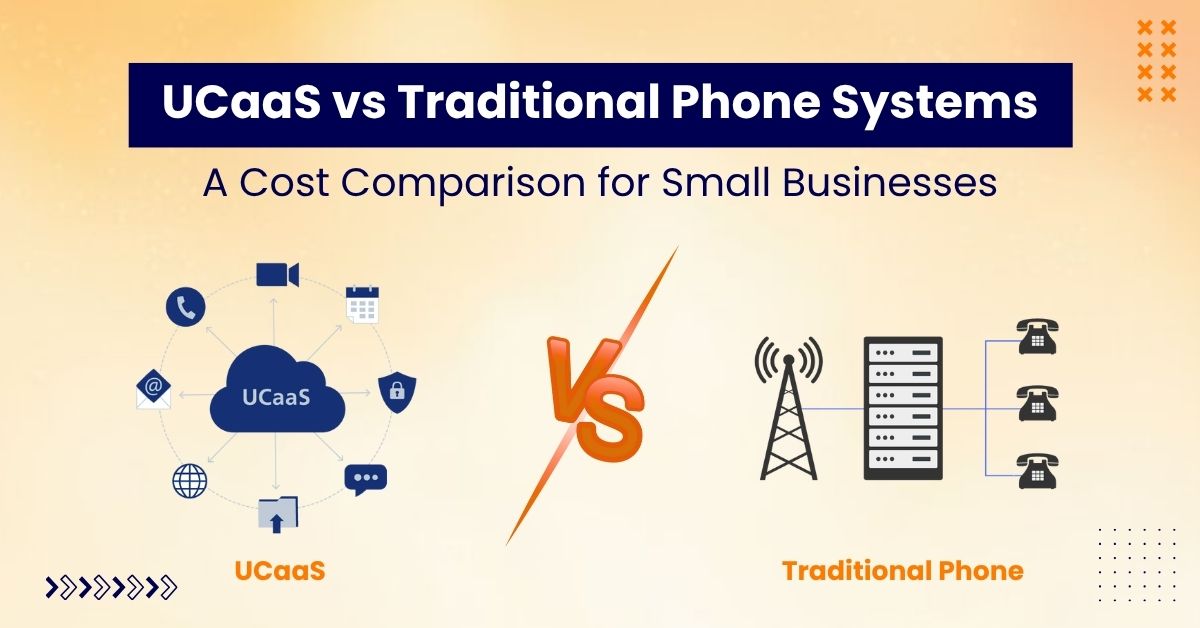
Cloud Communications vs Traditional Business Communication
| Comparison Area | Traditional Business Communication | Cloud Communications Platform |
| Infrastructure | Built around on-site hardware, desk-based systems, and fixed office setups | Delivered through the internet using hosted infrastructure |
| Setup Model | Usually heavier to install and configure | Usually faster to deploy and easier to activate |
| Hardware Dependency | Higher dependence on physical equipment and local systems | Lower dependence on on-site hardware |
| Maintenance Load | More internal upkeep, updates, and maintenance responsibility | Much of the system upkeep is handled by the provider |
| Scalability | Expansion can take more time, more setup, and more cost | Users, numbers, and services are easier to scale |
| Location Flexibility | More tied to office locations and fixed devices | Better suited to remote, hybrid, and multi-location work |
| User Access | Often limited by office-based access and fixed endpoints | Access across desktop, browser, tablet, and mobile devices |
| Communication Scope | Often centered around calling only or a narrow set of tools | Can combine voice, meetings, messaging, routing, and integrations |
| Business Agility | Slower to adapt when communication needs change | Better fit for businesses that need faster change and cleaner expansion |
| Long-Term Fit | Works for stable environments with limited change | Better long-term fit for businesses with growing or more complex communication needs |
How Cloud Communication Platforms Work
A cloud communication system is hosted and maintained by the service provider. Instead of buying and running the full communication stack in-house, the customer accesses the system over the internet and uses the services they need through apps, browsers, mobile devices, or supported desk phones.
At the center of this is cloud telephony. Calls are carried through internet-based voice technology rather than depending only on legacy infrastructure. That allows the provider to manage the calling environment while the business gets access to numbers, routing logic, voicemail, user controls, and connected communication tools from a central service layer.
This model gives businesses a few immediate advantages:
- Faster deployment
- Lower hardware dependency
- Easier user management
- Better support for remote and hybrid teams
- Cleaner scaling as needs change
Vitel Global’s business phone environment already reflects this kind of structure through cloud-based voice, desktop, and mobile access, smart call routing, live transcriptions, call summaries, voicemail, and integration support.
Types of Cloud Communication Systems
Not every business uses the cloud in the same way. The right model depends on security requirements, existing infrastructure, internal control needs, and budget.
Public Cloud
A public cloud communications system gives businesses access to hosted communication services in a shared cloud environment. This does not mean company data is exposed to other organizations. It means the provider runs the infrastructure for many customers while keeping each customer’s environment logically separated and protected.
This is often the most practical route for small and mid-sized businesses because it is:
- Easier to adopt
- More budget-friendly
- Simpler to scale
- Well-suited for faster rollout
Private Cloud
A private cloud setup is built for organizations that need tighter control, stricter privacy handling, or industry-specific security standards. This model is often more attractive to larger enterprises and sectors such as healthcare, legal services, or finance, where internal policies and regulatory concerns are heavier.
It can support stronger internal governance, though it may come with higher complexity and cost.
Hybrid Cloud
A hybrid model allows businesses to keep part of their communication environment on-site while adding cloud flexibility where it makes sense. This is useful for organizations that still rely on existing PBX investments or legacy systems but want the mobility and scalability of cloud services.
For some companies, this becomes a transition model rather than a permanent endpoint. It helps them modernize without forcing an immediate full replacement.
Communication Channels That Can Move to the Cloud
Cloud communications is no longer limited to voice alone. A modern platform usually supports several communication channels inside one system.
Voice Calling
Voice still matters. Many businesses still win business, solve service issues, and handle urgent requests by phone. A cloud communications setup supports internet-based calling with features such as routing, recordings, summaries, voicemail, and number management.
Vitel Global’s business phone system includes HD voice, call routing, call forwarding, live transcriptions, call summaries, department lines, and desktop and mobile access, which gives voice calling a much stronger role than a basic business line ever could.
Video Conferencing
Cloud video makes meetings easier to run across locations, devices, and teams. Instead of requiring a dedicated meeting room system, users can start or join meetings through supported apps and web access.
Vitel Global’s video conferencing solution includes HD video, screen sharing, built-in chat, participant controls, encryption, and integration with business tools, which makes it useful for internal meetings, client calls, webinars, and remote collaboration.
SMS, MMS, and Team Messaging
Business communication often moves faster through text than email. Internal coordination also improves when teams can message each other inside a business system instead of relying on personal apps.
Vitel Global supports business messaging, group messaging, instant alerts, team chat logs, and integrations that help businesses manage internal collaboration and customer communication in one connected structure.
Fax
Fax may sound dated, though it still matters in industries where document handling remains tightly controlled. Cloud fax lets businesses send and receive faxes digitally without maintaining physical fax equipment.
CRM-Connected Communication
One of the strongest reasons to adopt a cloud model is that communication can be tied to other business systems. Calls, messages, summaries, and records become more valuable when they connect directly with platforms such as Salesforce, Zoho, HubSpot, and other tools.
Vitel Global’s CRM integration supports synchronized records, call visibility, notifications, workflow support, and connected communication management across major CRM systems.
Build a Cloud Communication System That Can Grow With You
Unify business calling, collaboration, and connected workflows with Vitel Global.
Benefits of Cloud Communications Platforms
A cloud model changes much more than cost. It changes how teams operate.
Access to Better Features Without Heavy In-House Burden
Businesses no longer need to maintain every layer of communication infrastructure internally just to gain stronger functionality. Hosted systems give access to advanced features without forcing the company to build and maintain everything from scratch.
That includes capabilities such as:
- Call routing
- Call forwarding
- Video meetings
- Team messaging
- Voicemail handling
- Live transcriptions
- Call summaries
- Reporting
- Integrations
Better Support for Remote and Distributed Teams
A cloud communications platform works well for mobile and hybrid teams because staff can connect through desktop, browser, tablet, or mobile applications without losing the business identity of the communication system.
This matters for sales teams, distributed support teams, managers across locations, and businesses serving customers across time zones.
More Flexibility and Easier Scaling
Growth changes communication needs quickly. A business may need new numbers, more users, different routing, new departments, or support for another office. A cloud structure makes those changes easier than a hardware-heavy system usually can.
More Reliable Cross-Location Communication
A strong provider can support stable voice and communication services through cloud data centers, multiple carriers, and backup structures. Vitel Global’s company profile points to multi-carrier support, backup data center design, and 99.99% uptime positioning, which strengthens the trust side of cloud communication for businesses that rely on being reachable every day.
Lower Infrastructure Pressure
Cloud systems often reduce the burden of physical maintenance, on-site expansion, and upgrade cycles. That does not mean communication becomes effortless. It means more of the heavy operational load is shifted away from the customer and into the provider’s hosted environment.
Who Benefits Most From a Cloud Communications Platform
A cloud communications platform is useful for almost any business, though some teams feel the value faster than others.
Small Businesses
Small businesses benefit from a system that keeps calling, messaging, meetings, and routing in one place without forcing them into expensive on-site infrastructure.
Remote and Hybrid Teams
Teams working across home offices, client sites, and branch locations need one communication layer that stays consistent across devices and locations.
Sales and Customer Support Teams
Sales and support teams benefit from routing, summaries, CRM-connected visibility, and faster communication handoffs.
Multi-Location Businesses
Businesses with more than one office often need one shared communication structure instead of separate local systems.
Regulated and Service-Heavy Industries
Healthcare, legal, finance, and other service-led environments often need stronger record handling, secure communication, and dependable uptime.
A More Effective Remote or Distributed Workforce
One of the clearest advantages of cloud communications is that location matters less. Teams do not need to be in the same office to operate as one communication unit.
A distributed workforce can still:
- Answer from shared business numbers
- Join meetings from anywhere
- Transfer calls internally
- Send updates through team messaging
- Keep conversations tied to business systems
- Access the same platform across devices
That kind of consistency helps businesses reduce communication gaps while still giving employees more flexibility in how and where they work.
Selecting a Cloud Communications Provider
Choosing a cloud communications provider is not just about finding a platform that can place calls or host meetings. The real question is whether the provider can support the way your business communicates now and the way it is likely to operate later.
A good provider should be evaluated on five practical areas:
- security and compliance readiness
- communication features across voice, video, and messaging
- integration support with existing business systems
- ease of deployment and day-to-day management
- long-term value, not just entry pricing
For a business that wants more than a basic hosted line, these factors decide whether the platform will stay useful after rollout.
Security and Compliance
Security is one of the first things businesses should examine before moving communication into the cloud. Calls, messages, files, contact information, and internal discussions all pass through that environment. If the provider cannot protect that data well, the rest of the feature set matters less.
A strong cloud communications platform should support:
- encrypted communication channels
- secure access controls
- protected data handling practices
- reliable hosting environments
- backup and disaster recovery readiness
Vitel Global’s business messaging platform emphasizes encryption and secure data handling, while its video conferencing platform highlights end-to-end encryption and privacy controls. Its broader UCaaS and company profile materials also point to backup data center design, disaster recovery support, and secure hosted operations.
For industries with stronger privacy requirements, that kind of foundation matters. It is one thing to move communication to the cloud. It is another to move it there without losing trust.
Still Managing Communication Across Too Many Tools?
Move voice, video, messaging, and business workflows into one cleaner setup with Vitel Global.
Native AI Capabilities and Smarter Communication Control
Many cloud communication articles now mention AI, though buyers should look past the label and focus on how it actually improves work.
The useful questions are simple:
- Does the platform create better visibility into conversations?
- Does it reduce manual follow-up work?
- Does it help teams respond faster?
- Does it improve customer handling without adding more admin burden?
This is where built-in tools such as live transcription, summaries, smart routing, reporting, and conversation visibility become useful.
Vitel Global already positions these elements across its communication stack. The business phone platform includes live transcriptions, call summaries, and smart routing. The video platform references future-facing automation such as transcription and meeting summaries. The communication API materials also highlight call reports and connected voice and chat capabilities.
For businesses, that means cloud communication can shift from being a transport layer to being a working layer. Calls are no longer just completed. They are captured, understood, routed, and connected to the rest of the business.
Integrations With Other Business Tools
A cloud communications setup becomes far more useful when it fits the systems a business already depends on. If communication remains isolated, teams still end up copying notes, switching tabs, and chasing context.
That is why integrations matter so much.
A strong platform should support connections with:
- CRM platforms
- calendar tools
- messaging environments
- ticketing or workflow tools
- custom apps where needed
Vitel Global’s CRM integration supports platforms such as Salesforce, Zoho, HubSpot, Vtiger, and others. Its communication API also gives businesses the option to extend voice and chat capabilities into their own applications, which is important for companies that want communication built into existing workflows instead of being awkwardly layered on top.
This is one of the clearest signs of maturity in a cloud communications platform. It should not ask your team to work around it. It should fit the way your business already runs.
Ease of Use and Deployment Speed
A platform may be rich in features and still become a burden if rollout is too heavy or if the interface is too difficult for regular users.
Businesses should look for a setup that can be deployed without drawn-out disruption and used without a long adjustment period. The goal is not just to launch a new system. The goal is to get staff comfortable enough with it that communication gets better instead of slower.
Vitel Global’s product materials repeatedly position its communication tools around straightforward implementation, multi-device compatibility, simple access, and low-friction use. The messaging platform highlights quick setup. The video product describes an easy meeting launch and broad device support. The business phone system emphasizes user-friendly controls and centralized cloud-based management.
That matters because a cloud migration that looks good on paper can still fail if users avoid the system or only half-adapt it.
Pricing and Value
Businesses should always examine cost, though pricing should be read in the context of what the platform removes, not only what it charges.
A cloud communications system often reduces:
- physical hardware dependency
- maintenance burden
- scattered vendor costs
- separate tools for calling, messaging, and meetings
- friction when scaling up or down
The better question is not whether cloud communication is free of cost. It is whether it gives more usable communication capacity for the spend.
A business that replaces separate calling, video, messaging, and support tools with one hosted environment is often buying clarity as much as functionality. It also gains better predictability. Monthly cost becomes easier to forecast, and growth does not force a full infrastructure rethink.
Planning for a Successful Migration to the Cloud
A cloud migration works better when businesses treat it as an operational change, not just a technical switch.
Have the Right Internal Team
Even for smaller businesses, someone should own the migration. For larger businesses, this may include people from IT, operations, customer service, or management. A communication system touches too many workflows to be rolled out casually.
Define Clear Business Goals
Before moving to a new platform, the company should know what it wants fixed or improved.
Examples include:
- reducing communication silos
- supporting remote work better
- improving routing and response time
- replacing scattered tools
- lowering infrastructure pressure
- giving managers more visibility into communication patterns
Without clear goals, businesses often end up buying features rather than solving communication problems.
Choose the Right Cloud Model
Public cloud, private cloud, and hybrid cloud all serve different needs. A smaller business might move comfortably into a shared hosted environment. A regulated organization might require stricter controls. A company with legacy infrastructure may move in stages through a hybrid model.
Assess Existing Systems
Before rollout, the business should look at:
- current voice environment
- current devices in use
- network readiness
- CRM or app connections
- security requirements
- user needs by role
This makes rollout more stable and reduces unpleasant surprises once the system is live.
Test Before Full Migration
A phased rollout often works better than a full jump. It allows the business to test call quality, usability, integrations, permissions, and workflow fit before putting the entire company on the platform.
Support Adoption After Rollout
Rollout is not the finish line. The real work is helping teams use the system well. That means training, updates, clear ownership, and a practical way to resolve questions quickly.
Ready to Simplify Calls, Meetings, and Messaging?
Discover how Vitel Global helps businesses reduce friction and improve communication across every location.
Examples of Cloud Communications Industry Use Cases
A cloud communication model becomes easier to understand when viewed through actual business use.
Sales Teams
Sales teams benefit from mobile access, call routing, summaries, and CRM-connected visibility. That helps reps respond faster, follow up with more context, and avoid losing inbound opportunities when they are away from the desk.
Customer Support Teams
Support teams need structure. Calls need to land in the right place. Internal follow-up needs to happen without confusion. Messaging, recordings, call summaries, and routing all help support operations stay organized.
Healthcare and Professional Services
Healthcare offices, legal firms, and consulting teams often rely on fast communication and tighter records. Cloud-based calling, secure messaging, voicemail delivery, virtual fax, and video communication reduce manual handling while giving these businesses more flexibility.
Remote and Hybrid Teams
Cloud communications is especially strong for teams working across locations. One platform can support internal chat, meetings, business calling, and shared communication identity even when the team is split across states or time zones.
Growing Multi-Location Businesses
A business opening new offices or serving different regions often needs a cleaner communication layer than a patchwork of local systems. Cloud communication gives those businesses one operational structure across numbers, routing, users, and devices.
Selecting the Best Cloud Communication Platform for Your Business
The right platform depends on how your business communicates and what it is trying to fix.
A small business may need to replace scattered calling tools and bring voice, messaging, and meetings together. A distributed team may need mobile-first access and better coordination. A larger organization may need integrations, administrative visibility, and cloud flexibility without losing control.
What matters most is that the platform helps the business communicate more clearly, operate more cleanly, and stay adaptable as the business changes.
A cloud communications platform should help your company:
- connect voice, video, and messaging into one environment
- support remote and hybrid users properly
- reduce communication friction across teams
- add users and services without infrastructure strain
- improve visibility into customer and team interactions
- stay reliable as the business grows
How Vitel Global Supports Cloud Communications
Vitel Global is not only offering one isolated cloud tool. It already has the communication building blocks that businesses usually look for when comparing a cloud communications provider.
Its broader environment supports:
- cloud-based business phone systems
- HD calling with routing and forwarding
- live transcriptions and summaries
- secure video conferencing
- team chat and business messaging
- CRM integration across major platforms
- communication APIs for custom workflows
- UCaaS capabilities for unified business communication
- desktop and mobile access
- multi-carrier and backup-ready infrastructure support
That matters because businesses rarely need just one channel. They need voice, meetings, messaging, routing, records, and integrations to work together without creating more operational clutter. Vitel Global gives companies a more connected structure instead of forcing them to buy and manage separate communication layers.
For a growing business, that translates into practical outcomes:
- fewer communication gaps across teams
- cleaner handling of customer calls and follow-up
- better internal coordination through messaging and shared access
- easier support for remote and hybrid work
- stronger continuity across offices and users
- more trust in system reliability for day-to-day business use
Vitel Global’s company profile also strengthens the trust side of the decision through its U.S. presence, multiple carrier relationships, backup data center support, and 99.99% uptime positioning. That makes it a stronger fit for businesses that depend on communication staying available across locations and work styles.
Bring Cloud Communications Into One Business-Ready System
Unify calling, meetings, messaging, and connected workflows with Vitel Global.
Frequently Asked Questions
1. What is a cloud communications platform?
A cloud communications platform is a hosted system that delivers business communication tools such as voice, video, messaging, and integrations over the internet instead of relying on traditional on-site systems.
2. How is a cloud communications platform different from a traditional phone system?
A traditional system depends more heavily on fixed infrastructure and local hardware. A cloud platform is internet-based, easier to scale, and better suited to mobile, remote, and multi-location work.
3. Why would a business choose a cloud communications provider?
A business may choose a cloud communications provider to simplify communication, reduce infrastructure burden, support distributed teams, and gain access to voice, video, messaging, and integrations inside one hosted environment.
4. Is cloud communication secure?
A strong provider should support encryption, secure access controls, protected hosting, and backup readiness. Security quality still depends on the platform, the provider, and how the business manages user access.
5. Can cloud communications support remote teams?
Yes. One of the biggest advantages of cloud communication is that it supports remote and hybrid teams through desktop, browser, mobile, and shared platform access.
6. What communication tools usually move to the cloud?
The most common tools include VoIP calling, video conferencing, team chat, business messaging, voicemail handling, CRM-connected communication, and, in some industries, digital fax.
Published: September 11th, 2023
Subscribe to Our Latest Updates
Get monthly product and feature updates, the latest industry news, and more!