

Cloud-Based Phone System: Features, Benefits & Business Use
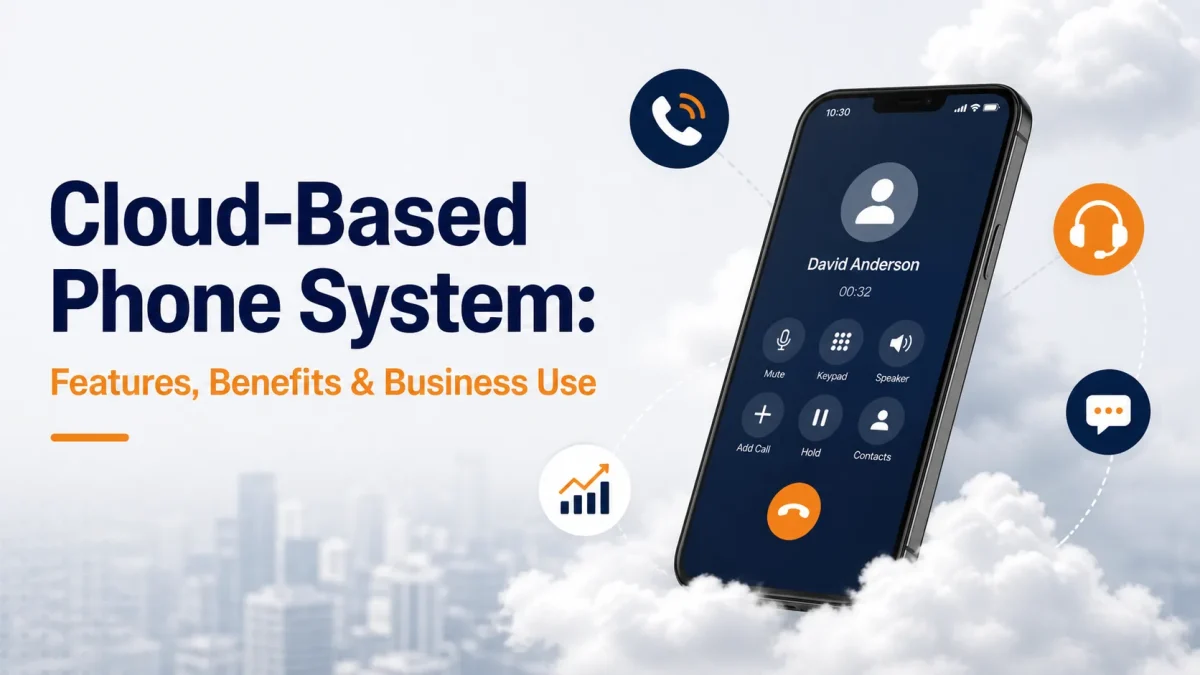

Table of Contents
A cloud-based phone system gives businesses a more flexible way to manage calls, voicemail, routing, texting, and team communication without relying on aging desk phones or office-bound telecom hardware. For many teams, the move is no longer only about replacing old phone lines. It is about improving mobility, simplifying customer communication, lowering upkeep, and giving staff a better way to stay connected across office, home, and mobile devices.
As soon as a business starts growing, the limits of older phone setups become harder to ignore. One person ends up handling too many incoming calls. Remote staff lose visibility. Expanding to a new office or adding users becomes slower than it should be. Vitel Global helps businesses move to cloud based business phone systems that are easier to manage, easier to scale, and better suited to how modern teams work.
What Is a Cloud-Based Phone System?
A cloud-based phone system is a business calling setup that runs through the internet instead of depending on copper phone lines and hardware-heavy telecom equipment at your office. Calls are handled through hosted infrastructure, which means the business can make and receive calls from desk phones, laptops, mobile apps, or desktop clients without being locked to one place.
That is why cloud-based phone systems for small business use have become a practical option for startups, service firms, sales teams, and multi-location companies. The system is tied to users and workflows more than to walls and wiring.
A modern business phone system cloud setup often includes:
- business calling over internet-based connections
- voicemail and voicemail-to-email
- call routing and auto attendant menus
- mobile and desktop access
- call forwarding
- call recording
- business texting
- analytics and reporting
- integrations with CRM and support tools
This is what separates cloud-based business telephone systems from older systems that only handle basic calling.
Types of Cloud-Based Business Phone Systems and Networks
Not every business uses the same model. Some need a lighter setup. Others want a broader communication layer built around voice, messaging, meetings, and support.
VoIP Calling
VoIP is the base layer behind most cloud phone systems. It converts voice into digital traffic and carries calls through internet-based connections. This gives teams more room to work across devices and locations without needing separate lines for every desk.
Cloud PBX
A hosted PBX manages extensions, routing, greetings, voicemail, and department-level call handling without placing physical PBX hardware in every office. This is often the core of a cloud-based phone service because it lets businesses manage users and rules from a web portal.
UCaaS Layers
Some businesses want more than voice. They want calling, meetings, chat, messaging, file sharing, and collaboration under one system. That is where UCaaS becomes relevant. It brings more communication functions into the same environment.
CCaaS Extensions
For businesses with support teams or higher call traffic, contact-center capabilities can be layered in through call queues, routing logic, reporting, coaching tools, and conversation management.
Hybrid Support for Older Devices
Some businesses still use older analog equipment, fax lines, or existing desk hardware. In those cases, certain cloud-based business phone systems can be adapted to work during transition periods rather than forcing a full replacement on day one.
Benefits of Cloud-Based Phone Systems for Business
The biggest reason companies move to cloud based phone systems for business is not novelty. It is control. They want a setup that fits the current business, not the business they had years ago.
Lower Ongoing Infrastructure Burden
A cloud based phone system reduces dependence on bulky hardware, office-specific telecom layouts, and repeated service visits. It also reduces the friction that comes with maintaining outdated voice equipment.
Better Mobility for Teams
Calls can follow users across devices. A salesperson in Dallas, a support lead in Phoenix, and a founder working from home can all stay on the same business identity. This is one reason many teams now prefer cloud-based phone systems for small business use over older line-based setups.
Easier User Expansion
Adding or removing users is far simpler with cloud based business phone systems than with systems tied to physical installs and line-by-line provisioning. This matters for fast-growing businesses and for firms that manage seasonal staffing.
Cleaner Customer Experience
Customers care about whether they can reach the business quickly and be directed properly. A cloud based phone service can improve that with routing, department menus, business hours, voicemail handling, and shared visibility across teams.
Better Continuity
If a storm, outage, office issue, or local interruption affects one location, a well-structured cloud-based phone system can help reroute communication and reduce disruption. That can matter a lot for healthcare groups, service businesses, legal teams, and sales operations.
Smarter Feature Access
Many cloud phone systems include features that used to require separate tools or expensive upgrades. This can include call recording, voicemail transcription, virtual reception menus, analytics, and text support.
Cloud-Based Phone System vs Traditional Phone System
| Comparison Factor | Cloud-Based Phone System | Traditional Phone System |
| Technology | Runs over the internet using VoIP | Runs through physical phone lines and on-site hardware |
| Setup Time | Fast to activate and configure | Slower setup with wiring, installation, and technician support |
| Hardware Requirement | Minimal hardware, often works with mobile, desktop, or IP phones | Requires desk phones, PBX hardware, and line infrastructure |
| Upfront Cost | Lower upfront investment | Higher installation and equipment costs |
| Monthly Cost | Usually more predictable per-user pricing | Often higher line-based and maintenance costs |
| Scalability | Easy to add or remove users | Expansion usually needs new hardware and manual setup |
| Remote Access | Strong support for remote and hybrid teams | Limited, often tied to the office location |
| Mobility | Calls can be handled across phones, laptops, and apps | Mostly desk-phone dependent |
| Maintenance | Managed by the provider through the cloud | Requires on-site updates, repairs, and support |
| Features | Includes call routing, voicemail to email, analytics, texting, auto attendant, and integrations | Often limited unless extra systems or upgrades are added |
| Business Continuity | Can reroute calls quickly during outages or location changes | More vulnerable to physical line issues and local hardware failure |
| Multi-Location Support | Easier to manage across offices and teams | More complex to manage across locations |
| CRM and App Integrations | Often supports modern integrations | Usually limited or unavailable |
| Reporting and Analytics | Available in many plans | Usually basic or absent |
| Best Fit | Modern businesses need flexibility, growth, and mobile use | Businesses with fixed office setups and basic calling needs |
For most growing businesses, a cloud based phone system gives more flexibility, lower overhead, and stronger day-to-day usability than a traditional phone system.
Why More Small Businesses Are Moving to Cloud Phone Systems
A cloud-based phone system for small business use has grown more relevant because small teams now work in more than one way. Some are fully remote. Some split time between the office and the field. Some want customers to feel they are reaching a larger, well-structured company even when the internal team is still lean.
Small businesses often need:
- one number that works across several people
- the ability to answer from a laptop or mobile app
- Business calling without giving out personal numbers,
- support for growth without rebuilding everything
- call handling that looks professional from the first customer interaction
That is why the best cloud-based phone system for small businesses is rarely the one with the cheapest starting point. It is the one that keeps working as the business changes.
Why Businesses Choose Vitel Global for Cloud-Based Phone Systems
Vitel Global helps businesses move beyond basic calling and build a communication setup that feels usable every day. The goal is not to hand over a number and leave the rest to the customer. The goal is to help businesses run a phone system that fits their team structure, customer expectations, and growth plans.
With Vitel Global, businesses can support:
- business calling across desktop and mobile devices
- local and toll-free business numbers
- call routing by department, user, or availability
- voicemail-to-email for faster response handling
- call recording for review and training
- number porting for smoother transitions
- multi-location support under one system
- 24/7 support for ongoing reliability
This is especially useful for businesses that have outgrown personal phones, isolated desk setups, or office-bound systems that no longer match how the team works.
Switch to a Smarter Cloud Phone System With Vitel Global
Launch a cloud based business phone system that supports growth, cleaner call handling, and better reach across every device.
Choosing the Best Cloud-Based Phone System for Small Business
Picking the best cloud based phone system for small business use starts with asking better questions. Many teams compare only monthly pricing, then realize later that the cheaper setup cannot support growth, texting, routing, or shared coverage.
Start with these questions:
How Many Users Need Access?
A solo founder needs a different setup than a 20-person team handling inbound calls across multiple roles. User count affects number structure, permissions, shared coverage, and reporting needs.
Where Will Calls Be Answered?
If the team works from home, on the road, or across more than one office, mobile and desktop access should be standard. A business phone system cloud setup should fit the team’s real work patterns.
Do You Need Only Calling, or More Than Calling?
Some companies need a simple business number. Others need texting, voicemail-to-email, call recording, integrations, or support for meetings and chat. That changes which provider fits best.
Will You Need Call Routing?
If calls should move to sales, support, billing, a receptionist, or an after-hours path, routing matters. This is one of the biggest differences between a basic number and a usable cloud-based phone system.
Do You Need to Keep Existing Numbers?
Some businesses already have numbers printed on ads, listings, cards, or websites. If that number matters to the market, porting should be part of the selection process.
How Fast Will the Business Change?
The right cloud based phone systems for business should handle growth, staff changes, user additions, and location shifts without creating telecom headaches every time something changes.
What the Best Cloud Phone System for Small Business Should Include
The best cloud phone system for small business use usually needs a balance of simplicity and room to grow. That means the system should offer:
- dependable calling quality
- mobile and desktop access
- voicemail controls
- call routing
- user management
- business texting
- basic reporting
- straightforward admin controls
A small company in Austin may only need a few users now. Six months later, it may need shared coverage, more routing paths, and better visibility into missed calls. That is why future usability matters as much as the current setup.
What Vitel Global Helps You Solve
Businesses often come looking for a better phone setup because the current one is starting to show cracks.
Common issues include:
- personal numbers being used for work
- missed calls during busy periods
- weak coverage across teams
- limited flexibility for remote staff
- no routing for departments or time windows
- too much dependence on one person’s phone
- outdated office-based equipment
A cloud based phone system helps remove those weak points by giving the business a stronger structure around communication.
Common Features That Matter in Cloud-Based Phone Systems
A cloud based phone system should make daily work easier, not add more moving parts. The most useful features are the ones your team actually touches every day.
Auto Attendant and Call Menus
An auto attendant gives callers a clear first step instead of sending every call to one person. It helps even a smaller business sound organized and prepared. Sales can go one way, support another, and after-hours calls can follow a different path.
Call Routing and Forwarding
Routing rules make a real difference once calls start coming in from multiple channels, time zones, or locations. A cloud based business phone system can route by team, role, business hour, or availability, so the business does not depend on one person to catch every incoming call.
Voicemail to Email
This feature saves time because missed messages are easier to review quickly. Teams can scan, prioritize, and respond faster instead of dialing into voicemail one message at a time.
Business Texting
A lot of customer communication no longer happens only by voice. Appointment reminders, short updates, confirmations, and quick replies often move faster by text. A business phone system cloud setup that includes texting gives teams another practical way to stay responsive.
Call Recording
Call recording helps with review, training, service quality, and internal follow-up. For support teams and sales teams, it also helps bring more clarity to what happened on the call instead of relying only on memory.
Mobile and Desktop Access
This is one of the strongest reasons businesses switch. A cloud based phone system lets people use the same business identity from a smartphone, laptop, or desk setup without exposing personal numbers or creating separate call paths.
Reporting and Analytics
Once call volume grows, reporting starts to matter. Businesses want to know how many calls were missed, when call spikes happen, which teams are busiest, and where response patterns need attention.
Cloud-Based Phone Systems for Small Businesses and Growing Teams
A cloud-based phone system for small business use should do two things at the same time. It should feel simple to set up now, and it should still make sense when the team gets larger later.
For smaller teams, the biggest value often comes from:
- fast setup without hardware-heavy installation
- one business identity across several devices
- a cleaner way to separate personal and work communication
- Business calling that works outside the office
- a more polished customer-facing experience
For growing teams, the value expands into:
- shared call handling
- department-level routing
- role-based access
- call data visibility
- support for multiple offices or remote staff
- easier expansion without changing the whole system
This is why cloud-based phone systems for small businesses are not just an alternative to older office phones. They often become the starting point for better communication across the whole company.
Modernize Your Business Calling With the Cloud
Set up calling, routing, voicemail, and mobile access in one place with Vitel Global.
Try Vitel Global Now
What Makes the Best Cloud-Based Phone System for Small Business
The best cloud-based phone system for small business use is rarely the one with the lowest starting price. It is the one that removes friction without making setup harder than it needs to be.
For smaller teams, the best fit usually includes:
- one main number with clear call routing
- mobile and desktop access
- voicemail and forwarding controls
- business texting
- room to add users later
- enough reporting to catch missed call patterns
- a setup that works without heavy office hardware
A small team may not need every advanced feature on day one. It still needs a system that will not force a full change six months later.
Pros and Limits of a Cloud-Based Phone System
A fair buying guide should cover both sides. A cloud based phone system solves a lot, but it still depends on the business choosing the right setup.
What Works in Its Favor
A cloud based business telephone system usually gives businesses:
- lower hardware dependency
- more room for remote and hybrid work
- quicker user changes
- broader feature access
- less office-specific setup
- more control through web-based management
What Still Needs Attention
There are still a few areas businesses should plan around:
Internet Stability
Because calling runs through internet-based connections, the quality of the network still matters. A weak setup can affect call clarity and reliability.
Device Readiness
Some businesses need to decide whether users will work from softphones, desk phones, laptops, or mobile apps. The technology choice should match how the team already works.
Transition from Older Systems
If the business still uses analog devices, older fax lines, or physical PBX habits, the shift may need to be staged rather than done all at once.
Internal Adoption
The best cloud based phone system for small business teams still needs a clean rollout. If the team does not understand the routing, voicemail, and call-handling setup, the system will feel more confusing than helpful.
How to Set Up a Cloud-Based Phone System Without Creating More Work
A lot of businesses avoid changing phone systems because they expect the move to be disruptive. In reality, the process is often much cleaner when the provider helps structure it properly.
Step 1: Decide How the Business Receives Calls
Start with the practical questions:
- Who answers first
- Which calls go to sales
- Which calls go to support
- What happens after business hours
- Whether one number or several numbers are needed
Step 2: Choose the Number Structure
A company may need:
- one main business number
- local numbers by city
- toll-free numbers for broader reach
- direct numbers for certain team members
Step 3: Define Routing and Availability
This is where the phone setup starts acting like a real business system. Business hours, voicemail paths, call forwarding rules, overflow handling, and department logic all matter.
Step 4: Add the Team and Devices
Each user should know where calls appear, how voicemails are handled, and what the customer sees on outgoing calls.
Step 5: Review Before Going Fully Live
Test the greetings, ring paths, transfer flows, and missed-call handling before publishing the setup widely. This helps avoid confusion after launch.
Vitel Global Cloud-Based Phone System Use Cases
Businesses do not all buy cloud phone systems for the same reason. The use case shapes what the system must handle well.
Small Service Businesses
A small local business may want a cloud based phone system for small business use because it needs one main number, coverage when the owner is away, voicemail-to-email, and a more polished customer contact path.
Sales Teams
Sales teams need a system that supports speed. Calls should reach the right person fast, missed calls should be visible, and mobile access should not create identity confusion.
Support and Front Desk Teams
A front desk, intake team, or support team often needs routing, queue handling, clear voicemail rules, and a setup that keeps callers from bouncing between people with no answer.
Multi-Location Businesses
A business with teams in New York, Dallas, Atlanta, or Phoenix may need one communication structure across all locations without rebuilding every location separately. That is where cloud based phone systems for business become especially useful.
Remote and Hybrid Teams
Remote teams often need one business presence that works across home offices, travel schedules, and different devices. A hosted phone environment makes it that much easier than a location-bound office line.
Why the Vitel Global Cloud Phone System if the Better Fit for Your Business
A cloud phone system should do more than replace old phone lines. It should make daily communication easier for the people using it and more consistent for the customers calling in.
Vitel Global helps businesses build cloud-based business phone systems that support real operating needs, including shared call handling, mobile access, cleaner routing, easier user management, and more reliable coverage across teams and locations. The setup works well for startups, service businesses, sales teams, support functions, and growing companies that want a phone system that feels more usable day to day.
With Vitel Global, businesses can support:
- cleaner call handling
- better mobility across devices
- easier user changes as teams grow
- stronger coverage across locations
- shared support visibility
- faster response handling
- a more organized customer-facing experience
That makes the move practical for businesses that want a system built around daily use, not just initial setup.
Switch to Vitel Global Now
Final Take: Is a Cloud-Based Phone System Worth It?
For most modern businesses, yes. The reason is not that older systems suddenly stop making calls. The reason is that older systems stop fitting the business once communication becomes more fluid, more distributed, and more dependent on fast response.
A cloud-based phone system helps businesses:
- reduce hardware dependence
- support remote and office-based work together
- manage calls with more structure
- Add users without telecom friction
- present a more reliable front to customers
- build communication around actual workflows
The right choice comes down to whether the business wants a fixed office phone setup or a communication system that can move with the team.
For many companies, the answer becomes clear once the old setup starts slowing response, limiting visibility, or making everyday call handling more difficult than it should be.
Replace Legacy Phones With a Smarter Cloud Setup
Vitel Global helps businesses switch to a cloud-based phone system with stronger routing, mobile flexibility, and cleaner communication from day one.
Frequently Asked Questions
1. What is a cloud-based phone system?
A cloud-based phone system is a business calling setup that uses internet-based infrastructure instead of relying on traditional copper phone lines and on-site PBX hardware.
2. Are cloud based business phone systems good for small teams?
Yes. A cloud-based phone system for small business use can help small teams manage calls across devices, set business hours, route calls more clearly, and avoid mixing personal and business communication.
3. Do cloud phone systems only work in offices?
No. One of the strongest advantages of cloud phone systems is that users can make and receive calls through mobile apps, laptops, desktops, and supported desk devices from different locations.
4. What do I need to run a cloud-based phone service?
You need a dependable internet connection, a provider that fits your use case, and devices that support the way your team works. That can include smartphones, laptops, or desk phones.
5. What should I look for in the best cloud-based phone system for a small business?
Look for mobile access, call routing, voicemail controls, user management, texting support, and enough flexibility to handle future growth without forcing another system change.
Published: June 3rd, 2022
Subscribe to Our Latest Updates
Get monthly product and feature updates, the latest industry news, and more!