




Hosted VoIP Phone System: Features, Benefits, & Uses
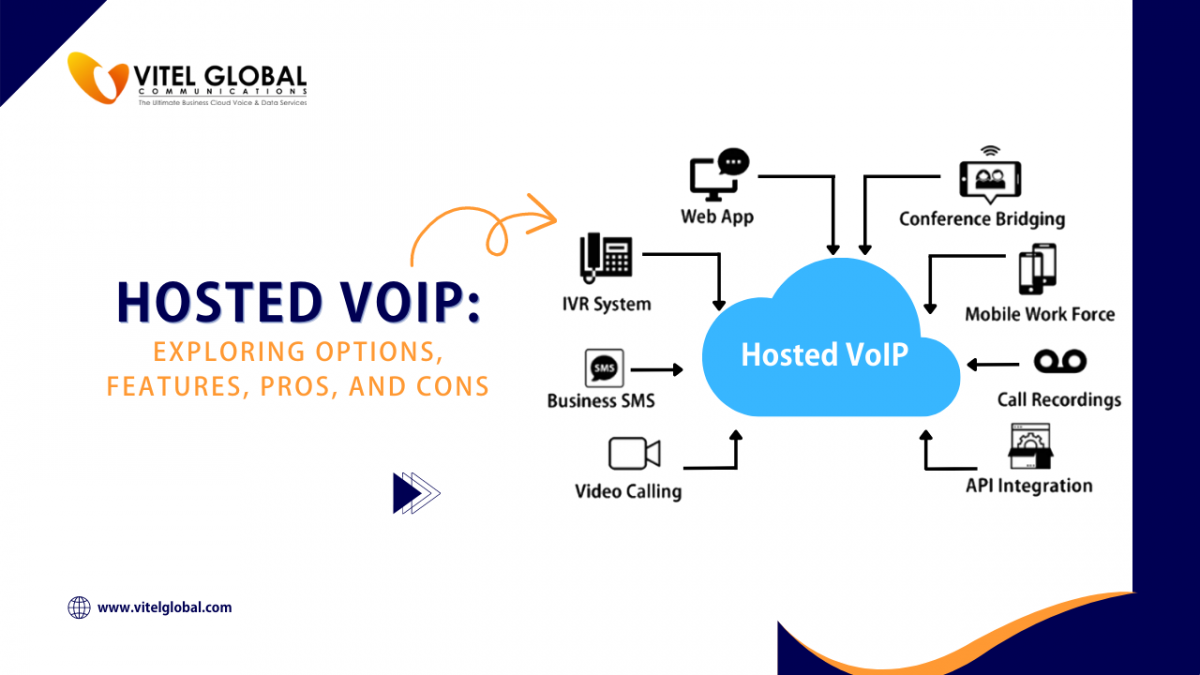

Table of Contents
A hosted VoIP phone setup gives businesses a way to manage calling through the internet instead of relying on office-bound hardware and legacy phone lines. For companies that need calling, routing, mobility, and cleaner administration without maintaining on-site phone infrastructure, that shift can make daily communication far easier to manage. It also gives teams more room to work across office, home, travel, and customer-facing environments without losing a professional business presence.
A strong hosted VoIP setup is no longer only about placing calls at a lower cost. Businesses now expect routing, voicemail, video meetings, messaging, mobile and desktop access, CRM visibility, and better support for distributed teams. Vitel Global fits that direction well because its communication stack already supports business phone systems, messaging, video conferencing, CRM integration, communication APIs, and UCaaS capabilities that help businesses work from one connected environment instead of juggling multiple disconnected tools.
What Is a Hosted VoIP Phone System?
A hosted phone system is a business calling setup that operates through the internet and is managed off-site by the provider instead of being housed inside the business office. That means the provider manages the core telephony environment while the customer uses the service through desk phones, laptops, mobile apps, browsers, or other connected devices.
In simple terms, hosted VoIP gives businesses access to a phone system without asking them to build and maintain the core system on their own premises. That reduces hardware burden, shortens setup time, and gives teams more flexibility in how they answer, transfer, route, and manage calls.
This is also why many businesses now compare hosted business phone systems with older PBX environments before making a switch. The real question is not only which one makes calls. The better question is which one supports the way the business actually works today.
Replace Legacy Phone Limits With a Smarter Hosted VoIP System
Bring calling, routing, meetings, and messaging into one Vitel Global platform.
How a Hosted Phone System Works
A hosted phone system uses VoIP to carry voice traffic through the internet. Instead of routing calls through older analog or office-bound infrastructure, the provider hosts the call environment in secure data centers and connects users through the internet.
The process usually works like this:
- The business signs up with a provider
- The provider activates the hosted phone environment
- Incoming calls reach the hosted PBX layer
- The system routes calls based on rules, users, departments, or schedules
- Outbound calls are placed from desk phones, laptops, mobile apps, or softphones
That is one of the most useful parts of a hosted VoIP service. The business does not need to maintain the whole back-end phone environment just to gain routing, voicemail, extensions, and broader call management.
Vitel Global’s product stack reflects this hosted model through cloud-based calling, smart routing, desktop and mobile access, live transcriptions, summaries, and business communication support across devices.
What Is the Difference Between VoIP and Hosted?
This is a common point of confusion.
VoIP is the method used to make calls over the internet. Hosted refers to where and by whom the system is managed.
So, VoIP is the call technology, while hosted means the provider manages the phone environment for the customer. A business may use VoIP inside different service models, though hosted VoIP solutions are usually the most attractive for companies that do not want the burden of managing the entire phone system internally.
Types of Hosted Phone Systems
Businesses usually compare two main paths when they look at hosted phone options.
Cloud-Hosted Phone System
A cloud-hosted phone system places the phone environment off-site and allows businesses to connect directly through the internet. This is often the cleaner option for companies that want less hardware, faster rollout, and simpler management.
It usually suits businesses that want:
- lower setup friction
- easier remote access
- less maintenance burden
- simpler user management
- better support for distributed teams
For many businesses, this is the stronger route because it removes the need to keep aging telephony equipment inside the office.
SIP Trunking
SIP trunking usually makes more sense for businesses that already have an on-premise PBX and want to extend or modernize it instead of replacing it outright. It allows the older PBX environment to connect through internet-based voice channels instead of traditional phone lines.
That means SIP trunking can be useful, though it is not always as light to manage as a fully hosted path. Businesses with existing infrastructure may prefer it for budget or transition reasons, while others may prefer a fuller hosted system.
Hosted PBX vs SIP Trunking
A hosted PBX setup is generally the better fit when a business wants a more complete hosted system with less in-house hardware dependency. SIP trunking is more appropriate when the business wants to keep its current PBX and update its line delivery model.
A simple way to compare them:
- Hosted PBX means the phone system itself is managed off-site
- SIP trunking means the business keeps its PBX but replaces traditional line delivery with internet-based line access
That is why businesses choosing between hosted VoIP providers often need to decide whether they want a cleaner hosted transition or a more limited upgrade path around an existing PBX.
Hosted VoIP Options at a Glance
| Option | Best Fit | Main Strength | Main Limitation |
| Cloud-Hosted Phone System | Businesses want a cleaner move away from on-site hardware | Easier rollout, simpler management, stronger remote access | Depends heavily on provider quality and internet stability |
| Hosted PBX | Businesses wanting full provider-managed telephony features | Routing, extensions, voicemail, and business controls without office PBX hardware | Less useful if a company wants to keep its current PBX setup |
| SIP Trunking | Businesses that already have an on-premise PBX | Modernizes business line delivery without replacing the PBX immediately | Still leaves more maintenance and control inside the business |
| On-Premise Phone System | Businesses with very specific internal telecom needs | Direct physical control over telephony hardware | Higher maintenance, heavier setup, less flexible for remote teams |
For many modern businesses, a hosted VoIP service is the cleaner option because it reduces hardware burden while giving teams better access across devices and locations.
Upgrade Business Calling Without Adding More Complexity
Use Vitel Global to bring hosted calling, smarter routing, and connected communication into one platform.
Who Can Benefit From a Hosted Phone System?
Hosted systems are useful across many business types, though some teams feel the value faster than others.
Remote and Hybrid Teams
Remote and hybrid teams need one communication structure that works across devices and locations. A hosted system helps users answer from office phones, laptops, or mobile devices while still presenting one business identity.
Small Businesses and Startups
Smaller businesses often do not want to spend heavily on office hardware or a complicated setup. A hosted setup allows them to get business-grade calling with a more predictable monthly cost and cleaner expansion options.
Growing Customer-Facing Teams
Sales, support, and service teams often need routing, shared numbers, call visibility, and extensions that feel far more structured than basic mobile calling. Hosted phone systems support that without forcing every communication step through one physical office.
Top Benefits of Hosted VoIP
The main appeal of hosted VoIP is not just lower cost. It is the combination of flexibility, lighter management, and stronger day-to-day communication support.
Easier Setup
A hosted phone system usually avoids the long setup path of traditional systems. Businesses can start faster because the provider handles the back-end environment.
Lower Infrastructure Burden
The business does not have to buy and maintain the same level of physical phone hardware and switching equipment as older office setups.
Better Remote Access
Users can work across mobile, desktop, and other connected devices instead of being tied to one desk phone.
More Useful Communication Features
Hosted systems usually bring access to features such as call routing, voicemail delivery, auto attendants, conferencing, analytics, and integrations that are harder to manage cleanly in older systems.
Easier Growth
When the business adds people, departments, or locations, the hosted model is usually easier to expand than a fixed office-bound system.
Vitel Global’s business phone environment reflects many of these hosted benefits through HD voice calls, routing, summaries, call forwarding, mobile and desktop access, and deeper links into messaging and CRM-connected communication.
Key Drawbacks of a Hosted Phone System
A hosted setup is strong for many businesses, though it still comes with a few practical considerations.
Internet Dependence
Call quality depends on the strength and stability of the internet connection. If connectivity is weak, voice quality can suffer.
Power and Network Reliance
If power or business internet goes down, service can be affected unless the company has backup plans or failover routing in place.
Provider Dependence
The quality of the system depends heavily on the provider’s infrastructure, uptime, support quality, and security practices.
Security Still Matters
A hosted setup can be secure, though businesses still need to choose providers with proper controls, hosting standards, and data protection practices.
Hosted Phone System Features Your Team Needs
The strength of a hosted system is not only that it moves calling into the cloud. It gives your team a more useful communication setup around the call itself.
Voicemail to Email Transcription
Voicemail still matters, though most teams do not have time to stop and listen to every message one by one. Transcription helps by turning voice messages into readable text that can be reviewed faster and stored more clearly.
For busy teams, this means:
- quicker follow-up
- less chance of missing key details
- cleaner records for internal handoff
Video Conferencing Built Into the Same Environment
A business phone platform becomes far more useful when it supports meetings, too. Teams do not always want to move into a different tool just to review a screen, walk a client through a demo, or hold an internal discussion.
Vitel Global’s video conferencing solution supports HD meetings, screen sharing, in-meeting chat, participant controls, and encrypted communication, which makes it a natural extension of a hosted phone setup rather than a separate layer of friction.
Security and Reliability
A business phone system should not create uncertainty around privacy or uptime. A good hosted system needs strong encryption, stable infrastructure, and clear continuity support.
Vitel Global’s broader company profile points to multiple carrier relationships, backup data center support, and 99.99% uptime positioning. That matters for businesses that rely on calls every day and cannot afford communication instability.
Call Recording
Call recording is useful for training, service review, sales coaching, dispute review, and internal quality checks. Businesses that want better visibility into how calls are handled usually need this built into the system instead of being added awkwardly through other tools.
Real-Time Call Analytics
Hosted systems become stronger when they give teams visibility into call behavior, not just dial tone.
Reporting can help businesses understand:
- call volumes
- missed call patterns
- response performance
- queue pressure
- activity by user or team
That kind of visibility helps managers make better staffing and communication decisions.
Auto Attendants and Routing
Auto attendants save time by directing callers to the right person or team without putting every incoming call through a live receptionist. Routing rules then decide how calls move based on department, user availability, or business hours.
Vitel Global’s hosted calling environment includes smart routing, simultaneous handling, department lines, and other business calling controls that make the system more useful than a basic hosted line.
HD Call Quality
Businesses often assume internet-based calling will sound weaker than older office systems. In practice, a properly supported hosted setup can sound cleaner than many traditional systems, provided the connection is stable and the provider’s infrastructure is strong.
Replace Office-Bound Phone Systems With a Smarter Hosted Solution
Give your team hosted calling, messaging, and meeting support through Vitel Global.
Hosted VoIP vs On-Premise Phone Systems
This is one of the key buying decisions.
An on-premise phone system gives the business more physical control over the hardware and internal setup. That can still appeal to some companies with existing telecom investment or very specific internal requirements.
A hosted setup usually appeals more to businesses that want:
- less hardware burden
- quicker deployment
- easier remote access
- simpler growth
- less maintenance responsibility
The tradeoff is that the hosted model depends more on the provider’s infrastructure and the business’s internet connection, while the on-premise model keeps more of the telephony layer inside the business itself.
For many modern teams, the hosted route feels more practical because work is no longer centered around one office and one bank of desk phones.
Hosted VoIP vs Cloud VoIP vs Hosted PBX
These terms often overlap, which is why buying decisions get messy.
- Hosted VoIP usually refers to internet-based calling managed off-site by the provider.
- Cloud VoIP is often used in a broader way for internet-delivered calling services that may support wider cloud-based access and integrations.
- Hosted PBX refers more specifically to a provider-managed PBX environment that handles business telephony features such as routing, extensions, voicemail, and auto attendants without the PBX hardware sitting in your office.
For a buyer, the practical question is not which label sounds better. It is whether the provider gives the right mix of calling, mobility, control, and connected business communication.
Choosing the Right Hosted Phone Solution
Not every provider is the right fit for every business. A hosted system should be evaluated by how well it supports real operating needs, not just by a long feature page.
When comparing hosted VoIP providers, businesses should look closely at:
- call quality and provider reliability
- mobile and desktop app quality
- routing and auto attendant controls
- recording and reporting support
- messaging and meeting support
- CRM and workflow integrations
- admin simplicity
- security posture
- support access
- room to grow as the business adds users or locations
The strongest hosted VoIP solutions are the ones that reduce friction across the whole communication flow. They should not only place calls. They should help the team work better around calls.
How Vitel Global Fits In
Vitel Global is a strong fit for businesses that want a hosted communication setup without keeping voice, messaging, meetings, and workflow visibility in separate systems.
Its broader environment supports:
- hosted business calling
- smart call routing
- call forwarding
- live transcriptions and summaries
- desktop and mobile access
- business messaging and team chat
- video conferencing
- CRM integrations
- communication APIs
- UCaaS support
That means businesses using Vitel Global are not only getting a hosted VoIP service. They are moving into a wider communication structure that supports how modern teams actually work.
Vitel Global’s phone system materials already highlight HD voice, routing, call summaries, department lines, simultaneous call handling, and cloud-based management. Its other products extend that value into meetings, messaging, and CRM-connected activity.
That is useful for companies that want one hosted communication layer rather than a scattered collection of point tools.
Is a Hosted VoIP Phone System Right for Your Business?
A hosted system is usually the right fit when your business wants stronger calling without the upkeep of on-site phone infrastructure.
It is especially useful if your team:
- works across office and remote locations
- needs better routing and user management
- wants desktop and mobile call access
- needs recordings, summaries, or analytics
- expects the system to grow as the company grows
- wants messaging, meetings, and calling closer together
For businesses that still rely heavily on fixed office hardware and have unusual internal telecom needs, an on-premise setup may still hold some appeal. But for many companies today, a hosted system is the cleaner path because it aligns better with how work and communication now happen across locations and devices.
Move to a Hosted Business Phone Setup That Works Beyond the Office
Bring calling, routing, messaging, and meetings into one Vitel Global communication system.
Frequently Asked Questions
1. What is hosted VoIP?
Hosted VoIP is a business phone setup where internet-based calling is managed off-site by the provider rather than through phone hardware maintained inside the business office.
2. What is the difference between hosted VoIP and hosted PBX?
A hosted PBX usually refers to the provider-managed PBX layer that controls extensions, routing, voicemail, and business telephony features. Hosted VoIP refers more broadly to internet-based calling delivered as a hosted service.
3. Are hosted business phone systems good for small businesses?
Yes. Hosted business phone systems often work well for small businesses because they reduce hardware burden, support faster setup, and allow companies to scale without replacing office infrastructure.
4. Do hosted VoIP providers support remote teams?
Yes. One of the biggest reasons businesses choose hosted VoIP providers is that users can make and receive business calls across desktop, laptop, and mobile devices instead of being tied to one office phone.
5. Is a hosted VoIP service secure?
A strong hosted VoIP service should support encryption, stable infrastructure, and protected data handling. Security still depends on the provider and how well the business manages access and internal controls.
6. Can hosted VoIP solutions integrate with CRM systems?
Many hosted VoIP solutions can connect with CRM tools and other business systems. Vitel Global, for example, supports CRM integrations across major platforms, which helps keep communication and customer context closer together.
Published: March 28th, 2026
Subscribe to Our Latest Updates
Get monthly product and feature updates, the latest industry news, and more!