



AI Call Answering for Dental Clinics: Never Miss a Patient Call
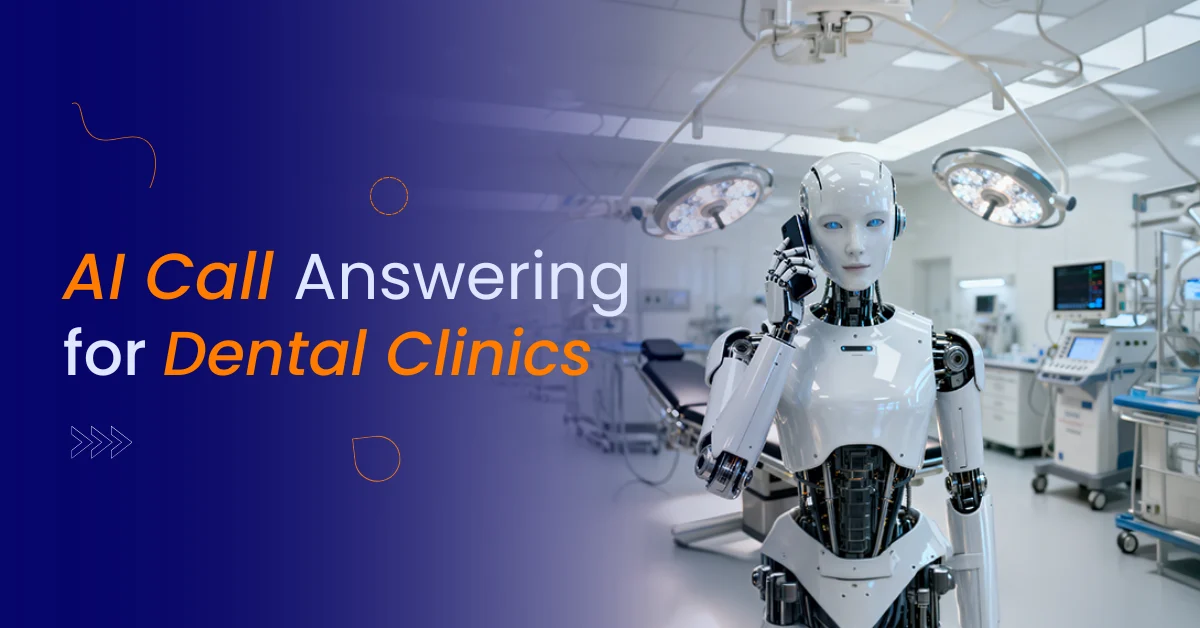

Table of Contents
A strong dental answering service is no longer a nice add-on for busy practices. It has become a direct part of how clinics protect revenue, reduce missed opportunities, and keep patient communication consistent. An ai dental receptionist helps dental teams answer more calls, manage routine requests, support scheduling, and stay responsive even when the front desk is already fully occupied with in-office care.
For many dental clinics, the issue is not a lack of demand.
It is the gap between patient intent and front-desk availability. A new patient may call during a hygiene rush. An existing patient may try to reschedule after business hours. A parent may want to confirm an appointment while the receptionist is helping someone at check-in. When those moments are missed, the clinic loses more than one conversation.
It loses trust, convenience, and often the booking itself.
That is why AI-supported call handling is gaining traction across dental offices in the United States. The right system does not just pick up the phone. It supports scheduling flow, protects the patient experience, and gives staff room to focus on care delivery instead of constant interruption.
Why AI Call Answering for Dental Clinics Matters More Than Ever
Dental clinics run on timing. Appointments are tightly scheduled, treatment chairs turn over quickly, and front-desk teams are expected to manage a constant stream of calls, confirmations, insurance questions, and patient arrivals at the same time. In that environment, missed calls are almost guaranteed unless the clinic has another layer of support.
Patients do not always call when the office is calm. They call before work, during lunch breaks, after school, late in the day, and after hours. They call when they need a cleaning, when a crown feels loose, when a child has tooth pain, or when they finally decide to book the cosmetic consultation they have postponed for months. If no one answers, many of them do not try again.
AI call answering helps close that gap. It gives clinics a way to stay available without stretching the front desk beyond reason. Instead of sending callers straight to voicemail, the clinic can give them a guided response, capture the reason for the call, and move them toward scheduling or the right next step.
The Real Cost of Missed Calls in a Dental Practice
Most dental clinics already know missed calls are a problem. What often gets overlooked is how many business outcomes are tied to that one moment.
A missed call can mean a lost new-patient booking. It can mean a delayed response to a patient who needs to move an appointment. It can mean one more frustrated person telling a friend that the office is hard to reach. Over time, those small losses add up.
The financial side is obvious. Empty chairs hurt production. No-show gaps become harder to refill. Lead sources become less efficient when inquiries are not handled quickly. But the operational side matters just as much. Front-desk teams become reactive. Schedules stay messy longer than they should. Staff spend more time returning calls than resolving things in the moment.
A dependable dental answering service reduces that pressure. It catches the calls that would otherwise slip through and gives the clinic a more stable communication rhythm across the day.
What Is an AI Dental Receptionist?
An ai dental receptionist is a digital communication assistant built to handle common front-desk interactions through voice and, in many cases, text. It is designed to answer incoming calls, understand what the patient needs, and guide the conversation based on that request.
In a dental setting, that usually includes appointment booking, appointment changes, hours and location details, basic service questions, and routing urgent concerns to the appropriate contact path. A stronger system can also support text follow-ups, confirmation messages, and after-hours inquiry capture.
The point is not to remove every human touch from the front office. The point is to stop wasting skilled staff time on repetitive call handling that can be managed accurately through a structured system. When used well, AI call answering supports the team instead of competing with it.
How a Dental Answering Service Supports Daily Clinic Operations
The benefit of a dental answering service becomes much clearer when you look at how clinics actually operate hour by hour.
Early in the morning, patients call to confirm where they need to park or ask whether they need to arrive early for paperwork. Midday, hygiene checks and treatment discussions pull reception staff away from phones. In the afternoon, reschedules and insurance questions pile up while the front desk is also checking out patients and collecting balances.
In those moments, the clinic does not need more noise. It needs structure.
A well-configured AI answering flow can handle the most common categories of incoming requests without delay. New-patient callers can be guided toward booking. Existing patients can reschedule without waiting on hold. Routine questions can be handled instantly. Urgent issues can be flagged and moved to the right path.
That shift does two things at once. It improves the patient experience, and it protects the focus of the in-office team.
Core Features Clinics Should Expect From AI Call Answering
Not every platform is built for dental use. A generic answering setup may pick up the call, but that alone does not make it useful. Dental clinics need features that actually reflect the way a practice works.
1. 24/7 call coverage
Patients do not stop calling when the office closes. They call at night, on weekends, and during holiday breaks. A stronger ai dental receptionist gives the clinic continuous coverage so appointment interest does not disappear into a voicemail box.
2. Appointment booking and rescheduling
Scheduling is one of the main reasons patients call. If the system cannot support bookings or appointment changes clearly, it will create more cleanup work than value. Clinics need accurate, guided appointment handling tied to real availability.
3. Answers to routine patient questions
Many calls are simple. Patients want office hours, location details, accepted insurance direction, or basic information about a service. Those conversations should not require staff to stop what they are doing every time.
4. Emergency routing
A system used in dental communication must help distinguish routine requests from urgent concerns. A caller with severe pain should not move through the same path as someone checking business hours.
5. Multi-location routing
For group practices, callers often reach the wrong office first. The system should help move them smoothly to the correct location or team without creating confusion.
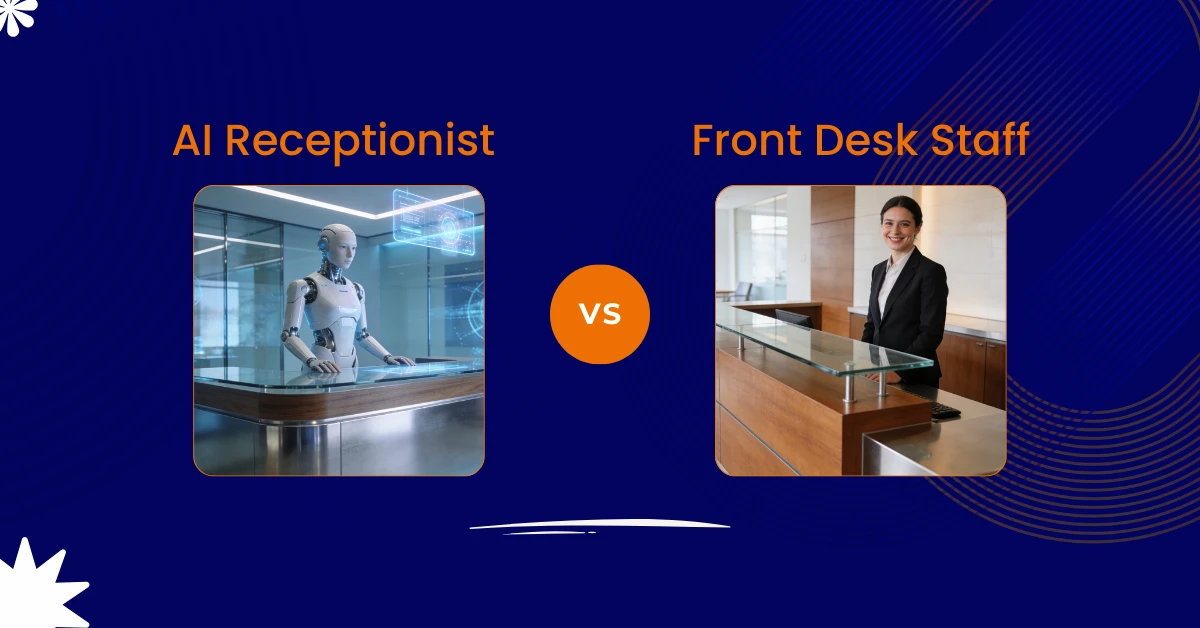
AI Dental Receptionist vs Traditional Dental Call Handling
| Communication Factor | Traditional Dental Call Handling | AI Dental Receptionist |
| Call Availability | Limited to office hours or staff availability | Available 24/7 including evenings and weekends |
| Missed Call Recovery | Calls often go to voicemail | Calls are answered instantly |
| Appointment Scheduling | Requires manual staff handling | Automated booking and rescheduling support |
| Front Desk Workload | High call interruption throughout the day | Reduced call pressure for staff |
| Patient Response Speed | Delayed during busy hours | Immediate response for most requests |
| Multi-Location Coordination | Often handled manually | Automated routing based on clinic location |
| Patient Experience | Depends on staff availability | Consistent communication experience |
For many dental clinics, the goal is not to replace human interaction. The goal is to reduce the number of patient conversations that never reach the clinic in the first place.
AI answering systems help clinics capture patient intent in real time while allowing staff members to stay focused on treatment coordination and patient care.
Scheduling Integration Changes Everything
AI answering becomes much more useful when it is connected to the scheduling environment the clinic already relies on. Without that connection, callers may receive generic guidance but still need staff to complete the booking manually. That slows everything down.
With scheduling integration, the system can do far more. It can reflect actual availability, help patients select times, support reschedules, and reduce the back-and-forth that typically clogs the front desk. That matters even more after hours, when patients are ready to book but no one is physically at the desk.
For dental clinics, this is often the difference between a communication tool that sounds interesting and one that actually improves operations.
AI Call Answering for Multi-Location Dental Groups
Single-office clinics feel call pressure. Multi-location groups feel it at scale.
As a practice expands, the communication load becomes harder to manage. Different providers may work from different locations. Some offices may handle specialty treatments while others focus on hygiene and general care. Patients often do not know which office they need. They just call the number they have.
An AI-supported dental answering service helps bring order to that complexity. It can identify which office the patient is trying to reach, guide the caller to the correct destination, and keep the experience consistent across the group. That consistency matters. Patients should not feel like every location belongs to a different company.
For group dental organizations, centralized call logic also makes reporting stronger. Leaders can see patterns in missed opportunities, booking demand, peak call times, and communication gaps across locations rather than relying on guesswork.
Why More Dental Practices Are Moving Toward AI Reception Support
The shift is not happening because clinics want flashy technology. It is happening because the front office already has too much to carry.
Dental teams are expected to answer calls, verify insurance details, manage check-ins, coordinate treatment discussions, handle balances, and support schedule changes, often at the same time. Adding more staff is not always realistic. Extending hours does not solve the daytime load. Traditional overflow systems often lack the flexibility clinics need.
AI reception support gives practices another option. It helps them stay responsive without making the front desk responsible for every incoming interaction in real time. That is especially attractive for clinics trying to grow, improve response quality, or reduce the number of opportunities lost to voicemail and long hold times.
Conclusion
Dental clinics operate in an environment where communication speed directly influences patient trust, appointment bookings, and practice growth. When patient calls go unanswered, the impact extends beyond a single missed conversation. It affects scheduling efficiency, patient satisfaction, and the overall perception of the clinic.
AI call answering provides a practical way for dental practices to strengthen their communication infrastructure without expanding administrative overhead. By capturing patient inquiries instantly, supporting scheduling requests, and guiding routine conversations, an ai dental receptionist helps clinics maintain responsiveness throughout the day.
For growing dental practices and multi-location organizations, this approach also creates a more scalable communication system. Instead of relying entirely on front desk availability, clinics can combine human support with intelligent call handling to maintain consistent patient access. When implemented correctly, AI call answering strengthens the front office workflow and support.
Why Vitel Global Fits This Need
Dental clinics that start looking into AI call answering are usually trying to solve a practical problem. They want fewer missed calls. They want stronger patient communication. They want a front office that feels less overwhelmed. They want better coverage without turning operations upside down.
This is where Vitel Global fits naturally.
Vitel Global supports clinics with a connected business communication environment built for call handling, messaging, routing, and team responsiveness. Instead of relying on disconnected tools, dental teams can create a more organized communication process around how patients actually reach the practice.
For dental clinics, that can mean:
A smarter call path for new patients, existing patients, and urgent concerns
Business texting support for reminders, confirmations, and follow-up communication
Call routing rules that reduce front-desk congestion during peak hours
Mobile and desktop flexibility for teams working across operatories, offices, or remote admin support
Better visibility into missed-call patterns and communication activity
That is where buyer intent becomes very clear. A clinic is no longer reading just to learn what AI answering is. It is starting to evaluate which provider can support growth, reduce communication friction, and make the front office more efficient. Vitel Global belongs in that evaluation because it supports the communication layer dental clinics depend on every day.
Capture Every Patient Call Without Overloading Your Front Desk
See how AI call answering and a dental answering service can help your practice manage calls, bookings, and patient communication more efficiently.
Frequently Asked Questions
1. How does an AI dental receptionist work in a real clinic setting?
An ai dental receptionist answers patient calls, identifies the reason for the call, and supports actions such as booking, rescheduling, answering routine questions, and routing urgent concerns. In most clinics, it works alongside the front desk and helps reduce repetitive call pressure.
2. Is a dental answering service useful for smaller practices?
Yes. Smaller practices often feel the impact of missed calls more sharply because a few unanswered inquiries can directly affect production. A dental answering service helps smaller clinics capture more calls without adding full-time staffing immediately.
3. Can AI call answering help after business hours?
Yes. After-hours communication is one of the clearest use cases. Patients can request appointments, ask basic questions, and start conversations when the office is closed instead of waiting until the next business day.
4. Can these systems support more than one clinic location?
Yes. A stronger dental answering service can route calls by location, service type, or provider logic. This is useful for group practices that need a more consistent communication experience across offices.
5. What should a clinic look for before choosing a system?
Clinics should look for clear dental workflow support, strong scheduling integration, secure communication handling, flexible routing, and a setup that actually reduces work for the front desk rather than creating more manual follow-up.
Published: March 12th, 2026
Subscribe to Our Latest Updates
Get monthly product and feature updates, the latest industry news, and more!