



AI Receptionist vs Front Desk Staff (Cost Comparison)
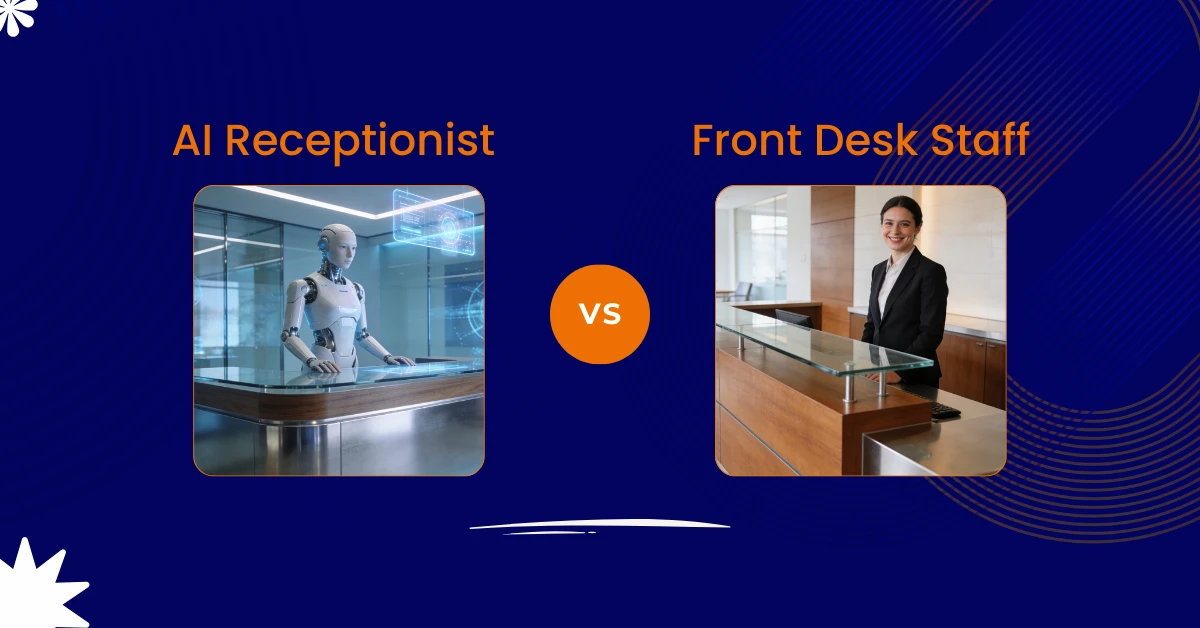

Table of Contents
Every growing business reaches a point where front desk staffing becomes expensive.
The question is simple.
Should you hire a human receptionist or switch to an AI receptionist?
At Vitel Global, we help businesses modernize communication using AI-powered solutions that reduce missed calls, lower hidden costs, and improve customer satisfaction. This guide provides a complete AI receptionist vs front desk staff cost comparison, including salary breakdown, scalability, compliance risks, ROI math, and real-world examples.
If you are evaluating a full-time receptionist, a virtual receptionist service, or an advanced AI front desk, this article gives you a clear answer.
What Is an AI Receptionist?
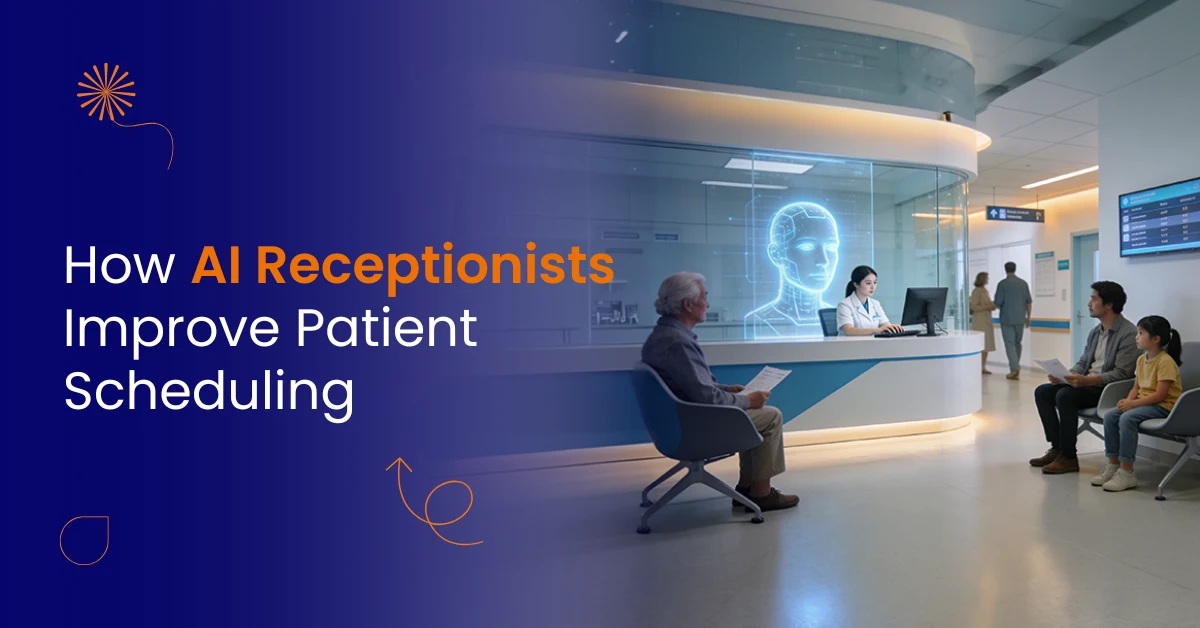
An AI receptionist is an automated virtual front desk system that answers calls, books appointments, routes inquiries, and handles customer communication using artificial intelligence without requiring full-time staffing.
Is an AI Receptionist Cheaper Than a Human Receptionist?
Yes. A human receptionist typically costs $3,500–$5,000 per month when including base salary, payroll taxes, health insurance, training costs, and office space. An AI receptionist service usually operates on flat rate pricing between $200–$800 per month with unlimited simultaneous calls and no turnover risk.
Over five years, the cost difference can exceed $200,000.
7 Key Cost Differences
- Base salary increases yearly with raises
- Payroll taxes increase the employer’s burden
- Health insurance adds significant overhead
- Office space creates operational expenses
- Sick days reduce availability during business hours
- Turnover costs require rehiring and retraining
- AI offers predictable flat-rate pricing
Salary vs AI Cost Breakdown Table
| Expense Category | Human Receptionist (Full-Time Employee) | AI Receptionist Service |
| Base Salary | $35,000–$45,000 annually | Not applicable |
| Payroll Taxes | 7.65%+ employer contribution | Included |
| Health Insurance | $4,000–$8,000 annually | Not required |
| Training Costs | Ongoing onboarding required | Minimal initial setup |
| Office Space | Desk, utilities, and equipment required | None |
| Sick Days | Paid leave required | Real-time availability |
| Turnover Costs | Recruiting and rehiring expenses | None |
| Monthly Cost | $3,500–$5,000+ | $200–$800 flat rate |
| Call Handling | One call at a time | Unlimited simultaneous calls |
| After Hours | Limited business hours | 24/7 support |
According to the U.S. Bureau of Labor Statistics, the median annual wage for receptionists exceeds $35,000 — before taxes, benefits, and overhead are added.
The Small Business Administration reports that labor costs are among the largest fixed expenses for small businesses.
These numbers matter in any cost comparison.
The True Cost of a Human Receptionist
Many business owners only calculate base salary.
That is incomplete.
Direct Costs of a Full-Time Employee
- Base salary increases with tenure and performance
- Payroll taxes increase the employer’s financial burden
- Health insurance raises total compensation costs
- Office space requires furniture and utilities
- Training costs recur with each new hire
Hidden Costs Often Ignored
- Turnover risk disrupts business operations
- Sick days reduce call handling capacity
- Busy periods increase overtime expenses
- Missed calls reduce average customer value
- Performance inconsistency impacts customer experience
This is why receptionist services cost more than expected.
AI Receptionist Cost Structure Explained
An AI receptionist service offers predictable pricing.
What AI Receptionist Pricing Typically Includes
- Flat rate pricing with a transparent monthly fee
- Unlimited calls without per-minute charges
- Unlimited simultaneous calls during busy periods
- Appointment scheduling is built directly into the AI system
- Integration with the existing phone system
- Real-time availability beyond business hours
There are no payroll taxes.
No health insurance.
No turnover costs.
No sick days.
The monthly cost remains stable.
ROI Math Example (Revenue Recovery Model)
Let us calculate the impact.
Assume:
- 12 missed calls per day
- 50% conversion rate
- Average customer value is $250
6 lost customers daily × $250 = $1,500 lost daily revenue.
That equals $45,000 per month in missed opportunity.
AI receptionists improve ROI by handling unlimited simultaneous calls.
Even small reductions in missed calls create significant cost savings.
What Happens When You Miss Just One Call?
One missed call can mean:
- A lost sale
- A lost client
- A lost referral
- A negative review
- A competitor gaining your customer
5-Year Cost Projection: Long-Term Financial Impact
Most businesses compare the monthly cost.
Smart businesses compare long-term financial impact.
Let’s analyze a 5-year projection.
Scenario: Full-Time Receptionist
Assume:
- Base salary: $40,000 annually
- Payroll taxes: 10%
- Health insurance: $6,000 annually
- Turnover every 2.5 years
Yearly cost breakdown:
- Salary: $40,000
- Payroll taxes: $4,000
- Health insurance: $6,000
- Miscellaneous training and onboarding: $3,000
Total annual cost: $53,000
5-year total (excluding inflation):
$53,000 × 5 = $265,000
This does not include:
- Office space
- Equipment
- Over time, during busy periods
- Revenue lost from missed calls
Scenario: AI Receptionist Service
Assume:
- Monthly fee: $600
- Initial setup: $1,000
Annual cost:
$600 × 12 = $7,200
Plus setup year one: $1,000
5-year cost projection:
Year 1: $8,200
Years 2–5: $7,200 × 4 = $28,800
Total 5-year cost: $37,000
5-Year Cost Difference
Human receptionist (5 years): ~$265,000
AI receptionist (5 years): ~$37,000
Difference: ~$228,000
This is not a small margin.
For many small businesses, that capital can:
- Fund marketing expansion
- Upgrade technology infrastructure
- Support business growth initiatives
- Improve customer experience systems
Long-term cost comparison changes the decision dramatically.
Scalability: AI vs Human Staff
Scalability determines long-term business growth.
Human Receptionist Limitations
- Handles multiple calls sequentially only
- Call volume spikes create longer hold times
- Hiring additional staff increases the monthly cost
- Training delays reduce operational efficiency
- Fatigue affects customer interactions
AI Front Desk Advantages
- Handles unlimited simultaneous calls instantly
- Scales during seasonal busy periods automatically
- Maintains consistent performance across all hours
- Supports business growth without hiring
- Provides after-hours support without overtime
This structural difference changes cost dynamics.
Consistency and Customer Satisfaction
Customer satisfaction depends on speed and clarity.
Human Receptionist Strengths
- Human touch builds emotional connection
- Emotional intelligence improves sensitive interactions
- Human judgment resolves complex issues
- Personal tone enhances relationship building
- Flexible communication adapts to context
AI Receptionist Strengths
- Responds instantly to routine inquiries
- Maintains consistent tone across all calls
- Avoids mood swings or fatigue
- Follows scripts precisely for compliance
- Ensures real-time availability always
AI falls short primarily in emotionally sensitive situations.
For many business owners, consistency matters more.
Compliance and Risk Comparison
Compliance risk can be costly.
Risks with In-House Staff
- Verbal miscommunication increases liability exposure
- Data entry errors create compliance gaps
- Inconsistent documentation reduces audit readiness
- Training lapses increase regulatory risk
- Human judgment sometimes varies under pressure
AI System Compliance Benefits
- Call logs are stored automatically for auditing
- Scripts remain consistent across interactions
- Automated appointment scheduling reduces errors
- Secure data handling improves privacy standards
- Structured reporting strengthens compliance
For regulated industries, structure protects revenue.
Industry Use Case Comparison
Different industries face different receptionist demands.
Here is how AI vs human performs in real-world settings.
Healthcare Clinic
Human Receptionist Challenges
- High call volume during business hours
- Insurance questions create long hold times
- Sick days disrupt appointment scheduling
- After-hours calls go unanswered
AI Receptionist Advantages
- Handles multiple calls during peak times
- Automates appointment scheduling accurately
- Provides after-hours patient information
- Reduces missed calls and lost revenue
In healthcare, reducing missed calls improves patient retention.
Law Firm
Human Staff Strengths
- Emotional intelligence for sensitive cases
- Human judgment during urgent client matters
- Personalized intake conversations
AI Front Desk Strengths
- Screens routine inquiries automatically
- Routes complex issues to attorneys
- Logs calls for compliance documentation
- Ensures real-time availability 24/7
A hybrid approach often works best for legal firms.
Home Services Business (HVAC, Plumbing, Electrical)
Human Receptionist Limitations
- Busy periods create call overload
- Technicians depend on fast scheduling
- After-hours emergencies go unanswered
- Overtime increases payroll expenses
AI Receptionist Benefits
- Captures emergency calls instantly
- Books appointments without delays
- Handles unlimited simultaneous calls
- Prevents revenue loss from missed calls
In home services, speed equals revenue.
SaaS or Tech Company
In-House Staff Challenges
- Routine product inquiries overwhelm the front desk
- Demo scheduling requires a structured intake
- Global customers call outside business hours
- Turnover risk disrupts onboarding consistency
AI Agents Benefits
- Automates demo booking and qualification
- Provides product FAQs instantly
- Operates across time zones seamlessly
- Scales with global business growth
Technology companies benefit from automation.
When AI Makes Financial Sense
AI receptionist services are ideal when:
- Call volume fluctuates during busy periods
- Business hours extend beyond traditional schedules
- Small businesses require a predictable monthly cost
- Routine tasks dominate daily customer interactions
- Budget constraints limit hiring a full-time employee
For many business owners, this shift is just the beginning.
When a Human Receptionist Is Still Necessary
A traditional receptionist may remain valuable when:
- Business depends heavily on emotional intelligence
- Walk-in traffic requires physical presence
- Complex problem-solving is required daily
- Brand prioritizes high touch customer experience
- Human judgment is critical in sensitive situations
This is not a simple AI vs human decision.
It is about aligning communication strategy with business goals.
Hybrid Approach: Balanced Cost Strategy
Many companies choose a hybrid approach.
AI handles:
- Routine calls and appointment scheduling
- After hours and overflow call volume
- Multiple calls during peak busy periods
- Automated answering service for inquiries
- First-line customer interactions
Human staff focus on:
- Complex issues requiring emotional intelligence
- Escalated complaints or sensitive cases
- Relationship building with high-value clients
- Strategic support for business growth activities
- Advanced decision-making scenarios
This model maximizes cost savings and customer experience.
Final Thoughts
The AI receptionist vs front desk staff cost comparison is not simply about replacing human staff. It is about understanding the true cost, scalability, compliance risk, and long-term business impact.
At Vitel Global, our AI-powered communication platform helps organizations reduce hidden costs, improve real-time availability, and eliminate missed calls that limit growth. Whether you choose full AI automation or a hybrid approach, the goal remains clear: protect revenue, improve customer experience, and support business growth with intelligent AI technology.
Businesses that delay automation often pay for it twice — once in staffing costs, and again in missed revenue. Intelligent communication is no longer optional. It is a structural competitive advantage that separates growing businesses from stagnant ones.
Compare AI vs Human Reception
Explore cost breakdown, scalability advantages, and revenue recovery strategies for modern businesses.
Frequently Asked Questions
1. Is an AI receptionist truly lower than a human receptionist?
Yes. When including payroll taxes, health insurance, office space, and turnover costs, the actual cost of a full-time receptionist often exceeds $4,000 monthly. AI receptionist pricing usually operates at a lower, predictable monthly fee with unlimited calls.
2. Can AI handle complex problem-solving like human staff?
AI agents handle routine inquiries and appointment scheduling effectively. However, AI falls short in emotional intelligence and in complex issues requiring human judgment. Many businesses implement a hybrid approach for balanced performance and customer experience.
3. Does AI improve customer satisfaction?
AI improves response speed and reduces missed calls. Faster responses increase customer satisfaction. However, certain customer interactions require human touch. Combining AI efficiency with human oversight often produces optimal customer experience results.
4. What are the hidden costs of a traditional receptionist?
Hidden costs include turnover risk, rehiring expenses, overtime during busy periods, sick days, training costs, and performance variability. These indirect expenses significantly increase the true cost beyond base salary.
5. How does AI support business growth long-term?
AI receptionist services scale instantly with call volume, reduce missed calls, and provide after-hours availability. This increases revenue capture and lowers operational expenses, allowing businesses to grow without increasing headcount.
Published: February 17th, 2026
Subscribe to Our Latest Updates
Get monthly product and feature updates, the latest industry news, and more!