



How AI Receptionists Improve Patient Scheduling
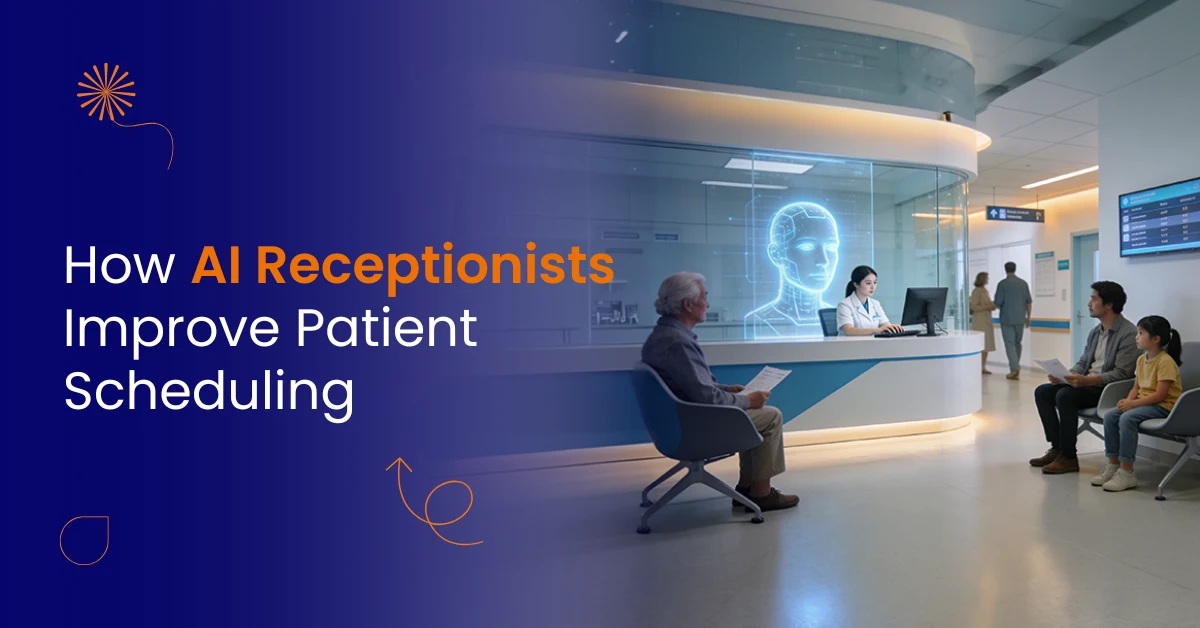

Table of Contents
AI receptionists improve patient scheduling by answering calls instantly, automating appointment booking, sending reminders, reducing missed appointments, integrating with electronic health records, and managing high call volumes without increasing staff workload.
Modern healthcare practices are under pressure.
Call volumes increase every year.
Patients expect faster responses.
Front desk staff manage overwhelming administrative tasks.
Missed appointments quietly reduce revenue.
This is why healthcare providers are asking:
How do AI receptionists improve patient scheduling?
At Vitel Global, we work with medical practices, dental practices, and multi-location healthcare providers who need smarter systems. This guide explains scheduling delays, no-shows, automation benefits, and measurable efficiency metrics — clearly and practically.
Quick Summary: How AI Improves Scheduling
• Answers every patient call instantly
• Automates appointment booking
• Sends reminders to reduce no-shows
• Integrates with EHR systems
• Operates 24/7 without staffing increase
The Hidden Scheduling Crisis in Modern Healthcare
Most healthcare practices believe scheduling problems are staffing issues.
In reality, they are system design problems.
Scheduling delays usually occur because:
- High call volumes overwhelm front desk staff
- Peak hours exceed human handling capacity
- Manual booking increases human error risks
- Repetitive tasks consume valuable time
- Business hours limit patient access
When patients cannot reach the front desk, they:
- Hang up and call another provider
- Cancel appointments without notice
- Delay needed medical care
- Leave negative online reviews
- Lose trust in the practice
This damages patient relationships and weakens patient loyalty.
According to MGMA and healthcare operations data:
- Average no-show rate ranges from 18–30%
- Missed appointments cost billions annually
- 67% of patients prefer digital scheduling
- Long wait times reduce patient satisfaction significantly
- Poor patient communication drives switching behavior
Sources: MGMA, HIMSS, CDC healthcare reports.
These numbers show why scheduling systems must evolve.
What Is an AI Receptionist in Healthcare?
An AI receptionist is an artificial intelligence-powered virtual front desk that answers patient calls, schedules appointments, updates electronic health records, and manages patient communication automatically using natural language processing and machine learning.
Unlike traditional answering services, modern AI receptionists work continuously.
They integrate with:
- Electronic health records are securely
- Existing systems already in use
- Phone systems across multiple locations
- Automated appointment scheduling workflows
- Analytics dashboards tracking call outcomes
This creates operational reliability without expanding headcount.
How AI Receptionists Improve Patient Scheduling: The Core Mechanisms
Let us examine this in structured detail.
1. Eliminating Missed Calls Completely
Missed calls equal lost revenue.
An AI receptionist system answers instantly.
It can:
- Handle high call volumes simultaneously
- Respond during peak hours consistently
- Capture patient information accurately
- Log call outcomes for analysis
- Route urgent calls appropriately
No voicemail gaps.
No unanswered patient calls.
This directly improves patient access.
2. Automated Appointment Scheduling with Rules
Manual scheduling invites human error.
AI systems use predefined scheduling rules.
They:
- Check provider availability instantly
- Prevent double bookings automatically
- Manage multiple providers efficiently
- Balance schedules across locations
- Update electronic health records immediately
This improves scheduling appointment precision dramatically.
3. Reducing Missed Appointments Through Automation
Missed appointments disrupt workflow and revenue.
AI receptionist systems send:
- Automated reminders before patient appointments
- SMS confirmations instantly
- Rescheduling options seamlessly
- Easy ways to cancel appointments correctly
- Follow-up alerts for non-confirmations
Studies show automated reminders reduce missed appointments by up to 30%.
That protects patient care continuity.
4. Managing Administrative Tasks at Scale
Front desk operations collapse under an administrative burden.
AI tools manage routine tasks such as:
- Routine inquiries about clinic hours
- Prescription refill requests routing
- Insurance verification confirmations
- New patient onboarding instructions
- Basic patient queries about services
Freeing human staff increases job satisfaction and reduces burnout.
Efficiency Metrics That Matter
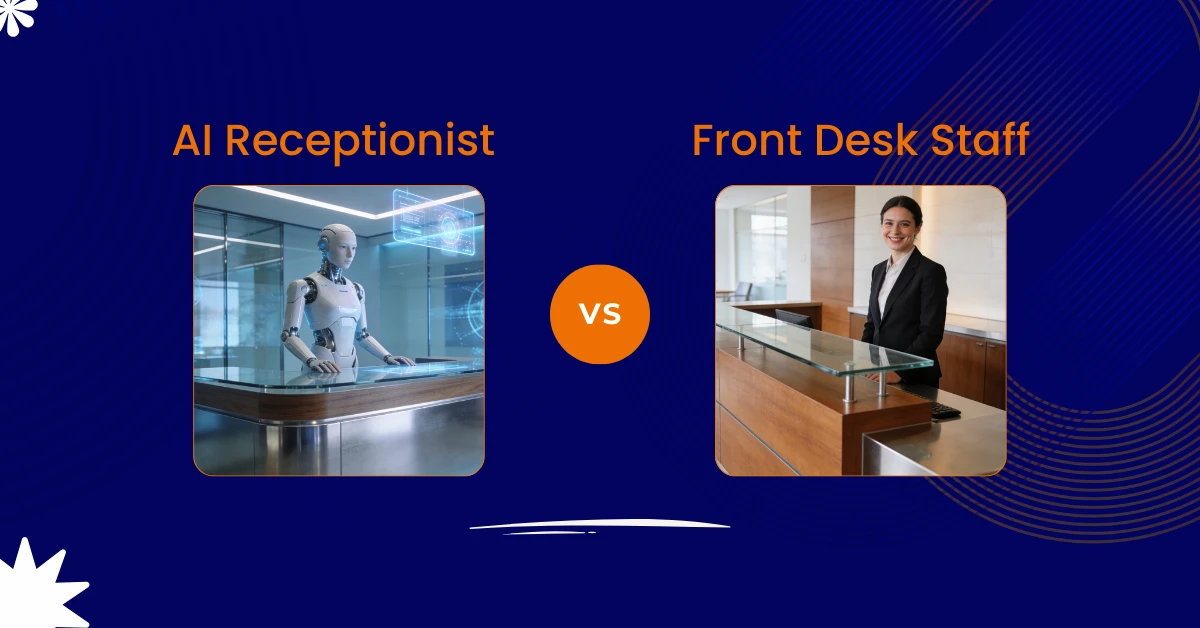
| Operational Factor | Human Receptionists | AI Receptionist System |
| Response Time | 2–5 minutes average | Instant |
| After-Hours Coverage | Limited to business hours | 24/7 reliable service |
| Missed Calls | Frequent during peak hours | Near zero |
| Administrative Tasks | High manual workload | Automated systems |
| Scheduling Accuracy | Prone to human error | Rule-based precision |
| Data Updates | Manual entry required | Auto-sync with EHR |
This shows clearly how AI receptionists improve patient scheduling efficiency.
Revenue Impact: A Clear Calculation
Consider this simple example.
If your practice:
- Misses 12 patient calls daily
- Converts 60% into appointments
- Average visit equals $180
12 × 60% × $180 = $1,296 daily revenue risk
Over one month:
$1,296 × 22 days = $28,512 potential lost revenue
An AI front desk reduces this risk significantly.
When evaluating AI receptionist cost compared to human receptionists, automation often produces a stronger ROI over time.
What Would This Mean for Your Practice?
Whether you manage 2 providers or 20, missed appointment recovery directly increases monthly revenue.
Even a 20% reduction in missed calls can significantly improve patient retention and scheduling efficiency.
See Your Practice’s Potential ROI
How AI Receptionists Improve Patient Experience
Patient experience improves when:
- Calls are answered immediately
- Scheduling appointments feels simple
- Wait times are reduced
- Communication remains clear
- Follow-ups are automated
Patients no longer complain about:
- Long hold times
- Confusing booking processes
- Delayed callbacks
- Poor communication clarity
- Missed reminder notifications
This increases patient satisfaction and improves patient loyalty.
AI Receptionists Work Alongside Human Staff
Automation does not remove the human touch.
Instead, it creates balance.
AI handles repetitive tasks.
Human staff handles emotional complexity.
This desk model improves front desk operations.
Healthcare providers report:
- Reduced administrative burden
- Higher staff morale
- Improved call outcomes
- Better scheduling accuracy
- Continuous improvement insights
Human expertise remains essential for sensitive interactions.
Why Healthcare Providers Choose Vitel Global
Unlike generic automation tools, Vitel Global:
• Integrates directly with existing EHR systems
• Supports multi-location healthcare providers
• Maintains HIPAA-aligned communication workflows
• Provides measurable efficiency dashboards
• Scales without increasing staffing costs
Addressing Common Concerns About AI Systems
Is Patient Data Safe?
Modern AI receptionist systems maintain HIPAA compliance standards.
AI receptionist systems must operate within strict HIPAA compliance guidelines defined by the U.S. Department of Health & Human Services. These regulations require encryption, secure handling of patient data, access control protocols, and proper audit logging to ensure protected health information remains confidential during patient communication and automated appointment scheduling.
They:
- Encrypt patient data securely
- Protect electronic health records
- Secure phone calls automatically
- Restrict access appropriately
- Maintain audit logs consistently
Patient information remains protected.
Can AI Handle Urgent Calls?
Yes.
Natural language processing detects urgency.
AI systems:
- Identify emergency language patterns
- Escalate urgent calls immediately
- Route complex cases to human staff
- Maintain clear communication
- Protect patient safety consistently
AI supports patient care responsibly.
AI Receptionists in Dental Practices and Multi-Location Clinics
Dental practices often operate in tightly scheduled environments.
AI receptionist systems:
- Manage appointment-heavy calendars efficiently
- Balance providers across multiple locations
- Reduce missed appointments significantly
- Improve front desk performance
- Increase reliable service consistency
Healthcare practices scaling across regions benefit from automation.
Traditional Answering Services vs AI Receptionist System
Traditional answering services only take messages.
AI receptionist systems:
- Complete automated appointment scheduling
- Update electronic health records instantly
- Follow structured scheduling rules precisely
- Provide conversational AI interactions naturally
- Store structured patient information securely
This is a shift from passive recording to active automation.
Signs Your Practice Needs an AI Front Desk
You may benefit from automation if:
- Patients complain about long wait times
- High call volumes overwhelm staff
- Missed calls happen daily
- Administrative tasks delay service
- Scheduling errors increase frequently
These signals indicate system strain.
The Role of Machine Learning in Continuous Improvement
Machine learning enables smarter performance over time.
AI systems analyze:
- Call patterns during peak hours
- Frequent patient queries
- Appointment cancellation trends
- Scheduling gaps and inefficiencies
- Patient feedback patterns
This allows continuous improvement of front desk operations.
Why Modern Healthcare Requires Automation
Modern healthcare practices face rising expectations.
Patients expect:
- Immediate patient access
- Flexible scheduling appointments
- Digital-first communication
- Reliable reminders
- Clear communication channels
Artificial intelligence supports these expectations without increasing overhead.
Final Thoughts
Understanding how AI receptionists improve patient scheduling allows healthcare providers to move from reactive operations to structured efficiency.
From reducing missed calls to automating appointment scheduling and minimizing administrative burden, AI systems deliver measurable improvements in patient experience and operational reliability.
At Vitel Global, we design AI receptionist solutions that integrate seamlessly with electronic health records, protect patient data, and strengthen patient communication across modern healthcare practices.
The future of patient scheduling is intelligent.
The future of modern healthcare is automated.
And Vitel Global helps you lead that transformation.
Get an AI Scheduling Setup
Vitel Global delivers secure, scalable AI receptionist solutions built for modern healthcare providers seeking measurable efficiency and improved patient satisfaction.
Frequently Asked Questions
1. How do AI receptionists improve patient scheduling accuracy?
AI receptionists improve patient scheduling accuracy by using predefined scheduling rules integrated with electronic health records. They reduce human error, manage high call volumes efficiently, confirm availability instantly, and update patient information automatically across multiple providers securely.
2. Can AI receptionist systems handle urgent patient calls safely?
Yes, AI receptionist systems use natural language processing to detect urgency in patient calls. They escalate sensitive interactions immediately to human staff while maintaining HIPAA compliance and protecting patient data securely across existing systems.
3. Is an AI receptionist compared to hiring staff justified?
When evaluating AI receptionist cost compared to human receptionists, healthcare practices often find long-term savings. AI systems operate continuously, reduce missed appointments, lower administrative burden, and improve scheduling efficiency without overtime expenses.
4. Are AI receptionists HIPAA compliant?
Modern AI receptionist systems are built to maintain HIPAA compliance standards. They encrypt patient data, secure electronic health records integration, protect patient information during communication, and ensure healthcare providers meet regulatory requirements consistently.
5. Will AI replace front desk staff completely?
No, AI receptionists support front desk staff rather than replace them. They manage routine tasks and repetitive tasks, freeing human staff to focus on patient relationships, sensitive interactions, and delivering high-quality patient care.
Published: February 17th, 2026
Subscribe to Our Latest Updates
Get monthly product and feature updates, the latest industry news, and more!