




Virtual AI Receptionist for Medical Clinics
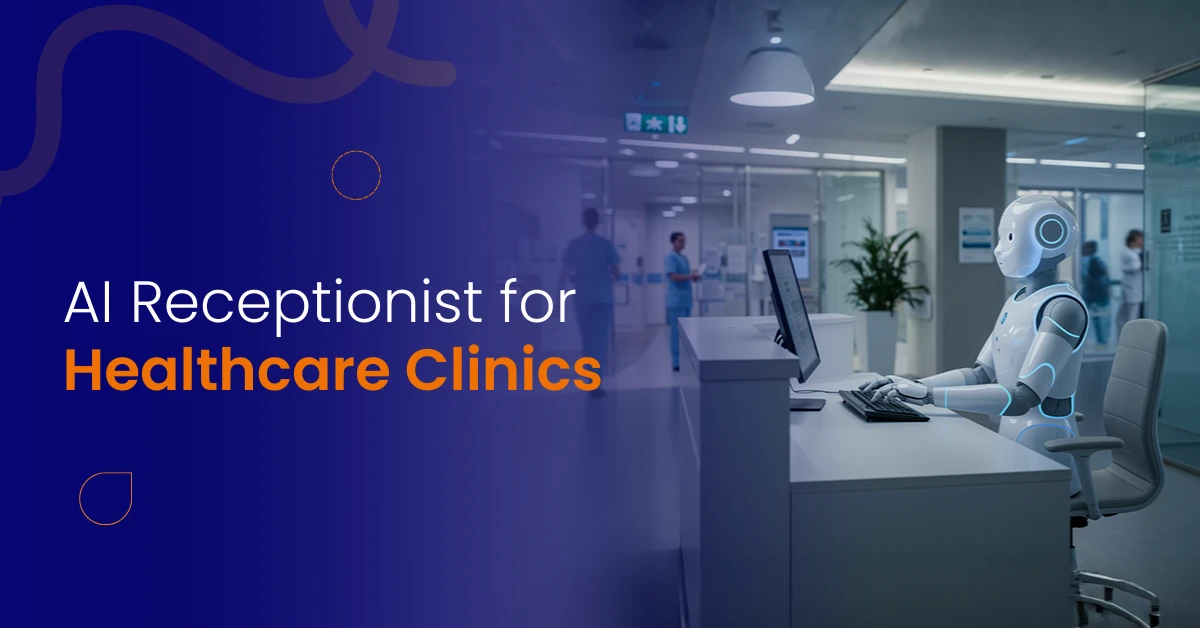

Table of Contents
A virtual medical receptionist helps medical clinics answer patient calls, manage appointment requests, route urgent inquiries, and reduce front desk pressure without hiring extra staff. For many clinics, the biggest patient experience issue is not the quality of care. It is the difficulty patients face when trying to reach the office.
Phones ring during check-ins. Patients call during lunch breaks. New patient inquiries arrive after business hours. Existing patients need appointment changes, insurance details, directions, prescription updates, and follow-up support. When the front desk is overloaded, calls are missed, patients wait longer, and appointment opportunities slip away.
An AI medical receptionist gives clinics a practical way to handle routine communication faster. It supports your staff by answering calls, collecting information, sending messages, and directing patients to the right next step. For clinics using Vitel Global, this works best as part of a wider cloud communication setup with call routing, voicemail transcription, business texting, mobile access, desktop access, CRM integration, and advanced call management.
What Is an AI Receptionist for Healthcare Clinics?
An AI receptionist for healthcare clinics is a voice-based digital front desk assistant that helps manage patient calls. It can answer incoming calls, understand common patient requests, collect details, route calls, share approved clinic information, and support appointment-related workflows.
A clinic can use an AI receptionist to help with:
- appointment requests
- office hours and location questions
- after-hours message capture
- call routing to staff or departments
- reminder and confirmation workflows
- basic patient intake details
- high call volume support
The goal is simple. The medical AI receptionist handles repeatable front desk tasks, while your human staff focuses on patients who need direct attention, judgment, and care.
For example, a patient calling to ask about office hours does not need to wait behind five appointment calls. A patient asking to reschedule can be guided quickly. A caller with an urgent concern can be routed based on the clinic’s rules. That is where a virtual receptionist healthcare setup becomes valuable.
Get a Free Demo of AI Receptionist
The Real Cost of Missed Calls in Healthcare
A missed call in a clinic is rarely just a missed call. It may be a new patient looking for care, an existing patient trying to confirm an appointment, or a parent calling about a child’s visit. If nobody answers, many patients will not wait. They call the next provider.
This creates hidden loss across the clinic:
- missed appointment opportunities
- more voicemail callbacks
- lower patient trust
- front desk backlog
- weaker schedule control
- higher no-show risk
- more staff stress
For a clinic receiving 150 to 300 calls a day, even a small missed-call percentage can affect revenue and patient satisfaction. If ten missed calls include three appointment opportunities, that loss repeats every business day.
A virtual medical receptionist helps reduce that leakage by making sure more calls are answered, more details are captured, and fewer patients are left without direction.
Why Traditional Front Desk Operations Break Down
Medical front desk teams carry a heavy load. They do far more than answer phones. They greet patients, verify information, handle forms, route messages, coordinate providers, manage schedules, and calm frustrated callers.
The pressure builds during:
- morning call rushes
- seasonal illness spikes
- provider schedule changes
- lunch-hour coverage gaps
- multi-provider appointment blocks
- insurance and billing call waves
- post-visit follow-up periods
A traditional front desk cannot expand instantly when call volume doubles. Staff members can only handle one conversation at a time. That is why even strong teams fall behind.
A medical office virtual receptionist helps protect the front desk from constant interruption. It gives the clinic an extra call-handling layer that works during peak periods, after hours, and across routine inquiries.
How an AI Medical Receptionist Solves the Problem
An AI medical receptionist solves the problem by giving clinics consistent first-response coverage. It does not get tired during call spikes. It does not forget to collect the caller’s name. It does not leave basic inquiries unanswered after the office closes.
A clinic can configure the AI receptionist to:
- answer calls with a clinic-approved greeting
- identify the reason for the call
- collect patient details for follow-up
- share approved answers for basic questions
- route urgent matters to staff
- take messages after hours
- send reminders or confirmations when connected to the right tools
This is especially useful for a virtual receptionist for a medical practice because patient communication is repetitive, time-sensitive, and easy to mishandle when staff is stretched thin.
Vitel Global strengthens this setup with a cloud communication base that supports call routing, voicemail-to-email, business texting, mobile and desktop access, extensions, call handling, and integration-ready workflows.
Quick Impact Snapshot for Clinics
A well-planned virtual receptionist for a medical office can improve daily clinic operations without changing the clinical care model.
Typical gains include:
- Faster call pickup
- Fewer missed calls
- Reduced front desk interruptions
- Better after-hours message capture
- Clearer routing for urgent calls
- More consistent patient communication
- Fewer repetitive callbacks
- Stronger appointment follow-up
The value becomes visible fastest in clinics that already feel front desk strain. A busy primary care office, urgent care clinic, dental practice, dermatology clinic, physical therapy center, or multi-location specialty practice can all benefit from more reliable call handling.
Explore Vitel Global AI Features for Healthcare
HIPAA Compliance and Data Security
Healthcare communication must be handled carefully. Patient calls may involve names, appointment needs, symptoms, billing questions, insurance details, and follow-up information. That means an AI receptionist for medical clinics must be reviewed through a privacy-first lens.
Clinics should look for:
- secure call handling
- limited access to sensitive information
- encrypted communication where applicable
- clear staff permissions
- careful call logging rules
- safe escalation paths
- defined handling for urgent patient concerns
Vitel Global’s cloud communication system gives clinics a business-grade foundation for secure calling, routing, messaging, voicemail, and access control. For healthcare use, the AI receptionist should be configured around the clinic’s HIPAA policies, vendor agreements, and internal privacy process.
This section should never be treated as a legal shortcut. Clinics should involve compliance and administrative leadership before using any AI receptionist with patient information.
AI Integration with EHR and Practice Management Systems
A virtual receptionist service medical solution becomes more useful when it fits the clinic’s existing workflow. If the AI receptionist captures information, but staff must copy everything manually, the clinic only shifts the workload from phone answering to data entry.
The stronger model connects communication with existing systems where appropriate. Useful integration paths include:
- appointment request routing
- call note delivery
- message notifications
- CRM or patient contact records
- calendar or scheduling support
- workflow handoff to staff
- follow-up text or email communication
A virtual receptionist for a medical practice should not sit outside the clinic’s daily process. It should help staff see what happened, what the patient needs, and who should act next.
Vitel Global already supports CRM integration, communication APIs, business messaging, call routing, voicemail transcription, and cloud-based phone workflows. That gives clinics the base needed to build a connected front desk communication process.
AI Receptionist vs Outsourced Call Centers
Many clinics compare AI receptionists with outsourced answering services. Both can answer calls, but the operating model is different.
An outsourced call center depends on external agents. Quality may vary by agent, call volume, and training. Some services charge by the minute or by provider count, which can become expensive as call volume rises.
A medical AI receptionist gives clinics a more consistent way to handle routine calls. It follows the clinic’s approved script, captures details in a structured way, and routes based on set rules.
The better comparison is practical:
Outsourced answering service
- useful for human call handling
- cost may rise with volume
- training quality can vary
- limited workflow control in some cases
- external team handles call flow
AI receptionist for clinics
- answers routine calls quickly
- supports after-hours coverage
- follows clinic-defined rules
- scales during call spikes
- routes complex calls to staff
- works inside a larger communication system when properly connected
For clinics that want more control, an AI answering service for medical practices can reduce dependency on manual overflow coverage while still keeping staff involved where human care is needed.
Talk to an Expert
Impact on Patient Experience and Satisfaction
Patients often judge a clinic by how easy it is to get help. A great provider experience can still feel frustrating if patients cannot reach the office, confirm an appointment, or get a simple answer.
A virtual medical receptionist improves patient experience by reducing the friction around communication. Patients benefit from:
- faster call response
- fewer long holds
- clearer directions
- better after-hours message capture
- simpler appointment-related support
- more consistent clinic information
- fewer repeated explanations
For the clinic, that means fewer frustrated voicemails and fewer rushed callbacks. For the patient, it means the office feels easier to reach.
This is one of the strongest reasons clinics search for the best virtual medical receptionist. They are not only trying to cut the front desk workload. They are trying to protect patient trust.
Advanced Capabilities of Artificial Intelligence in Clinics
The best use of AI in a clinic front desk is practical, not flashy. The system should handle routine communication well and know when to involve a person.
An AI medical receptionist for clinics can support:
- common patient questions
- appointment request intake
- after-hours message capture
- call summaries
- call routing by need
- reminder workflows
- multilingual support where available
- text-based follow-up where configured
This helps clinics organize the front door of communication. Patients with simple needs get help faster. Staff receive clearer information. More sensitive cases are routed to people who can respond properly.
AI should be used with boundaries. It should not diagnose, make clinical decisions, or replace medical staff. It should support the administrative side of patient communication.
ROI Breakdown: Measurable Cost Savings
The return from an AI receptionist for doctors comes from time saved, calls recovered, and appointments protected.
Consider a clinic that receives 200 calls per day. If 10 percent are missed during busy hours or after closing, that is 20 missed calls daily. If only five of those calls could have turned into booked appointments or retained visits, the revenue impact becomes serious over a month.
A virtual receptionist may help reduce:
- Missed appointment calls
- Repeat callbacks
- Overtime at the front desk
- Extra answering service costs
- Staff time spent on basic questions
- No-show risk through reminder support
The ROI is not only financial. It also affects staff morale. When the front desk is not drowning in repeat calls, the whole clinic feels more organized.
Implementation Timeline for Healthcare Clinics
Clinics should roll out an AI receptionist carefully. The first version should focus on front desk relief, not full automation of every patient interaction.
A practical rollout may include:
Review common call types
Identify how many calls involve scheduling, hours, directions, billing, prescription questions, insurance, or provider messages.
Build approved response rules
Decide what the AI can answer and what must be routed to staff.
Set escalation paths
Urgent calls, clinical questions, sensitive issues, and complex requests should move to human staff.
Connect communication workflows
Set call routing, voicemail, texts, notifications, and staff handoff rules.
Test before full launch
Call as a patient would. Test after hours. Test urgent routing. Test message capture.
Train the team
Staff should know where AI messages appear, how calls are routed, and when to step in.
Review performance weekly
Track missed calls, call outcomes, patient feedback, and staff workload.
A careful first rollout helps clinics gain confidence without overwhelming staff or patients.
Why Healthcare Providers Choose Vitel Global
Healthcare providers choose Vitel Global when they want a stronger communication foundation for clinic calls, messages, routing, and staff access. Vitel Global brings together the tools clinics need to support patient communication:
- cloud-based business calling
- smart call routing
- voicemail transcription
- business texting
- desktop and mobile access
- CRM integration
- call summaries
- extensions and department routing
- after-hours call handling
- communication APIs for custom workflows
For a clinic, this means the AI receptionist for healthcare clinics does not have to function as a disconnected call bot. It can sit inside a broader business phone system that supports the way clinics already communicate.
That is where Vitel Global excels: the AI receptionist works with calling, texting, routing, and integrations under one communication environment.
Switch to Vitel Global
What Makes Vitel Global Different
Many tools answer calls. Vitel Global helps clinics manage the full communication path around those calls.
A patient may start with a phone call, receive a text reminder, leave a voicemail, request a callback, or need routing to the right department. Vitel Global gives clinics the communication structure to handle that journey with better control.
For medical clinics, Vitel Global can support:
- front desk overflow
- appointment inquiry routing
- after-hours message capture
- voicemail-to-email
- business texting
- remote staff access
- multi-location clinic communication
- call summaries and transcripts
- CRM-connected communication records
That is what separates a simple answering tool from the best AI healthcare receptionist for a clinic setup. The clinic gets more than a call answer. It gets a cleaner communication workflow.
Concerned About AI Replacing Human Care?
This concern is fair. Healthcare is personal, and patients want to feel heard. A clinic should never use AI in a way that makes patients feel pushed away from real people.
The better use of an AI receptionist for clinics is support. AI handles the front desk work that does not require empathy or clinical judgment. Human staff continue handling urgent, emotional, sensitive, or complex patient needs.
That balance matters. The AI receptionist can answer routine calls, collect details, and route requests. Your staff still owns the patient relationship.
Conclusion
Medical clinics are under pressure from every direction. Patients expect faster answers. Staff are managing heavier workloads. Missed calls turn into missed appointments, lower trust, and added stress.
A virtual medical receptionist gives clinics a practical way to modernize patient communication without adding more front desk pressure. It helps answer calls faster, route patients correctly, capture after-hours messages, support appointment workflows, and reduce routine admin load.
For clinics looking for a reliable AI receptionist for medical clinics, Vitel Global offers the communication foundation needed to make the system useful in real practice operations: calling, routing, texting, voicemail transcription, mobile and desktop access, CRM integration, and advanced call management in one cloud-based environment.
Modernize Your Clinic Front Desk With Vitel Global
Help your clinic answer more calls, reduce front desk overload, and support patient communication with a smarter front desk system.
Frequently Asked Questions
1. What is a virtual medical receptionist?
A virtual medical receptionist is a digital front desk assistant that helps medical clinics manage phone calls, appointment requests, routine questions, messages, and call routing. It supports the front desk by handling repeatable communication tasks so staff can focus on patients inside the clinic and calls that need human attention.
2. How does an AI medical receptionist help a clinic?
An AI medical receptionist helps clinics answer calls faster, reduce hold times, capture patient details, and route calls based on need. It is especially useful during morning rushes, lunch-hour gaps, after-hours calls, and seasonal call spikes when front desk teams are already stretched.
3. Is an AI receptionist for healthcare clinics HIPAA compliant?
An AI receptionist for healthcare clinics can support HIPAA-aware workflows when it is configured with secure call handling, access control, encrypted data movement, and proper patient information rules. Clinics should confirm compliance responsibilities, vendor agreements, and internal policies before using any AI system with protected health information.
4. Can a virtual receptionist for a medical practice schedule appointments?
A virtual receptionist for a medical practice can support appointment workflows depending on the setup. Some systems collect appointment requests for staff review, while more advanced configurations can connect with scheduling tools to help with confirmations, reminders, or direct booking.
5. Will an AI receptionist replace human front desk staff?
No. The best use of an AI receptionist is to support staff, not remove them. It handles routine calls, basic information requests, message capture, and routing. Human staff continues managing sensitive questions, urgent needs, patient concerns, and situations that require care and judgment.
Published: February 13th, 2026
Tags:
- ai front desk for clinics
- ai receptionist for healthcare
- ai voice receptionist healthcare
- appointment automation healthcare
- healthcare ai receptionist
- healthcare appointment scheduling ai
- healthcare call automation
- healthcare call center alternative
- hipaa compliant ai receptionist
- hipaa compliant call handling
- medical ai receptionist
- medical office automation
- reduce missed calls healthcare
Subscribe to Our Latest Updates
Get monthly product and feature updates, the latest industry news, and more!