



How Call Analytics & Reporting Support for Sales Teams
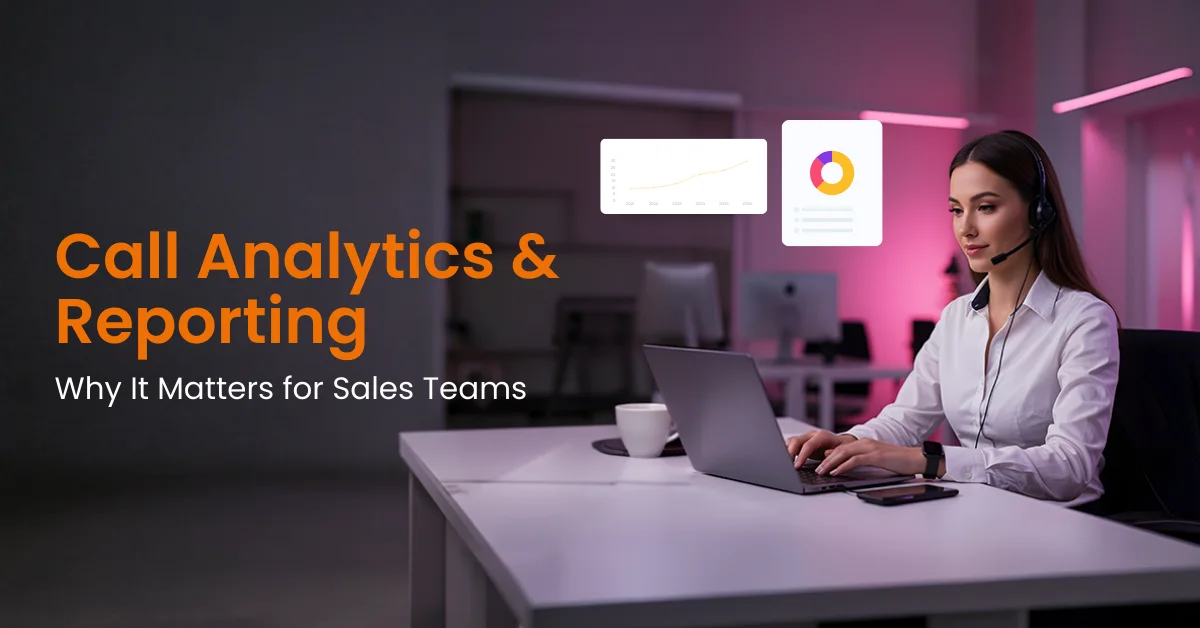

Table of Contents
Call analytics & reporting becomes mandatory for sales teams in revenue-driven organizations. They shape how managers track performance, coach sales teams, and forecast revenue. Without structured call reporting, sales visibility fades. Without call analytics software, performance tracking becomes speculation. And without speech analytics and structured call monitoring, data-driven decisions are delayed.
Every inbound and outbound sales conversation creates measurable intelligence. The real question is whether your team is capturing it, analyzing it, and using it to influence outcomes. Modern sales organizations across cities like New York, Austin, and San Diego are shifting from manual sales call report logging to automated call analytics software that tracks patterns across thousands of interactions.
Unified Sales Intelligence Through Call Reporting and Call Analytics
Sales teams generate data constantly. A single discovery call reveals buying signals, objections, pricing resistance, and competitor mentions. Multiply that across dozens of sales teams, and you have a goldmine of insight.
Call reporting centralizes that information. Instead of scattered CRM notes, structured sales call report dashboards provide leadership with visibility across pipelines, call outcomes, and rep-level trends.
Turn Conversations into Measurable Performance
Call analytics software collects:
- Call duration
- Talk-to-listen ratio
- Follow-up commitments
- Objection frequency
- Deal stage movement
- Close outcomes
This level of call analytics allows sales managers to see which conversations move deals forward and which stall momentum.
Vitel Global’s Sentiment Analytics strengthens this process by identifying recurring phrases, tone shifts, and buyer hesitation patterns. When speech analytics flags competitor mentions or pricing concerns, teams respond faster.
Sales visibility improves immediately when call reporting is consistent across the organization.
Identify Revenue Patterns Faster
Instead of reviewing calls randomly, call monitoring combined with call analytics highlights patterns:
- Which sales teams convert discovery calls at higher rates
- Which vertical markets respond best
- Which pricing objections appear most frequently
- Which demo invitations actually lead to closing
A structured sales call report system reveals trends that manual note-taking simply cannot capture.
Why Vitel Global for Call Analytics & Sales Visibility?
Sales teams do not need another dashboard. They need revenue clarity. Vitel Global delivers enterprise-grade Call Analytics, Speech Analytics, and Call Monitoring built specifically for revenue-driven organizations. Here’s why sales leaders choose Vitel Global:
- AI-powered sentiment and intent detection
- Real-time call monitoring with supervisor intervention
- Automated CRM-integrated sales call reporting
- Multi-location team visibility
- Custom keyword tracking for competitors and pricing alerts
- Forecast-aligned performance dashboards
Unlike standalone call tracking tools, Vitel Global connects conversation intelligence directly to pipeline health and revenue forecasting.
For organizations managing inside sales, remote reps, or distributed teams, Vitel Global centralizes performance visibility without increasing administrative workload.
Request a Live Call Analytics Demo
Solve Sales Gaps Before They Affect Revenue
Revenue rarely drops without warning signs. The signals are usually hidden in conversations. Call analytics software helps sales leaders detect:
- Increased objection rates
- Shorter call durations
- Delayed follow-ups
- Lower close ratios
Speech analytics can detect hesitation language and emotional cues. When multiple calls show rising buyer resistance, leadership can adjust messaging before quarterly numbers suffer.
Call monitoring ensures coaching is based on real interactions rather than assumptions.
Identify Hidden Revenue Gaps Today
Performance Tracking with Sales Call Report Dashboards
Performance tracking is more than tracking quotas. It is about understanding activity quality. A well-structured sales call report provides:
- Individual rep call volume
- Average handle time
- Conversion by stage
- Objection handling patterns
- Follow-up compliance
Call analytics allows managers to compare top performers with developing sales teams. Instead of vague coaching, call reporting delivers specific examples backed by measurable data.
Real-Time Call Monitoring for Smarter Coaching from Vitel Global
Vitel Global offers a Call monitoring system that enables supervisors to:
- Review live conversations
- Access call transcripts
- Track sentiment shifts
- Provide mid-call support
Speech analytics automatically highlights keywords tied to pricing discussions, budget approval, or competitor comparison. Sales managers no longer need to sit beside sales teams for hours. Call analytics software delivers clarity without disrupting workflow.
From Data to Decisions: The Role of Call Analytics Software
Raw numbers do not drive growth; interpretation does. Call analytics software transforms thousands of conversations into structured performance summaries. Instead of anecdotal feedback, leadership reviews trends across teams.
Sales visibility expands when:
- Data is centralized
- Reports are standardized
- Dashboards are customizable
- Alerts notify managers of risk signals
A unified sales call report format ensures everyone interprets performance consistently.
Organizations operating multi-location teams across states benefit even more. Whether sales teams are in Chicago, Miami, or Los Angeles, call reporting keeps leadership aligned.
Improve Sales Forecasting Accuracy
Forecasting often fails because pipeline health is misread. Call analytics adds another layer to forecasting by measuring buyer intent signals:
- Positive language frequency
- Commitment statements
- Next-step confirmations
- Deal acceleration trends
Speech analytics evaluates tone and language intensity. A call may be long, but if urgency signals are missing, the probability of a close shifts. With structured call reporting, forecast meetings rely on evidence instead of optimism.
Increase Accountability Across Sales Teams
When call monitoring and call analytics are standard practice, accountability increases naturally. Sales representatives know:
- Calls are logged
- Follow-ups are tracked
- Performance metrics are visible
- Coaching is evidence-based
A transparent sales call report system reduces blame shifting and focuses conversations on improvement.
CRM integration ensures every call automatically logs outcomes, transcripts, and next actions. Thus, your sales team members spend more time selling and less time updating the sheets.
Shorten Sales Cycles with Speech Analytics
Long sales cycles often stem from repeated objections or unclear messaging. Vitel Global provides AI-powered speech and meeting analytics that identify:
- Frequently raised concerns
- Repeated budget hesitation
- Product feature confusion
- Missed qualification steps
When patterns appear, leadership updates scripts, objection frameworks, or training modules.
Call analytics software also tracks talk ratios. If sales teams dominate conversations, deals may stall. Balanced dialogue often correlates with higher close rates.
With stronger call reporting insights, sales cycles tighten, and follow-up timing improves.
What to Include in a High-Impact Sales Call Report
A strong sales call report is not a transcript dump. It is structured documentation that ties conversation outcomes directly to revenue movement. Modern call reporting should capture both quantitative and qualitative signals.
Core Data Fields Every Sales Call Report Should Track
- Contact name, title, and company
- Call date and duration
- Stage in pipeline
- Call objective
- Objections raised
- Budget discussion status
- Decision-maker involvement
- Next steps and owner
- Follow-up date
- Call recording or transcript link
When paired with call analytics, these fields transform into trend data across dozens or hundreds of conversations.
For example, if call reporting shows that pricing objections spike at the proposal stage, leadership can adjust positioning before deals stall.
Layering Speech Analytics into Sales Call Reports
Speech analytics strengthens every sales call report by tagging:
- Competitor mentions
- Pricing resistance
- Urgency signals
- Buying intent language
- Risk indicators
Rather than manually listening to recordings, managers rely on speech analytics to highlight segments worth reviewing. Call monitoring becomes targeted instead of random.
Best Practices for Analyzing Call Analytics Without Overcomplicating It
Sales teams do not need more dashboards; they need clarity.
Automate Data Collection Through Call Analytics Software
Manual logging creates inconsistent sales call report entries. Automated call analytics software captures transcripts, call outcomes, and sentiment automatically. This reduces:
- Data entry errors
- Missing follow-up notes
- Delayed reporting
- Incomplete records
Automation improves accuracy and keeps performance tracking consistent.
Standardize the Sales Call Report Format
When every rep uses a different format, leadership cannot compare performance. Standard call reporting templates allow managers to:
- Compare rep conversion rates
- Identify stage-specific drop-offs
- Track average deal velocity
- Monitor follow-up reliability
- Consistency makes call analytics actionable.
Coach Using Patterns, Not One-Off Calls
One bad call does not define performance. Patterns do. Call monitoring should focus on:
- Recurring objection mishandling
- Repeated pricing pushback
- Over-talking trends
- Qualification gaps
Speech analytics supports this by identifying repeated phrasing that correlates with lost deals. Coaching becomes specific, measurable, and repeatable.
Track Custom Keywords That Influence Revenue
Call analytics software allows custom keyword tracking, such as:
- Competitor brand names
- Budget constraints
- Timeline urgency
- Feature requests
- Expansion interest
- Cancellation risk
When 40 percent of calls reference a specific competitor, that insight shapes enablement materials immediately. Sales visibility improves when trends are surfaced early.
CRM and Tech Stack Integration: Removing Friction
Disconnected tools slow sales teams down. Call reporting should sync automatically with:
- CRM platforms
- Dialers
- Revenue tracking systems
- Email platforms
- Meeting schedulers
When call analytics software integrates natively, sales call report entries populate without manual updates. Sales representatives avoid toggling between tabs. Managers avoid chasing missing data.
For US-based sales teams handling hundreds of weekly calls, integration alone can save dozens of hours per month.
Operational Efficiency Through Live Call Monitoring
Live call monitoring is not about surveillance. It is about support.
Supervisors can:
- View transcripts as calls unfold
- Detect negative sentiment early
- Step in during high-risk deals
- Flag missed qualification steps
Speech analytics alerts managers when tone shifts or pricing objections escalate. Instead of post-call damage control, managers intervene at the right moment.
Sales Visibility at Scale for Multi-Location Teams
Sales organizations with distributed teams across states often struggle with alignment.
Call analytics provides centralized reporting regardless of rep location. A rep in Boston and another in Phoenix follow the same sales call report structure. Leadership views unified dashboards rather than fragmented spreadsheets.
This level of visibility strengthens pipeline reviews and revenue planning.
From Sales Activity to Revenue Intelligence
Activity volume alone does not guarantee performance. Call analytics connects:
- Call frequency
- Conversion ratio
- Follow-up discipline
- Deal velocity
- Close percentage
Speech analytics adds depth by identifying language that signals buyer readiness.
When both quantitative and conversational metrics align, forecasting accuracy improves. Organizations that rely only on CRM stage updates often misread deal health. Call reporting fills that gap.
Industry Use Cases: How Call Analytics Drives Measurable Sales Gains
Call analytics is not limited to call centers. Revenue teams across industries rely on structured call reporting to maintain sales visibility and tighten execution.
SaaS and Technology Companies
Software sales teams often manage complex pipelines with multiple decision-makers. Call analytics software tracks:
- Product feature discussions
- Security objections
- Budget timing signals
- Competitive comparisons
Speech analytics highlights buying intent phrases that correlate with higher close probability. Sales leaders use this data to refine messaging and shorten deal cycles.
Financial Services and Insurance
Advisors and agents must document conversations accurately. A detailed sales call report ensures:
- Compliance tracking
- Clear next steps
- Documented disclosures
- Consistent follow-ups
Call monitoring also supports coaching by reviewing tone and trust-building language during high-value calls.
Healthcare and Professional Services
For service-based organizations in cities like Dallas, Atlanta, or Los Angeles, sales visibility is tied to appointment bookings and consultation conversions. Call analytics identifies:
- Drop-off points in scheduling calls
- Insurance-related objections
- Repeated service questions
- Missed upsell opportunities
Managers can adjust scripts and training before conversion rates decline.
See How Call Analytics Fits Your Industry
Revenue Impact: Turning Call Reporting into ROI
Sales performance improves when decisions are based on structured insights.
Call reporting improves ROI by:
- Reducing missed follow-ups
- Identifying stalled deal stages
- Improving objection handling
- Tracking rep-level conversion trends
- Increasing forecast reliability
Speech analytics adds context by identifying emotional signals in conversations. A deal may appear healthy in CRM, but language patterns might suggest hesitation. Call analytics software bridges that gap.
Organizations that commit to structured call monitoring often report higher win rates within two quarters because coaching becomes targeted rather than general.
Building a Culture of Accountability Through Call Monitoring
Sales accountability does not require micromanagement. It requires visibility. When every sales call report is automatically logged, teams operate with clarity. Sales teams can review transcripts, self-correct messaging, and prepare better follow-ups.
Managers can:
- Compare activity versus outcomes
- Track consistency in qualification
- Identify top-performing patterns
- Adjust training priorities
Call analytics creates alignment between individual performance and company revenue goals.
Vitel Global Call Analytics & Reporting: The Competitive Advantage Sales Teams Cannot Ignore
Revenue does not decline without warning. The signals live inside conversations. Vitel Global provides clear call reporting that captures those signals. Our Call Analytics feature organizes them, whereas Speech Analytics interprets them. Vitel Global offers a comprehensive Call Monitoring feature that supports sales and is very useful for training and improvement. A structured sales call report keeps leadership informed.
Sales visibility increases, and performance tracking becomes precise. Vitel Global is the first choice of organizations that treat conversations as measurable assets, which helps them outperform those that rely on memory and scattered notes.
Turn Every Sales Conversation into Revenue with Vitel Global
Revenue-focused sales leaders do not invest in call analytics for curiosity; they invest for measurable growth.
If your team is:
- Missing follow-ups
- Struggling with inconsistent rep performance
- Losing deals to untracked objections
- Forecasting based on guesswork
- Managing remote or multi-location teams
Then your current call reporting system is limiting revenue visibility.
Vitel Global’s Call Analytics, Speech Analytics, and Call Monitoring platform is built specifically for revenue-driven sales organizations that require:
- AI-powered speech intelligence
- Real-time sentiment tracking
- Automated sales call report logging
- CRM-integrated dashboards
- Multi-location sales visibility
- Coaching backed by measurable data
Unlike generic call tracking tools, Vitel Global transforms conversations into structured revenue intelligence.
Sales managers gain:
- Clear objection trend analysis
- Competitor mention tracking
- Close probability signals
- Deal-risk alerts
- Rep-level performance benchmarking
Vitel Global’s call reporting feature acts as a revenue optimization system powered by conversation intelligence. Organizations that adopt structured call analytics typically see:
- Improved win rates
- Faster sales cycles
- Higher follow-up compliance
- More accurate forecasting
- Stronger rep accountability
View Call Analytics in Action
Book your personalized Vitel Global Call Analytics demo and turn every sales call into revenue intelligence.
Frequently Asked Questions
1. What is the difference between call reporting and call analytics?
Call reporting documents call activity and outcomes, while call analytics evaluates patterns, trends, and performance metrics across multiple calls. Together, they provide sales visibility and performance tracking.
2. How does speech analytics improve sales performance?
Speech analytics analyzes tone, keyword usage, and buying signals within conversations. It highlights patterns that influence deal success, helping managers coach sales teams with precision.
3. Can small sales teams benefit from call analytics software?
Yes. Even teams with fewer than ten sales teams gain value from structured sales call report tracking. Early visibility prevents pipeline issues from escalating.
4. How often should sales managers review call monitoring data?
Weekly review cycles work well for most teams. Larger organizations may implement daily dashboard monitoring supported by monthly trend analysis.
5. Does call analytics integrate with CRM systems?
Most call analytics software platforms integrate directly with major CRM systems, automatically syncing call reporting data, transcripts, and activity logs.
Published: March 4th, 2026
Subscribe to Our Latest Updates
Get monthly product and feature updates, the latest industry news, and more!