



HIPAA Considerations for AI Phone Systems
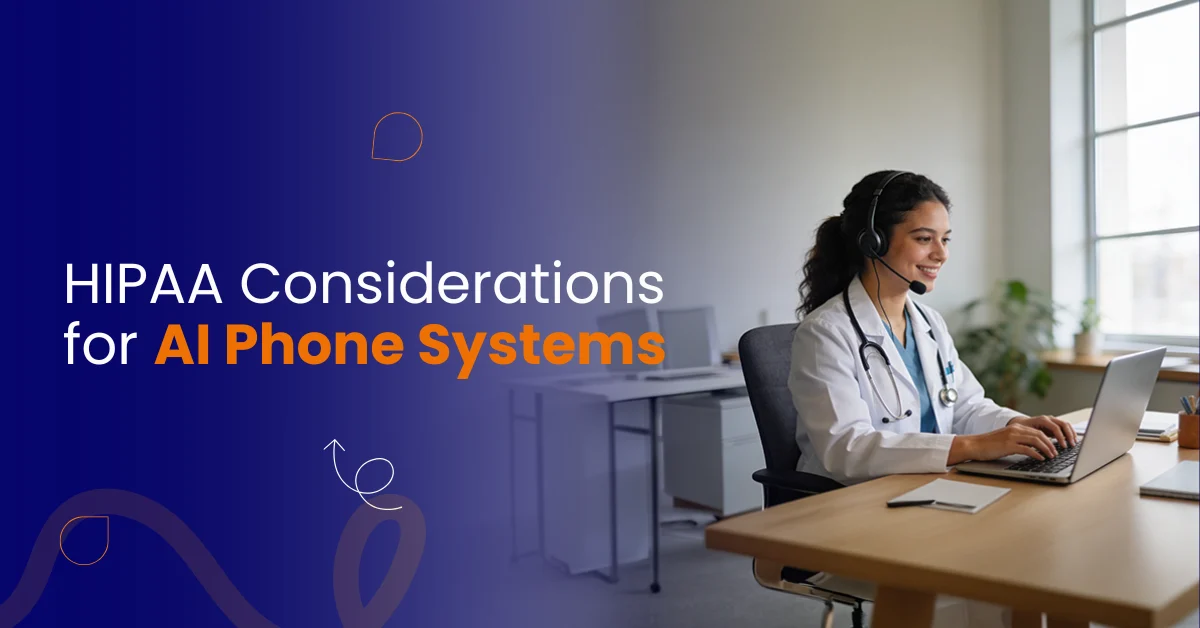

Table of Contents
Healthcare communication is changing fast. AI phone systems now answer patient calls, verify insurance, and support appointment scheduling. But in the healthcare sector, innovation must follow strict HIPAA regulations.
At Vitel Global, we help healthcare providers deploy AI phone technology that protects patient data and ensures HIPAA compliance. If your organization handles protected health information, understanding HIPAA considerations for AI phone systems is not optional. It is a legal responsibility under the Health Insurance Portability and Accountability Act.
This guide explains HIPAA rules, patient data protection, compliant AI setup, and secure call handling in clear and practical terms.
What Is a HIPAA-Compliant AI Phone System?
A HIPAA-compliant AI phone system is a communication platform that uses encryption, access controls, audit logs, and business associate agreements to protect electronic protected health information (ePHI) during calls, recordings, and automated workflows.
What Are HIPAA Considerations for AI Phone Systems?
HIPAA considerations for AI phone systems refer to the legal, technical, and administrative requirements that healthcare organizations must follow when AI systems process patient health information.
Under the Health Insurance Portability and Accountability Act, any system that handles electronic protected health information (ePHI) must meet specific security and privacy standards.
According to official guidance from the U.S. Department of Health & Human Services (HHS), covered entities and business associates must protect sensitive health information through administrative, physical, and technical safeguards.
An AI phone system that records calls, transcribes conversations, stores patient records, or routes patient communication falls under HIPAA compliance obligations.
Why HIPAA Compliance Matters in AI Phone Systems
AI phone systems improve healthcare operations. They reduce wait times and streamline patient calls. However, without proper compliance, they introduce legal and financial risk.
Failure to maintain HIPAA compliance can lead to:
- Significant civil monetary penalties
- Federal investigations and compliance audits
- Mandatory breach notification procedures
- Patient trust erosion
- Reputational damage
HIPAA enforcement is increasing across the healthcare sector. The HIPAA Security Rule overview by HHS explains that organizations must protect electronic protected health information against data breaches and unauthorized access.
For healthcare providers and health plans, compliance is not just technical. It is operational and legal.
Core HIPAA Rules That Apply to AI Phone Systems
1. HIPAA Privacy Rule
The HIPAA Privacy Rule regulates how patient information can be used and disclosed.
It ensures:
- Only authorized personnel have access to patient information.
- Data use limitations are clearly defined.
- Sensitive patient information remains confidential.
- Patient privacy rights are respected.
- Healthcare organizations document disclosure policies.
AI systems must be configured so that only authorized recipients can access sensitive data.
2. HIPAA Security Rule
The HIPAA Security Rule focuses on electronic protected health information and technical safeguards.
It requires:
- Administrative safeguards for compliance oversight.
- Physical safeguards protect servers, workstations, and communication devices.
- Technical safeguards, including strong data encryption.
- Access controls with role-based permissions.
- Audit logs for continuous monitoring activities.
AI phone systems must align with these requirements before deployment.
3. Breach Notification Rule
The Breach Notification Rule requires organizations to notify affected individuals when data breaches occur.
This includes:
- Clear breach notification procedures.
- Timely reporting to regulators.
- Documented risk assessments after incidents.
- Maintaining compliance documentation records.
- Preventing repeat security incidents.
If AI systems mishandle sensitive health data, organizations must follow strict reporting obligations.
HIPAA Compliance Checklist for AI Phone Systems
Below is a compliance framework healthcare organizations should follow.
Administrative Safeguards
- Conduct documented annual risk assessments.
- Maintain detailed records of policies.
- Perform regular HIPAA compliance audits.
- Train staff on patient data protection.
- Sign a business associate agreement with AI vendors.
Physical Safeguards
- Restrict physical access to servers.
- Secure workstations handling patient records.
- Implement device disposal security policies.
- Protect hardware storing healthcare data.
- Ensure physical safeguards protect sensitive systems.
Technical Safeguards
- Enable data encryption during calls.
- Encrypt stored data containing ePHI.
- Apply strict access controls companywide.
- Use multi-factor authentication systems.
- Maintain audit logs for AI systems.
These safeguards reduce compliance risks and financial risk exposure.
How AI Phone Systems Process Patient Data
AI phone systems interact with:
- Appointment scheduling and confirmations.
- Insurance verification conversations.
- Mental health intake discussions.
- Billing and payment processing inquiries.
- General healthcare communication workflows.
Each patient call may contain protected health information. Therefore, AI tools must follow HIPAA standards at every step.
| Compliance Area | Required Control | Purpose |
| Call Recording | Encrypted storage and restricted access | Protect patient health information |
| AI Models | Trained without sensitive data exposure | Reduce sensitive data risks |
| Access Controls | Role-based permissions for staff | Limit unauthorized personnel |
| Monitoring | Continuous monitoring and audit logs | Detect compliance risks early |
| Authentication | Multi-factor authentication enabled | Strengthen data security |
This structure supports maintaining HIPAA compliance across healthcare operations.
Business Associate Agreements and AI Vendors
Under HIPAA regulations, AI vendors that access patient information are classified as business associates.
Healthcare organizations must:
- Execute a signed business associate agreement.
- Define accountability for data security.
- Verify subcontractor management practices.
- Review vendor breach notification procedures.
- Ensure AI vendors meet HIPAA standards.
Without a signed business associate agreement, organizations face immediate compliance risks.
Data Encryption, Access Controls, and Audit Logs
The HIPAA security rule focuses heavily on technical safeguards.
AI phone systems must implement:
- End-to-end data encryption.
- Secure storage of electronically protected health information.
- Access controls limit system access.
- Audit logs documenting all activity.
- Ongoing monitoring for data breaches.
Data protection is not optional. It is central to patient privacy.
Encryption protects stored data and patient records. Access controls ensure only authorized personnel can retrieve sensitive patient information.
Risk Assessments and Ongoing Monitoring
Risk assessments identify vulnerabilities in AI systems before incidents occur.
Healthcare organizations should:
- Conduct a formal risk analysis annually.
- Document corrective security practices clearly.
- Monitor AI tools continuously.
- Perform HIPAA compliance audits regularly.
- Update safeguards after regulatory changes.
The healthcare sector is increasingly targeted by cyber threats. Continuous monitoring reduces risk analysis failures and strengthens patient data protection.
Real Risk Scenario Example
A healthcare practice implemented a non-compliant AI phone system without encryption. Call recordings containing sensitive health information were stored unprotected. A data breach occurred. The organization faced regulatory penalties and financial risk.
With a HIPAA-compliant AI setup:
- Data encryption protects stored data.
- Access controls restrict sensitive information.
- Audit logs provide incident transparency.
- Breach notification procedures are predefined.
- Administrative safeguards ensure accountability.
Proper configuration prevents costly compliance failures.
How Vitel Global Supports HIPAA-Compliant AI Phone Systems
At Vitel Global, our AI phone system is built to support healthcare communication environments that require maintaining compliance.
We focus on:
- Secure cloud architecture for healthcare organizations.
- Strong data encryption and technical safeguards.
- Role-based access controls for authorized personnel.
- Multi-factor authentication implementation.
- Audit logs and continuous monitoring systems.
Our approach aligns with HIPAA requirements and healthcare data protection standards. We help covered entities, healthcare practices, and health plans reduce compliance risks while modernizing patient communication.
Conclusion
HIPAA considerations for AI phone systems require structured planning, secure configuration, and continuous oversight. Healthcare organizations must align AI technology with HIPAA regulations, privacy rule standards, and security rule safeguards.
At Vitel Global, we support healthcare providers with HIPAA-compliant AI phone systems designed to protect patient data, reduce compliance risks, and modernize healthcare communication safely.
When patient information is involved, compliance is not optional. It is foundational.
Talk to a HIPAA Communication Specialist
Before deploying AI phone technology, ensure your communication stack is secure and compliant.
Frequently Asked Questions
1. What are HIPAA considerations for AI phone systems?
HIPAA considerations for AI phone systems include protecting protected health information, implementing data encryption, applying access controls, conducting risk assessments, signing business associate agreements, and complying with the HIPAA privacy rule and security rule requirements.
2. Do AI vendors need a business associate agreement?
Yes. AI vendors that access patient health information are considered business associates under HIPAA regulations. Healthcare organizations must sign a business associate agreement and verify that the vendor maintains HIPAA-compliant security practices and breach notification procedures.
3. How does the HIPAA security rule apply to AI systems?
The HIPAA security rule focuses on administrative safeguards, physical safeguards protect infrastructure, and technical safeguards like encryption and audit logs. AI systems handling electronic protected health information must meet these standards to maintain compliance.
4. What risks come from non-compliant AI phone systems?
Non-compliant AI phone systems create legal and financial risk, expose healthcare organizations to regulatory penalties, increase data breach exposure, and damage patient trust. Risk analysis failures and weak security practices heighten compliance risks.
5. How can healthcare organizations ensure HIPAA compliance?
Healthcare organizations can ensure HIPAA compliance by conducting risk assessments, implementing data encryption, enforcing access controls, using multi-factor authentication, maintaining audit logs, performing compliance audits, and ensuring ongoing monitoring of AI systems.
Published: February 17th, 2026
Tags:
- AI business phone
- AI call automation
- AI phone system
- ai receptionist healthcare
- healthcare call handling
- healthcare communication
- healthcare data security
- HIPAA call recording
- HIPAA Compliance
- HIPAA compliant VoIP
- HIPAA phone systems
- medical office phone system
- patient communication systems
- secure cloud phone system
Subscribe to Our Latest Updates
Get monthly product and feature updates, the latest industry news, and more!