



7 Key UCaaS Trends to Watch Out for in 2026
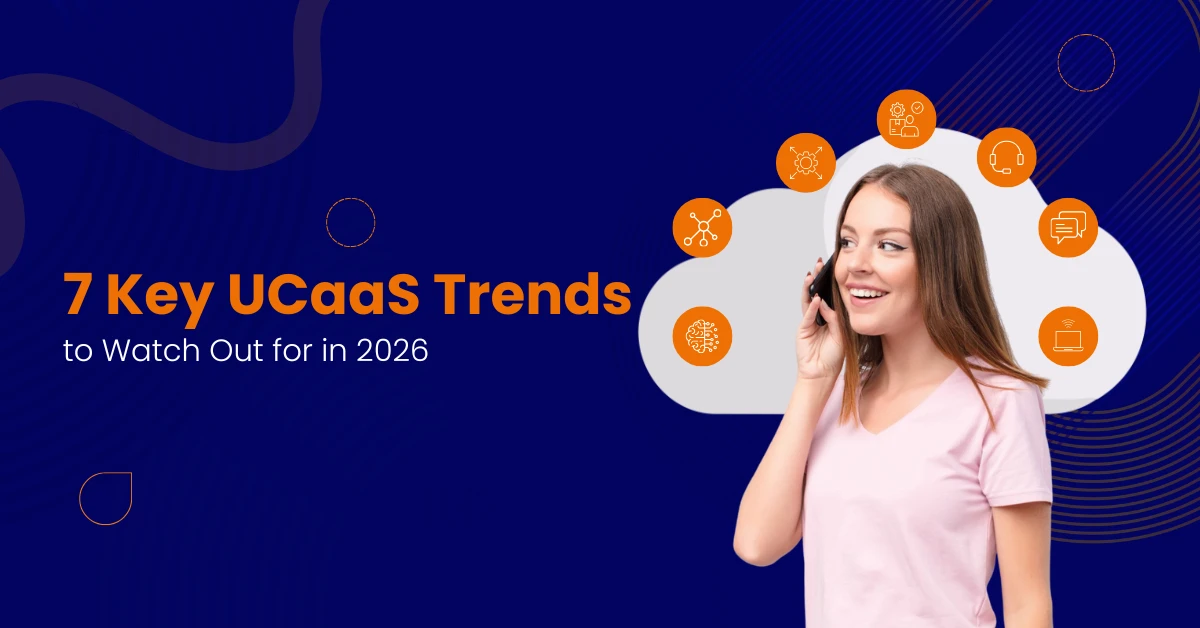

Table of Contents
Business communication is no longer just about making calls. It is about how organizations stay connected, protect data, support hybrid work, and prepare for the future.
At Vitel Global, we work with many businesses that are rethinking unified communications as part of their digital transformation journey. In 2026, UCaaS platforms will not support business operations from the side. They are at the center of how teams collaborate, serve customers, and scale.
This guide explains the 7 key UCaaS trends to watch out for in 2026. Each trend reflects real shifts in technology, priorities, and how companies communicate in a cloud-first world.
Why UCaaS Trends Matter in 2026
UCaaS adoption continues to grow because work itself has changed. Hybrid models are common. Remote work is permanent. Teams operate across offices, time zones, and even languages.
Traditional systems cannot handle this shift. Cloud-based unified communications provide flexibility, scalability, and intelligence. In 2026, UCaaS trends are not just about tools. They are about clarity, security, and continuity.
Many businesses now evaluate UCaaS platforms based on long-term value, not short-term features.

Trend 1: Artificial Intelligence Becomes Built Into UCaaS
Artificial intelligence is no longer optional. In 2026, AI is embedded across UCaaS platforms.
AI tools support call routing, transcription, virtual assistants, and sentiment analysis. AI agents assist employees by removing repetitive tasks and improving response quality. These systems do not replace teams. They support them.
Artificial intelligence helps organizations understand conversations, detect intent, and act faster.
Key AI-driven changes include:
- AI tools automate routine communication and support workflows
- Virtual assistants improve response speed across communications
- Sentiment analysis enhances contact center interaction quality
AI now shapes how communications work.
Trend 2: One Platform Replaces App Switching
App switching has become a serious productivity problem. Employees move between tools for calls, instant messaging, file sharing, and collaboration.
In 2026, UCaaS platforms focus on delivering one app, one platform.
Voice, messaging, collaboration tools, and file sharing live together. This reduces friction and improves adoption across teams.
Benefits of a single platform include:
- One app reduces productivity loss from constant app switching
- The same platform improves collaboration and communication clarity
- Single platform simplifies onboarding and daily usage
Simplicity now matters more than feature overload.
Trend 3: UCaaS Is Designed for Hybrid and Remote Work
Hybrid work is no longer a trend. It is the default model.
UCaaS platforms now support employees working from the office, home, or anywhere else. Cloud systems ensure consistent performance across devices and locations.
Connection drops and unreliable calls are no longer acceptable. Reliability is a baseline expectation.
Hybrid-ready UCaaS capabilities include:
- Hybrid models support flexibility without sacrificing communication quality
- Remote work tools help teams stay connected anywhere
- Cloud platforms reduce downtime and connection drops
UCaaS enables work without location limits.
How UCaaS Changes Daily Work for Employees
UCaaS trends are often discussed at a technical level. Their real impact is felt by employees.
In 2026, employees expect communication tools to feel natural. They do not want to think about platforms or tools. They want to stay connected without friction.
Unified communications reduce confusion. Instant messaging replaces long email threads. File sharing happens inside conversations. Meetings start without delays.
When teams use one app for calls, chats, and collaboration, productivity improves naturally. Fewer tools mean fewer mistakes. Clear communication improves morale. UCaaS is no longer about technology. It is about making work simpler.
Trend 4: Security, Compliance, and Data Privacy Take Priority
As business communication moves to the cloud, protecting data becomes critical. Conversations contain sensitive data, customer details, and internal decisions.
In 2026, cybersecurity posture is a major buying factor.
Multi-factor authentication, encryption, strict access controls, and compliance requirements are expected by default.
Security-driven priorities include:
- Multi-factor authentication protects accounts from unauthorized access
- Protecting data ensures trust across communications
- Compliance requirements align with industry regulations
Data privacy is no longer optional.

Trend 5: Avoiding Vendor Lock-In Becomes Strategic
Vendor lock-in limits flexibility. Many companies regret being stuck on rigid platforms.
In 2026, organizations prefer UCaaS platforms that integrate easily with Microsoft Teams, CRMs, and contact center tools.
They want freedom, not dependency.
Reasons companies avoid lock-in include:
- Vendor lock-in restricts future technology flexibility
- The same platform dependency limits innovation and negotiation
- Open systems support long-term platform changes
Flexibility is now a competitive advantage.
Trend 6: UCaaS and Contact Centers Fully Converge
UCaaS platforms and contact center solutions are no longer separate systems.
Voice, instant messaging, and AI-powered support flow into one experience. AI agents assist routing. Virtual assistants handle common queries. Analytics provide real-time insight.
This convergence delivers:
- Contact center integration improves response speed and consistency
- AI agents balance workloads across support teams
- Unified data improves customer experience outcomes
Customer communications become scalable and measurable.
The Role of UCaaS in Customer Experience Transformation
Customer expectations have changed. Speed matters. Clarity matters. Consistency matters.
UCaaS platforms directly shape customer experience. Conversations move across channels without repetition. Teams access shared context. Sentiment analysis helps agents respond appropriately.
When communications are unified, customers feel heard. Issues are resolved faster. Trust improves.
In 2026, UCaaS adoption directly influences customer satisfaction. Businesses with fragmented systems struggle. Those with unified communications deliver smoother experiences.
Trend 7: Communication Clarity and Language Precision Matter More
As communication volume increases, clarity becomes critical. Even punctuation matters.
Quotation marks, punctuation marks, and sentence structure affect meaning. Different quotation marks, such as single quotation marks, double quotation marks, straight quotes, and standard quotation marks, can change interpretation.
Question marks, commas, and punctuation placement influence tone. Quoted material inside emails or messages must be clear.
In global teams using the English language and other languages, consistent character sets and correct punctuation prevent confusion. Clear communication supports professionalism and reduces misunderstandings.
Why UCaaS Matters More for Growing Organizations
As organizations grow, communication complexity increases faster than headcount.
More teams mean more coordination. More offices mean more systems. Without UCaaS platforms, communication becomes fragmented.
Cloud-based UCaaS systems scale easily. New employees are onboarded faster. Teams collaborate without location limits.
UCaaS helps organizations grow without rebuilding communication infrastructure. This flexibility matters for companies planning long-term expansion.
Preparing for the Future of UCaaS Beyond 2026
UCaaS trends will continue evolving. What matters is choosing platforms that adapt.
AI agents will become more conversational. Virtual assistants will handle more tasks. Security expectations will rise. Compliance requirements will expand.
Organizations must choose UCaaS platforms that support change, not resist it. Open systems, strong support, and continuous innovation matter.
The future belongs to companies that view UCaaS as a foundation, not just a tool.
Why Many Businesses Choose Vitel Global
Vitel Global delivers secure, scalable, and AI-powered UCaaS solutions for modern organizations.
From business phone systems and virtual numbers to contact center solutions, AI voice assistants, and analytics dashboards, Vitel Global enables seamless communication across distributed teams.
With enterprise-grade reliability, strong cybersecurity posture, CRM integrations, and 24/7 support, Vitel Global helps businesses stay connected while reducing complexity.
Ready to Future-Proof Your Business Communications?
If your organization plans to modernize communications in 2026, now is the time. Experience secure, flexible, and AI-powered UCaaS built for hybrid work and future growth.
FAQs: UCaaS Trends in 2026
1. What are the 7 key UCaaS trends to watch out for in 2026?
The 7 key UCaaS trends to watch out for in 2026 include AI-powered communications, single-platform collaboration, hybrid work enablement, stronger security, vendor flexibility, contact center convergence, and improved communication clarity across global teams.
2. How does AI impact UCaaS platforms?
AI impacts UCaaS platforms through virtual assistants, AI agents, sentiment analysis, intelligent routing, and analytics. These AI tools improve productivity, enhance customer interactions, and reduce manual workloads across unified communications and contact center environments.
3. Why is avoiding vendor lock-in important for UCaaS buyers?
Avoiding vendor lock-in gives companies flexibility to integrate tools, adapt to change, and negotiate better terms. Open UCaaS platforms allow organizations to evolve without being restricted to a single platform or ecosystem.
4. Is UCaaS suitable for hybrid and remote work?
Yes. UCaaS platforms support hybrid work and remote work by offering cloud-based voice, instant messaging, file sharing, and collaboration tools that work consistently across locations, devices, and networks.
5. How does UCaaS support security and compliance requirements?
UCaaS platforms support security through encryption, multi-factor authentication, strict access controls, and compliance features. These measures protect sensitive data, meet regulatory requirements, and strengthen overall cybersecurity posture.
Published: March 27th, 2023
Subscribe to Our Latest Updates
Get monthly product and feature updates, the latest industry news, and more!