




How to Get a Business Phone Number


Table of Contents
If you want to get a business phone number, the real goal is to give your business a more professional way to be reached. A dedicated business line helps protect your personal number, supports cleaner call handling, and gives your team a better way to manage calls, texts, voicemail, and follow-up. Vitel Global helps businesses set up business calling that looks credible from day one and stays flexible as teams, locations, and call volume grow.
A personal number may work at the beginning. After that, it usually creates more friction than convenience. Calls come in after hours, personal and work conversations mix together, and team coverage becomes harder to manage. A dedicated business number fixes that early and gives your brand a stronger first impression.
Why You Need a Business Phone Number
A separate business line changes how people see your company before the conversation even starts. It gives customers, partners, and prospects a direct path that feels organized, reliable, and ready to respond.
A business number helps you:
- keep work and personal calls separate
- create a more professional business presence
- route calls to the right person or department
- manage business hours with more control
- support remote work without exposing private numbers
- add team members without rebuilding your calling setup
When business owners say they need a business phone number, they are usually asking for more than a second line. They want privacy, structure, and a setup that still works once the business gets busy.
Stop Running Business Calls Through a Personal Number
Set up a business phone number that gives your team cleaner coverage, better call control, and a more professional customer-facing line.
What Is a Business Phone Number?
A business phone number is a dedicated work number used for customer communication, internal coordination, and brand visibility. It can be local, toll-free, vanity, or virtual. What makes it different from a personal line is not just the number itself. It is the business phone system behind it.
A modern business number can support features such as:
- call forwarding
- voicemail to email
- auto attendant menus
- business texting
- call routing
- shared lines
- mobile and desktop access
- analytics and reporting
That is why businesses no longer think only about getting a number. They think about how that number works inside a phone system built for daily business use.
Types of Business Phone Numbers You Can Choose
Local Numbers for Regional Trust
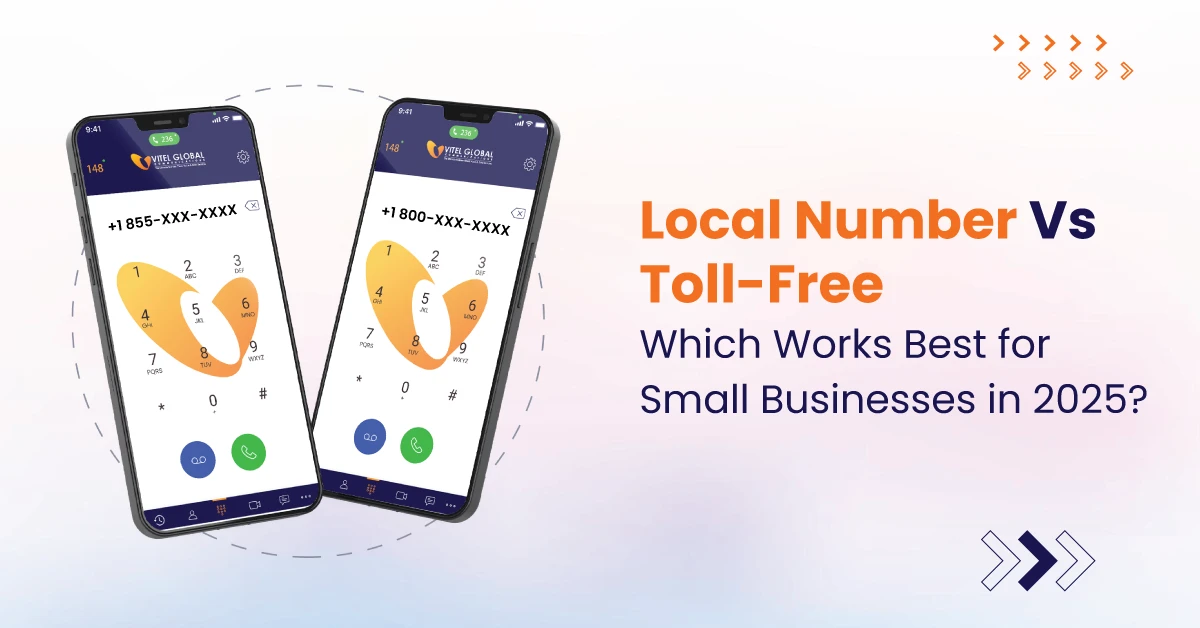
A local number uses a familiar area code and helps your business feel closer to the customers you serve. This works well for contractors, law firms, clinics, real estate teams, retailers, and service businesses that want stronger trust inside a specific market.
A local number often helps when your business wants to look rooted in a city such as Austin, Dallas, Phoenix, Atlanta, or Miami without making the number feel distant or overly corporate.
Toll-Free Numbers for Wider Reach
A toll-free number helps a business look broader in reach and easier to contact across states. It works well for support teams, e-commerce brands, national service businesses, and companies that want one central contact point for campaigns and customer service.
If your business wants to get a business telephone number that feels more national, toll-free is often the first choice.
Vanity Numbers for Recall
Vanity numbers work well when memorability matters. A number tied to a phrase, product, or service can support paid campaigns, radio ads, branded promotions, and stronger recall.
For businesses focused on recall and response, this can be a strong move.
Virtual Numbers for Flexible Work
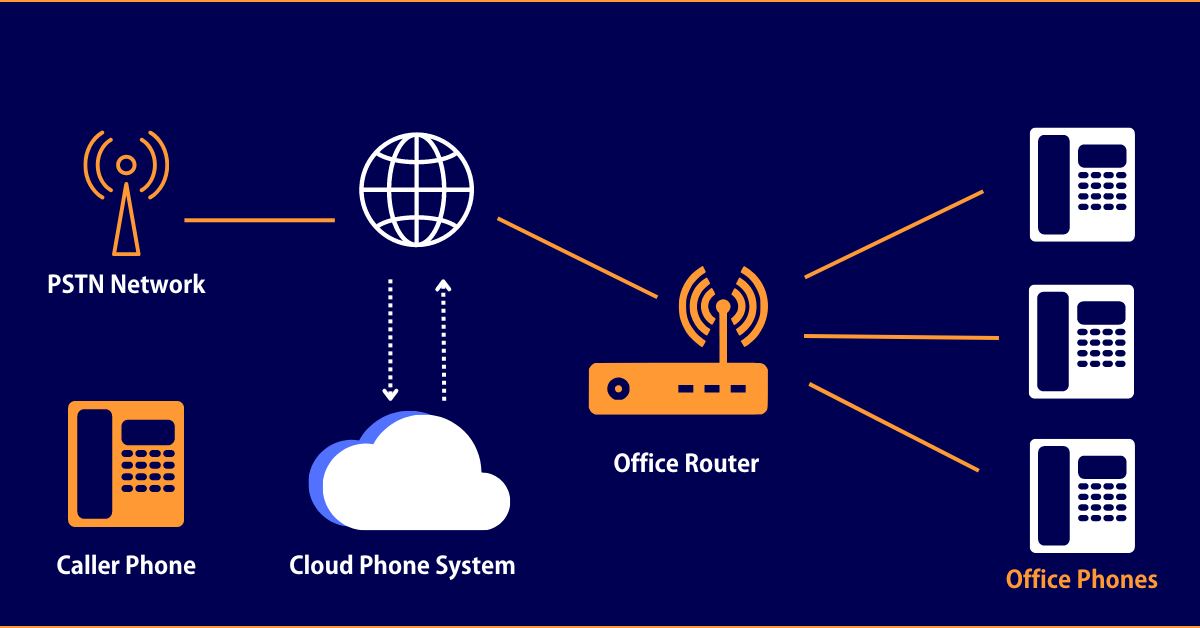
If you are searching for how to get a virtual business phone number, this is where many growing businesses start. A virtual number is not tied to one desk or one device. It can ring on a mobile app, desktop, laptop, or desk phone, depending on how your team works.
This is one of the best choices for hybrid teams, remote teams, founders, consultants, and field staff who need business calling without being stuck in one office.
How to Get a Business Phone Number in 4 Strategic Steps
Step 1: Decide What the Number Needs to Do
Before choosing a provider, decide what your business needs this number to handle every day.
Ask:
- Will this number be used by one person or several team members?
- Do you need local trust, national reach, or both?
- Will people only call, or will they text too?
- Do you need business hours and after-hours rules?
- Do you want to keep your current number?
- Will the team use mobile devices, desktops, or both?
This makes the process of getting a business telephone number much cleaner, because you are not picking based on price alone. You are choosing based on use.
Step 2: Choose the Right Number Type
Once the purpose is clear, choose the number format that fits your audience and operating model.
- Local if trust in a specific market matters
- Toll-free if you want a broader brand reach
- Vanity if recall matters in marketing
- Virtual if flexibility matters most
If you want a number that still works as your business grows, a virtual business number backed by a cloud phone platform is usually the strongest choice.
Step 3: Pick a Provider That Supports Real Business Use
This is where many businesses choose too narrowly. They choose a cheap number and later realize it cannot support routing, team use, texting, integrations, or call handling.
A provider should help you:
- set up business calling on mobile and desktop
- create extensions or shared coverage
- manage business texting
- Route calls based on hours or teams
- port an existing number if needed
- support growth without a hardware-heavy setup
Vitel Global helps businesses get a business number that works beyond the first setup. The number becomes part of a usable communication system, not a standalone line with limits.
Step 4: Set Up the Phone System Around the Number
Once your number is active, the real value comes from how it is configured. A strong setup usually includes:
- custom greeting
- voicemail
- routing rules
- business hours
- call forwarding
- text access
- team assignment
- missed-call handling
This is the stage where the number starts working like part of your business rather than just another line. A missed call can go to voicemail-to-email. A sales call can ring multiple team members. A support line can follow business hours and move to after-hours coverage.
Which Business Phone Number Is Right for You?
The right number depends on how your business is seen, where your customers are located, and how your team handles calls day to day.
- Choose a local number if most of your customers are in one city or service area, and local trust matters.
- Choose a toll-free number if you want a broader reach across states and a contact point that feels more centralized.
- Choose a vanity number if brand recall matters in marketing and you want the number to be easier to remember.
- Choose a virtual number if your team works across mobile devices, remote locations, shared coverage, or multiple users.
For many growing businesses, a virtual business number gives the strongest mix of flexibility, control, and long-term usability.
Business Phone Number Options at a Glance
| Business Need | Best Number Type |
| Build local trust | Local number |
| Support broader reach | Toll-free number |
| Improve brand recall | Vanity number |
| Support flexible work | Virtual number |
What Features Should You Look for in a Business Phone System?
A number alone is not enough. If you want that number to support growth, the phone system behind it matters just as much. The right setup helps your team respond faster, stay organized, and keep customer communication under control.
Multi-Device Access
You should be able to take calls from a desk phone, laptop, or mobile app without changing the business identity the caller sees.
Call Routing and Forwarding
Calls should move where they need to go without confusion. This matters for small teams, growing teams, and owners who are often away from a desk.
Voicemail to Email
This helps teams review missed calls faster and stay on top of follow-up without dialing into voicemail manually.
Business Texting
For many teams, text is now part of normal business communication. Appointment reminders, short updates, and quick replies all move faster this way.
Auto Attendant
A greeting that routes callers to the right path gives even a smaller company a more organized image.
Analytics and Reporting
Once calls increase, reporting starts to matter. You want visibility into missed calls, call volume, response patterns, and team activity.
Integrations
A stronger business phone setup should connect with the tools your team already uses, especially CRM, support, and scheduling tools.
Build a Business Number Around the Way Your Team Works
Launch a business phone setup with calling, texting, routing, voicemail, and mobile access designed for modern customer communication.
Signs You’re Ready to Upgrade to a Business Phone Number
Some businesses wait too long because the current setup still “works.” In reality, the phone setup usually starts showing stress before the owner admits it. Here are the common signs:
You Are Using a Personal Number for Customer Calls
This usually feels fine at first. Then the personal phone turns into the default line for everything. Sales calls, follow-ups, weekend questions, missed leads, support messages, vendor callbacks. At that point, the number is no longer helping the business. It is draining it.
Calls Are Getting Missed or Delayed
Missed calls often mean lost revenue, especially for service businesses, local teams, and smaller companies where each inquiry matters. If callbacks are happening late or not at all, the current setup is already costing more than a proper business line.
You Need Team Coverage
A personal number works for one person. It breaks fast when multiple people need to answer, transfer, or follow up. A small business phone number should let the business grow past one device and one individual.
You Want Better Boundaries
A business phone system gives structure. Business hours, voicemail rules, forwarding logic, shared visibility, and routing all help protect personal time without making the business look unavailable.
You Need a More Professional Front Door
If people are finding your website, ads, listings, or social pages, the business should have a contact point that matches the rest of the brand. This is often the moment when owners stop asking, “Do I really need a business phone number?” and start asking how fast they can get one live.
Managing Your Business Phone on Mobile Devices
One of the biggest reasons businesses now prefer cloud-based phone systems is mobility. The business number is no longer tied to one desk or one office.
With the right system, your team can:
- answer the business number from a smartphone
- make outbound calls that still display the company identity
- check voicemail without calling into a mailbox
- send or receive business texts from the same number
- stay available while traveling, working remotely, or moving between locations
This matters for sales teams, consultants, founders, field staff, account managers, and service businesses where people are not sitting beside a desk phone all day.
If you need a business phone number that works on the go, mobile access should be part of the standard setup, not an added feature.
How Much Does a Business Phone Number Cost?
The cost depends on the number of types, providers, feature sets, and the number of users who need access. What matters more is understanding the difference between paying for a number and paying for a system that can actually support the business.
Basic Cost Factors Include:
- local vs toll-free vs vanity number
- number of users
- texting support
- routing and voicemail features
- mobile and desktop access
- call analytics
- integrations
- number porting if you want to keep an existing line
A basic local number may look cheap upfront, but if it lacks routing, texting, shared use, or forwarding, the business often ends up replacing it later.
A stronger setup usually gives more long-term value because it includes the tools that reduce missed calls, improve response speed, and support growth.
That is why the real comparison is not just the monthly price. It is the value per month.
What Affects Business Phone Number Cost?
The monthly cost of a business phone setup usually depends on a few practical choices:
- number type, such as local, toll-free, vanity, or virtual
- number of users who need access
- whether business texting is included
- call routing and voicemail features
- mobile and desktop calling support
- reporting and integrations
- whether you want to keep an existing number
A lower monthly price may look attractive at first, but if the setup cannot support routing, texting, shared use, or mobile access, the business often ends up replacing it later. A stronger setup usually delivers better value because it supports cleaner communication from the start.
Business Phone Number Cost by Business Stage
Solo Founder or Freelancer
A solo operator may only need one number, voicemail, mobile access, and call forwarding. In that case, the goal is simplicity with a professional look.
Small Team
A growing business usually needs shared access, business hours, text support, and basic routing. This is where a real business phone number for small business use starts to show its value.
Multi-User Team
Once multiple people need to answer calls or manage separate call paths, the number should sit inside a stronger system with routing, reporting, and role-based access.
This is where businesses often realize that a proper setup costs less than continuing with a patchwork of personal phones, missed calls, and manual follow-up.
Why Vitel Global Is a Smarter Choice for Business Phone Numbers
Vitel Global helps businesses do more than just get a business phone. It helps them turn that number into a working communication asset.
With Vitel Global, businesses can support:
- local, toll-free, and virtual number options
- calling across desktop and mobile devices
- business texting
- voicemail and routing controls
- shared access for teams
- call management built for growth
- cleaner communication for sales and support workflows
This is especially useful for teams that have moved past basic calling and want a system that supports mobility, response speed, and brand credibility.
How to Get a Business Phone Number With Vitel Global
If you are ready to move forward to get a modern business phone system with AI features, the setup can stay simple.
1. Choose the Number Type
Select local, toll-free, vanity, or virtual based on your market and goals.
2. Decide Whether to Keep or Replace Your Current Number
If you already have a number that customers know, you may be able to port it. If not, choose a fresh number that fits your market better.
3. Set the System Around the Number
Add voicemail, call routing, business hours, forwarding, texting, and team assignment based on how your business operates.
4. Start Using It Across Devices
Use the number through mobile, desktop, or other supported devices so the team can stay connected from anywhere.
This gives businesses a practical way to launch a business number without turning the setup into a long technical process.
Why Vitel Global Fits Businesses That Are Still Deciding
Some businesses know they need a better system. Others are still comparing whether to stay with a personal line, add a second phone, or switch to a full business platform.
Vitel Global fits well when your business is at any of these points:
- You are still using a personal mobile for work
- Want a separate line without carrying two phones
- Need a business phone number for small business growth
- Want to keep your current number and upgrade the system around it
- You want cleaner calling for sales, support, or client communication
- You need mobile access with better control
That makes it useful for early-stage businesses, established teams, and growing organizations that want a more organized communication setup without extra complexity.
Conclusion
If you want to get a business phone number, think beyond the number itself. The real decision is about how your business wants to be reached, how your team wants to work, and how much control you want over calls, texts, voicemail, and follow-up.
A dedicated business line improves more than appearance. It supports privacy, cleaner response handling, customer trust, and long-term flexibility. It helps separate work from personal life, gives teams better coverage, and creates a more credible way for customers to contact you.
Vitel Global helps businesses launch that next step with local, toll-free, vanity, and virtual number options backed by a more practical business phone system.
Give Your Business a Number That Can Support Growth
Set up a business phone number with the calling, control, and flexibility your team needs as customer demand grows.
Frequently Asked Question
1. What is the fastest way to get a business phone number?
The fastest path is usually through a cloud phone provider that lets you choose a number online and activate it across mobile or desktop devices. This is often the simplest way to get a business number without new hardware or long setup delays.
2. Can I use my current phone for business calls?
Yes. Many cloud systems let you use your existing phone through a mobile app while keeping your personal number private. This is a common option for owners asking how to get a business phone without carrying two devices.
3. What is the best business phone number for a small company?
That depends on the audience and work style. A local number works well for regional trust. A toll-free number works well for a broader reach. A virtual number is often the strongest choice when flexibility matters. For many teams, a business phone number for small business use works best when it also includes texting, routing, and mobile access.
4. Can I keep my existing number?
In many cases, yes. Number porting lets businesses move an existing number into a new phone system, so customers do not need to learn a new contact line.
5. How do I know if I need a business phone number?
If work calls are mixed with personal calls, customer follow-up is messy, or more than one person needs coverage, then yes, you likely need a business phone number already.
Published: May 5th, 2026
Subscribe to Our Latest Updates
Get monthly product and feature updates, the latest industry news, and more!