



What Is PRI? The TLDR on Primary Rate Interface
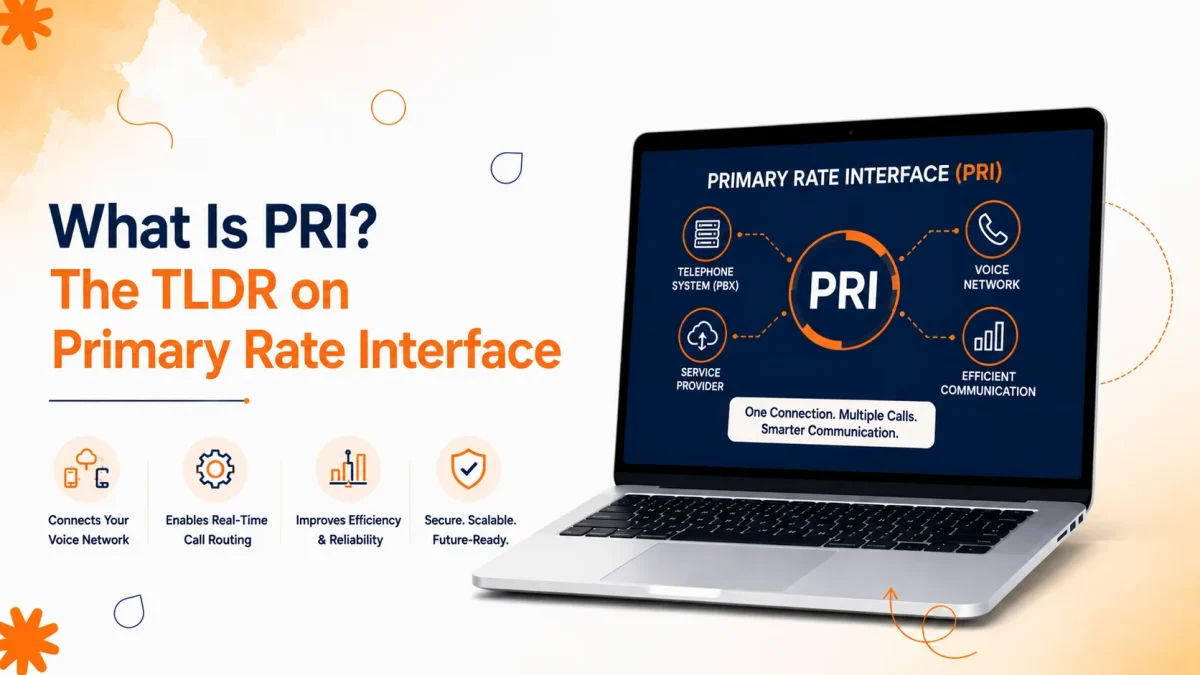

Table of Contents
A business phone system should help people connect quickly, clearly, and without confusion. For years, many companies used PRI lines to make that happen.
PRI stands for Primary Rate Interface. It is a digital telephone connection that allows a business to handle multiple calls simultaneously over a single telecom line. Before VoIP, SIP trunking, cloud phone systems, and AI-powered communication platforms became common, PRI was one of the most trusted options for offices, hotels, hospitals, banks, schools, call centers, and support teams.
But business communication has changed. Teams now work across offices, homes, mobile devices, and customer channels. So, what is PRI today? Is it still useful, or is it time to move to SIP, VoIP, or a unified communications platform?
This guide explains Primary Rate Interface in simple language, including how it works, where it still fits, and when it may be time to modernize your phone system.
What is Primary Rate Interface?
Primary Rate Interface is a digital telecom service that connects a company’s phone system to the public telephone network. It allows multiple calls to happen at the same time through one structured line. A normal phone line usually carries one call at a time, but a PRI phone system gives businesses several calling channels inside one connection. This means multiple employees can make or receive calls without needing separate physical lines for each person.
Think of PRI like a highway. The PRI line is the highway, and the channels are the lanes. If it has 23 calling lanes, 23 calls can happen at once. If it has 30 calling lanes, 30 calls can happen at once. The full form of PRI is Primary Rate Interface, where “Primary” means it is built for larger business communication needs, “Rate” refers to digital transmission capacity, and “Interface” means the connection point between the telecom provider and the business phone system.
How Does a PRI Phone System Work?
A PRI phone system usually connects four main parts:
Telecom Provider → PRI Line → PBX or EPABX → Office Phones and Extensions
The telecom provider delivers the PRI circuit to the business location. That circuit connects to the company’s PBX or EPABX system. The PBX then manages incoming calls, outgoing calls, extensions, departments, call transfers, and call routing.
For example, a company may have 100 employees. It does not need 100 separate outside phone lines because not all employees are on external calls at the same time. With PRI trunking, the business can share a fixed number of calling channels across many users.
If the business has 23 active PRI channels, 23 external calls can happen at once. If a 24th person tries to make or receive an external call, the call may wait, fail, or move to another route depending on the setup.
How PRI Works: T1 and E1 Explained
| Feature | T1 PRI | E1 PRI |
| Commonly Used In | North America and Japan | Europe, India, Australia, and many other regions |
| Total Channels / Timeslots | 24 | 32 |
| Voice/Data/Video Channels | 23 B Channels | 30 B Channels |
| Signaling Channel | 1 D Channel | 1 D Channel |
| Data Per Channel | 64 kbps | 64 kbps |
| Total Line Rate | 1.544 Mbps | 2.048 Mbps |
| Physical Connection | Usually two pairs of copper wires | Usually two pairs of copper wires |
A B channel carries the actual call, data, or video communication. A D channel handles signaling, such as call setup, caller ID, routing, and disconnect signals.
A common mistake is saying PRI always supports 23 calls. That is only true for T1 PRI. In many regions, E1 PRI supports 30 simultaneous calls.
Is PRI the Same as ISDN PRI?
PRI is part of the ISDN family, so it is often called ISDN PRI.
ISDN stands for Integrated Services Digital Network. It was created to carry digital voice and data over traditional telecom infrastructure.
There are two common ISDN service types:
BRI, or Basic Rate Interface, was designed for smaller needs.
PRI, or Primary Rate Interface, was designed for businesses and larger organizations.
When people talk about PRI lines, PRI telecom, PRI trunking, or a PRI phone system, they are usually talking about ISDN PRI connected to a PBX or EPABX system.
PRI, PBX, and EPABX Explained
Many readers confuse PRI with PBX, but they are not the same.
PBX stands for Private Branch Exchange.
EPABX stands for Electronic Private Automatic Branch Exchange.
A PBX or EPABX is the office phone system that manages extensions, departments, internal calls, call transfers, incoming calls, outgoing calls, and routing rules.
PRI is the connection that links this office phone system to the outside telephone network.
Simple explanation:
PBX or EPABX manages office calls. PRI connects that phone system to the telecom provider.
What Is PRI Used For?
PRI is commonly used by businesses that need multiple calls to happen at the same time from one location.
Common use cases include:
- Customer support teams handling inbound calls
- Call centers managing high call volume
- Hotels connecting rooms, reception, and departments
- Hospitals managing patient, admin, and emergency calls
- Banks and financial service offices
- Schools and universities
- Real estate offices with sales and support teams
- Large offices with many extensions
- Businesses that need stable inbound and outbound calling
PRI became popular because it helped companies organize business phone lines without installing a separate external line for every user.
What PRI Is Not
This section matters because PRI is often confused with other phone technologies.
- PRI is not a regular home phone line.
- PRI is not the same as VoIP.
- PRI is not SIP trunking.
- PRI is not an internet connection.
- PRI is not a mobile calling service.
- PRI is not a cloud phone system by itself.
PRI is a digital telecom connection used to connect a business phone system to the public telephone network.
PRI Lines vs Regular Analog Phone Lines
Traditional analog lines can become difficult to manage when call volume grows. If one analog line supports one external call, a growing business needs more wiring, more physical lines, and more maintenance.
PRI solved this by giving businesses multiple call channels through one digital circuit.
| Feature | Analog Line | PRI Line |
| Call Capacity | Usually 1 call per line | 23 or 30 calls depending on PRI type |
| Best For | Small or basic use | Business phone systems |
| Call Quality | Basic analog quality | Digital and stable |
| Scalability | Requires more physical lines | More channels in one trunk |
| PBX Support | Limited | Strong business PBX support |
This is why PRI became a major upgrade from analog business phone lines.
What Is PRI Trunking?
PRI trunking means using a PRI connection as a shared trunk between the telecom provider and a business phone system.
A trunk is a shared communication path that carries multiple calls. Instead of buying one line for every employee, the business uses a trunk with multiple channels.
For example, a company may have 80 employees but only 20 people on external calls during peak hours. A PRI trunk can support shared call capacity across the team.
PRI trunking can support inbound calls, outbound calls, direct inward dialing, caller ID, extension routing, and centralized call management when connected to the right PBX setup.
Benefits of Primary Rate Interface
PRI became popular because it gave businesses a stronger alternative to basic analog phone lines.
Lower Cost Than Multiple Analog Lines
PRI can reduce costs when compared with maintaining many individual analog lines. Several employees can share one PRI circuit, which means fewer physical lines, cleaner infrastructure, and easier call capacity planning.
Strong Digital Call Quality
PRI is a digital service, so it usually delivers clearer and more stable voice quality than old analog phone lines. Each channel typically carries 64 kbps, which is enough for traditional digital voice calls.
Multiple Calls at the Same Time
One PRI line can support several simultaneous calls. A T1 PRI usually supports 23 active calls, while an E1 PRI usually supports 30 active calls.
Works with PBX and EPABX Systems
A PRI phone system works well with traditional PBX and EPABX setups. The PBX manages extensions, departments, transfers, forwarding, and call routing while PRI connects the business to the outside telephone network.
Supports Useful Calling Features
PRI can support business calling features such as caller ID, call forwarding, conferencing, direct inward dialing, and centralized call control. These features help employees manage calls more efficiently than basic analog lines.
Centralized Management
With PRI, businesses can manage calling through one phone system instead of handling many separate lines. Adds, moves, routing changes, and extension management can be controlled through the PBX.
Better Reliability With Redundancy
PRI is known for stable office-based calling. Businesses can also add redundant PRI circuits to reduce the risk of downtime if one circuit fails.
A Digital Step Up From Analog
PRI was a future-ready upgrade when compared with older analog phone systems. However, SIP, VoIP, and cloud UCaaS are now better aligned with modern business communication.
Limitations of PRI Lines
PRI solved major communication problems in the past, especially for businesses using legacy PBX systems. But as SIP, VoIP, and cloud phone systems became common, PRI started to show its limits.
Higher Cost Than VoIP
PRI lines can be more expensive than modern internet-based phone systems. Businesses may also need to pay for hardware, installation, maintenance, and additional circuits as call volume grows.
Fixed Capacity Limits
Each PRI circuit has a fixed number of call channels. A T1 PRI usually supports 23 simultaneous calls. If a business needs more capacity, it may need another PRI circuit.
More Complex Setup
PRI systems often require compatible PBX hardware, PRI cards, gateways, and trained technicians. This can make installation, troubleshooting, and changes more complex than cloud-based phone systems.
Limited Flexibility
PRI depends on the telecom provider’s available features and signaling standards. It may not easily support newer IP-based capabilities such as AI call summaries, CRM-connected workflows, mobile apps, advanced analytics, or omnichannel communication.
Provider Network Dependency
PRI reliability depends partly on the service provider’s network. Line cuts, switch outages, or local infrastructure issues can affect business calling.
Legacy Technology
PRI is tied to older TDM-based telecom infrastructure. As providers shift toward IP-based networks, long-term PRI support may become limited in some regions.
Reduced Availability
PRI service may not be available everywhere. In some locations, telecom providers are reducing support for traditional PRI and ISDN services as they move toward SIP and cloud-based communication.
PRI vs SIP vs Hosted VoIP: What Is the Difference?
Many businesses compare PRI, SIP, and hosted VoIP when deciding whether to keep legacy phone lines or move to internet-based calling.
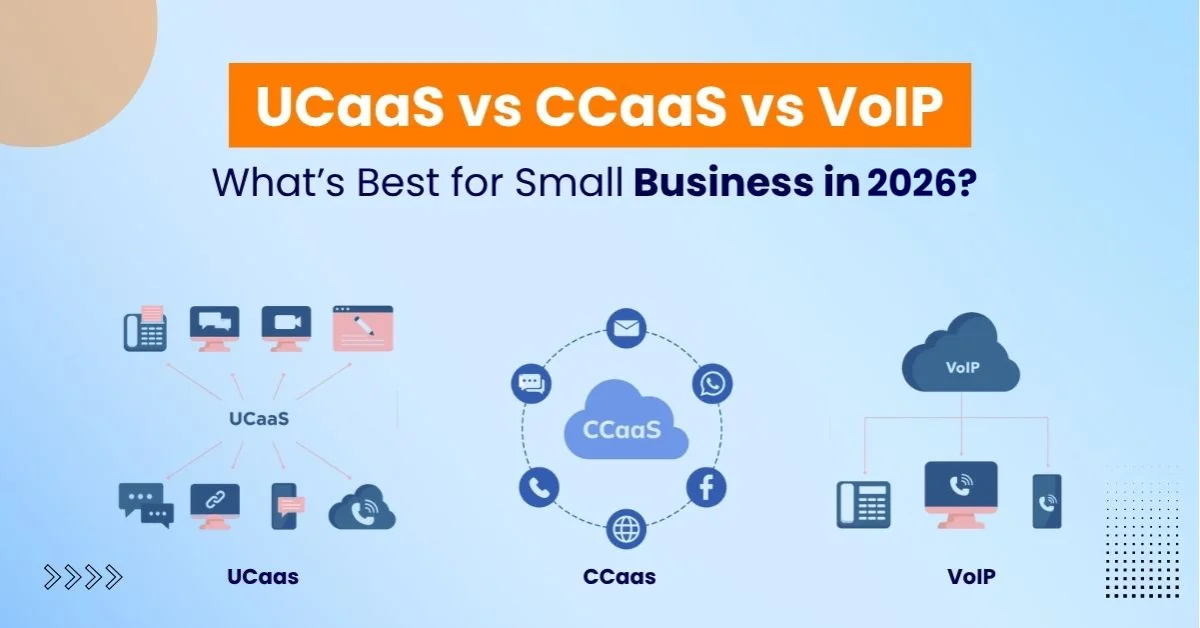
PRI uses a physical digital circuit. SIP trunking uses the Internet Protocol to connect calls through an IP PBX or phone system. Hosted VoIP moves the phone system to the cloud, so businesses can manage calls, users, routing, and features with less on-site hardware.
| Feature | PRI | SIP Trunking | Hosted VoIP |
| Connection Type | Physical telecom circuit | Internet/IP-based trunk | Cloud-based phone system |
| Scalability | Added in fixed channel blocks | Easier to scale up or down | Easy to add users, numbers, and features |
| Remote Work Support | Limited | Better for remote and hybrid teams | Strong support for remote and hybrid teams |
| Hardware Need | PRI card, gateway, or PBX hardware | IP PBX or SIP-compatible system | Minimal on-site hardware |
| Setup Complexity | More technical and location-dependent | Moderate, depending on PBX setup | Usually faster and simpler |
| Cost Flexibility | Can be higher due to circuits and maintenance | More flexible than PRI | Often easier to manage monthly |
| Reliability | Stable dedicated line | Depends on internet quality and provider setup | Depends on internet and cloud provider reliability |
| Modern Features | Limited | Supports more IP-based features | AI, CRM integration, analytics, messaging, meetings, UCaaS capabilities |
Simple answer: PRI is traditional and circuit-based. SIP is internet-based and more flexible. Hosted VoIP is cloud-based and better suited for businesses that want calling, routing, messaging, meetings, analytics, CRM workflows, and AI-powered communication features in one place.
Is PRI Better Than VoIP?
PRI is not better or worse in every case. It depends on the business.
PRI can be useful when a company has a working PBX, fixed office users, predictable call volume, and simple calling needs.
VoIP is better when a business wants cloud access, lower hardware dependency, CRM integrations, call analytics, mobile apps, AI call summaries, and communication from anywhere.
A business that only needs desk phone calling may still find PRI acceptable. A business that needs calling, messaging, meetings, CRM updates, and AI-powered insights in one place will usually need a more modern setup.
Is PRI Still Used?
Yes, PRI is still used by many businesses, especially those with older PBX systems and fixed office setups.
But PRI is no longer the default choice for modern business communication. Many companies are replacing PRI lines with SIP trunking, VoIP, hosted PBX, or unified communications platforms.
The reason is simple. Business communication now needs more than call capacity. Teams need faster routing, remote access, call intelligence, CRM updates, voicemail to email, video meetings, SMS, analytics, and AI-powered follow-ups.
PRI was built for a desk-phone-first workplace. Many businesses now need a conversation-first platform.
When Should You Still Use PRI Instead of SIP?
PRI may still make sense if:
- The business already has a working PBX or EPABX
- Most users work from one office
- Call volume is predictable
- The company wants a dedicated traditional voice circuit
- Internet reliability is poor in the area
- Existing PRI contracts are still cost-effective
SIP, VoIP, or cloud phone systems may be better if:
- The team works remotely or across locations
- The business wants faster scaling
- The company needs call analytics and recordings
- Sales and support teams need CRM integration
- Managers need AI summaries and automation
- The company wants lower hardware dependency
- The business is modernizing its phone system
How to Plan a PRI Migration
Moving away from PRI should be planned carefully. A rushed migration can create missed calls, number issues, or routing problems.
Before switching away from PRI, review:
- Current PRI lines and active channels
- Peak call volume
- All business numbers and DID numbers
- PBX or EPABX compatibility
- Fax machines, alarms, elevators, POS systems, and emergency lines
- Internet bandwidth and backup options
- Current call routing rules
- CRM and support software needs
- Number porting timeline
- Failover routing
- User training requirements
The goal is not only to replace PRI. The goal is to improve how the business communicates.
Common PRI Myths
Myth 1: PRI Means 23 Phone Numbers
No. PRI channels and phone numbers are different. Channels decide how many calls can happen at the same time. Phone numbers decide how people reach the business.
Myth 2: PRI Is the Same as PBX
No. PRI is the connection from the telecom provider. PBX is the business phone system that manages calls internally.
Myth 3: PRI Is an Internet Connection
No. PRI is not broadband internet. It is a digital telecom circuit.
Myth 4: One PRI Gives Unlimited Calls
No. A PRI line has a fixed number of channels. Once all channels are busy, additional calls need overflow rules or another route.
Myth 5: PRI Is Always Better Than VoIP
Not always. PRI can be stable, but SIP, VoIP, and cloud phone systems are usually more flexible for modern teams.
PRI Glossary: Important Terms You Should Know
- PRI: Primary Rate Interface, a digital business phone connection.
- ISDN: Integrated Services Digital Network, a digital network technology used for voice and data.
- PBX: Private Branch Exchange, an internal business phone system.
- EPABX: Electronic Private Automatic Branch Exchange, a business phone system for managing extensions and calls.
- PSTN: Public Switched Telephone Network, the traditional telephone network.
- T1: PRI format commonly used in North America and Japan.
- E1: PRI format commonly used in Europe, India, Australia, and many other regions.
- B Channel: The channel that carries the actual call, data, or video.
- D Channel: The channel that handles signaling and call control.
- DID: Direct inward dialing number assigned to a user, team, or department.
- SIP Trunking: Internet-based alternative to PRI trunking.
- VoIP: Voice over Internet Protocol, which carries calls over the internet.
- UCaaS: Unified communications as a service, a cloud platform for calls, meetings, messaging, and collaboration.
How Vitel Global Helps Businesses Move Beyond Legacy PRI
Vitel Global helps businesses modernize communication with AI-powered unified communications built for today’s teams.
Instead of managing calls separately from meetings, messages, workflows, and customer data, businesses can bring communication into one connected platform.
With Vitel Global, teams can support business calling, VoIP phone service, smart call routing, team messaging, video meetings, AI call summaries, CRM-connected communication workflows, remote access, customer response management, and scalable communication across locations.
For businesses still using PRI lines, this creates a clear path from legacy phone infrastructure to a smarter communication system.
The benefit is not just replacing old business phone lines. It is helping teams respond faster, work from anywhere, reduce manual follow-ups, and improve every customer conversation.
Final Thoughts
Primary Rate Interface played an important role in business telecom. It gave companies a reliable way to manage multiple calls through one digital connection. For many years, PRI phone systems helped businesses move beyond basic phone lines and handle higher call volume with more structure.
But today, the question is not only “what is PRI?” The better question is, “Does PRI still match the way this business works?”
If your team is office-based, your PBX is stable, and your call needs are simple, PRI may still work. But if your business needs remote access, AI call summaries, CRM-connected workflows, flexible routing, meetings, messaging, and better customer response, it may be time to move beyond PRI lines.
Modern communication is no longer just about making calls. It is about connecting every customer conversation, every team, and every follow-up in one smarter system.
Ready to Move Beyond Legacy PRI Systems?
Modernize your business communications with AI-powered VoIP, unified communications, smart call routing, CRM integrations, and seamless remote connectivity—all on one platform.
FAQs
1. What is PRI in telecom?
PRI in telecom means Primary Rate Interface. It is a digital business phone connection that links a company’s PBX or EPABX system to the public telephone network and allows multiple calls to happen at the same time.
2. How many calls can one PRI line handle?
A T1 PRI usually handles 23 simultaneous calls, while an E1 PRI usually handles 30 simultaneous calls. The number depends on the PRI circuit type and the region where the business phone system is used.
3. What is the difference between PRI and SIP?
PRI uses a physical telecom circuit, while SIP uses internet protocol to support business calling. PRI is usually tied to fixed office infrastructure, while SIP is more flexible for remote teams, cloud calling, CRM integration, and modern communication workflows.
4. Should my business move from PRI to VoIP?
Your business should consider moving from PRI to VoIP if your phone system is expensive, difficult to scale, tied to one office, or missing features like remote access, call analytics, CRM workflows, AI call summaries, and smarter routing.
5. Can Vitel Global replace my PRI phone system?
Yes. Vitel Global can help businesses move from legacy PRI phone systems to AI-powered VoIP and unified communications, bringing calling, routing, messaging, meetings, customer conversations, and call intelligence into one modern platform.
6. Can I keep my existing business numbers with Vitel Global?
Yes. Businesses can usually port existing numbers to Vitel Global when moving from PRI, PBX, or traditional phone service to VoIP. This helps reduce disruption and keeps customer-facing numbers active.
7. Does Vitel Global support AI call summaries and CRM-connected workflows?
Yes. Vitel Global supports AI-powered communication features such as call summaries, transcripts, conversation insights, and CRM-connected workflows. These help sales, support, and operations teams reduce manual notes and follow up faster.
Published: June 24th, 2026
Subscribe to Our Latest Updates
Get monthly product and feature updates, the latest industry news, and more!