



Complete Guide on Small Business Phone Systems


Table of Contents
A business phone system for small businesses is no longer just a calling setup sitting on a desk. It has become the communication layer that shapes how a company answers customers, routes sales calls, supports remote staff, and keeps every conversation organized. For growing teams, the right setup can reduce missed calls, tighten response times, and give a smaller company the polish customers usually expect from a much larger brand.
Today’s small business phone systems, VoIP phone service, and cloud-based phone system options give companies far more than voice calling. They support call forwarding, auto attendants, voicemail to email, mobile access, live transcriptions, call summaries, team messaging, CRM connections, and reporting. That shift matters. A small business no longer has to choose between affordability and capability. With Vitel Global, that communication stack can be built for day-to-day business use while still leaving room to grow.
What Are Business Phone Systems?
A business phone system is a communication setup that helps a company manage inbound and outbound calls across individuals, teams, and locations. Basic lines may only ring one phone. Modern business telephone systems handle extensions, transfers, call queues, voicemail, conference calling, routing rules, and shared business numbers.
For a small company, this can mean much more than having one office line. It can mean a sales call reaching the right rep on time, a support call getting directed to the right queue, and an after-hours inquiry still being captured properly.
A strong business phone system for small businesses usually helps teams:
- Answer calls from one central business number
- Route calls by department, time, or user availability
- Keep business and personal calls separate
- Support desktop, mobile, and softphone access
- Record, review, and manage customer conversations
- Look more established without adding front-desk overhead
Still using a basic line for business calls?
See how Vitel Global helps small teams manage calls with more structure and less confusion.
The Different Types of Small Business Phone Systems
Not every business needs the same setup. The best choice depends on team size, work style, budget, and how often calls drive revenue or service delivery.
KSU Systems
KSU systems are often seen as entry-level business phone setups. They work for smaller offices with limited staff and fairly simple call needs. In most cases, they are better suited to traditional environments with fixed desks and limited growth plans.
They may work for a very small office, though they usually feel restrictive once the team starts expanding. Mobility is limited, changes take more effort, and they do not give the flexibility most modern teams now expect.
PBX Systems
PBX systems are built to manage calls inside a business using shared lines and internal extensions. They are more advanced than KSU setups and can support higher call volume.
A traditional PBX can work well for larger offices, though installation and maintenance costs can rise quickly. Cabling, hardware, upgrades, and internal management all add weight to the setup. For smaller companies trying to stay lean, that can become a burden.
VoIP Systems
A VoIP phone system uses the internet to place and receive calls instead of relying only on traditional copper lines. This is now the direction most growing companies are taking.
A voice over IP phone system supports mobility, lower calling costs, easier setup, and richer features. It also allows businesses to run communication through desk phones, laptops, and mobile apps rather than being tied to one location.
For many teams, a VoIP phone system for small businesses is the most practical route because it supports present-day work habits. Staff can answer from home, from the road, or from another branch without losing business continuity.
Not sure which phone system fits your business today?
Compare smarter calling options with Vitel Global and choose a setup built for how your team actually works.
What Is the Most Effective Business Phone System?
There is no single answer that fits every company. A local services business will not use the same setup as a legal office, a staffing agency, or a multi-location sales team. The most effective system is the one that matches how your business actually communicates.
A good fit usually depends on:
- How many people answer calls
- Whether your team works from one office or several places
- Whether you need calling only or messaging and meetings too
- How often do calls need routing, recording, or reporting
- Whether your sales or support team relies on CRM visibility
For many growing companies, the strongest option is a cloud-based phone system built on VoIP. It gives access to the features modern teams actually use without locking the business into expensive hardware-heavy systems.
That is where Vitel Global becomes relevant. Its business phone offering already supports HD voice, call routing, call forwarding, voicemail, transcriptions, summaries, CRM connectivity, mobile and desktop access, and smart call handling inside one cloud voice environment. Those are not decorative extras. They are the features that help a small business answer faster and operate with less friction.
What Is a VoIP Business Phone System?
A VoIP business phone system uses internet connectivity to carry voice calls instead of relying only on legacy phone lines. This means your team can use the system through IP phones, desktop apps, mobile apps, and other connected devices.
For a small business, that changes a lot. The company is no longer tied to one front desk phone or one fixed office setup. A sales rep can answer through a laptop. A manager can pick up a customer call through a mobile app. A remote team member can stay on the same business number without exposing a personal line.
A modern VoIP phone service usually includes:
- Direct business numbers for users or departments
- Auto attendants and routing rules
- Call forwarding and transfer
- Voicemail and voicemail-to-email
- Conference calling
- Call recording and reporting
- CRM and business app integration
How VoIP Phones Work
Older systems were tied to on-site switching hardware. Calls moved through fixed infrastructure, and change requests often needed more time, more equipment, and more effort.
A voice-over-IP phone system works differently. Voice is converted into digital packets and carried through the internet. That allows the business to use its data network for calling, which makes setup and expansion far easier.
From the user side, it still feels familiar. You answer, dial, transfer, mute, hold, and conference just as you would on a normal business phone. The difference sits underneath. The system is more flexible, more portable, and far easier to manage when your team grows or changes.
Traditional Phone Systems vs VoIP Business Phone Systems
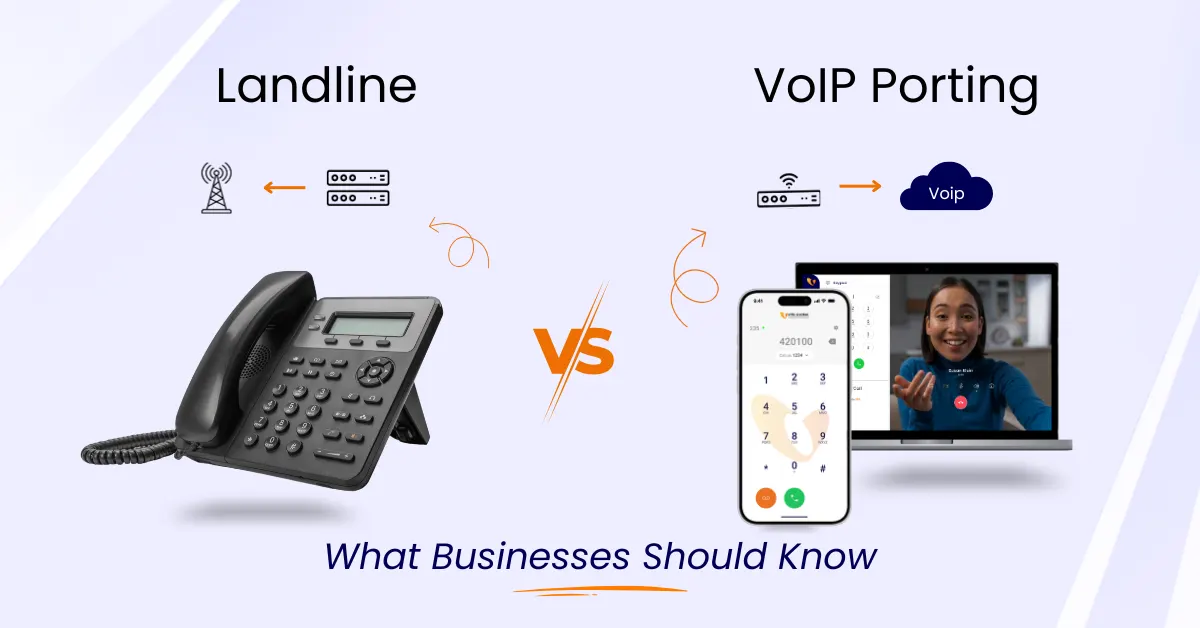
Traditional systems still have their place, though they often feel rigid for modern business use. They may require more hardware, more maintenance, and more cost as the team expands.
A VoIP system for small businesses usually gives smaller companies more room to operate well without carrying the same overhead.
Traditional Phone Systems
These are usually tied to fixed lines and fixed locations. They can be dependable, though expansion often means more installation, more equipment, and less agility.
VoIP Business Phone Systems
A VoIP phone system for a small business offers more flexibility. It is usually easier to scale, simpler to manage, and better suited to remote work, distributed teams, and mobile access.
It also supports features that traditional lines often lack or price at a premium, such as:
- Mobile and desktop calling
- Shared business numbers
- Advanced call forwarding
- Smart call routing
- Team messaging
- CRM integration
- Call recordings and summaries
Types of VoIP Phones
VoIP setups can support different device preferences depending on how your team works.
Hardware-Based Phones
These look like regular business desk phones, though they connect to the internet and support more advanced calling features. They are useful for front desks, office managers, and users who prefer a physical handset.
Software-Based Phones
Softphones run on laptops, desktops, tablets, or smartphones. They are often the best fit for remote users, hybrid teams, traveling staff, and companies that want flexibility without buying desk hardware for everyone.
Vitel Global supports desktop and mobile access as part of its phone environment, which makes it easier for a small business to keep one business identity across devices instead of juggling scattered communication habits.
VoIP Phones for Small Businesses
Small companies are moving toward VoIP because it gives them a better balance of affordability, control, and capability. Customers still expect fast answers and polished service, even when they are calling a team of five instead of a team of five hundred.
That is why business phones for small business use cases now go beyond basic dial tone. A small company may need:
- A virtual receptionist to greet and direct callers
- Mobile calling without exposing personal numbers
- Call logs and recordings for follow-up
- Shared numbers for sales or support
- Conference calling for distributed teams
- Fax alternatives and voicemail delivery by email
These are practical business functions. They help a smaller company stay reachable, look organized, and protect opportunities that might otherwise slip through.
Why a VoIP Business Phone System Is Necessary for Small Businesses
The phone system is often where first impressions are made. Customers judge speed, clarity, professionalism, and responsiveness from that first interaction.
A strong business phone system for small businesses helps companies:
- Look established from day one
- Avoid missed calls during busy hours
- Route calls better without a full receptionist team
- Support remote and hybrid work
- Reduce communication costs
- Keep customer conversations tied to the right records
Vitel Global’s broader communication environment also strengthens that position. Its product stack includes call routing, voicemail, call summaries, live transcriptions, integrations, team chat, CRM connections, and UCaaS support that give smaller teams a more complete communication model instead of a bare-bones phone line.
Benefits of VoIP for Small Businesses
For a smaller company, the strongest value of a VoIP business phone system is not just lower call costs. It is the way the whole business starts communicating with more control.
Easy to Maintain, Set Up, and Manage
Traditional lines often come with more setup friction, more service dependency, and more cost when the business needs changes. A VoIP phone service is usually much lighter to manage.
New users can be added quickly. Routing can be updated without rewiring an office. Business numbers can be reassigned when roles change. This matters for small teams where every admin hour counts.
Vitel Global’s cloud voice model supports that kind of flexibility through mobile and desktop access, business calling controls, routing options, and centralized management tools.
Flexibility and Mobility
A small company rarely operates from one fixed desk anymore. Owners move. Sales staff travel. Support teams may work from different places. A cloud-based phone system helps the business stay available without forcing everyone into one physical office.
With the right setup, staff can:
- Answer from a business app on mobile
- Use desktop calling while working remotely
- Transfer calls across locations
- Keep the same business identity across devices
That gives the company a more stable front end, even when the team itself is moving around.
Lower Company Expenses
Traditional systems often bring setup costs, maintenance costs, and higher charges for expansion. A VoIP phone system lowers much of that burden.
Smaller companies can often avoid:
- Large PBX hardware investments
- Extra wiring for every change
- Separate systems for voice and messaging
- High long-distance charges
That is one reason many businesses now see the best VoIP for small business conversations as more than a telecom decision. It is really an operating-cost decision.
Scales as the Business Grows
Growth creates pressure on communication. More staff means more numbers, more routing needs, more departments, and more customer volume.
A VoIP system for a small business makes that growth easier to manage. New users, new extensions, and new numbers can usually be added without replacing the entire setup. That is a major advantage for businesses that are hiring, opening new locations, or shifting toward hybrid work.
Helps Staff Get More Done
The benefit is not just that calls happen online. It is that the system supports work around the call.
That includes:
- Voicemail to email
- Call recording
- Transcriptions
- Call summaries
- Smarter routing
- Faster internal transfers
Those features cut down on repeated explanations, scattered notes, and missed follow-ups. Vitel Global highlights live transcriptions, call summaries, smart call routing, call handling, and integrations as part of its business phone environment, which helps smaller teams stay sharper without adding more layers of complexity.
Helps Small and Mid-Sized Businesses Compete Better
A smaller company may not have a large front desk team, a staffed call center, or dedicated communications administrators. That does not mean it should sound small.
A polished business phone system for small businesses helps a company:
- Answer professionally
- Route with clarity
- Use toll-free or local numbers
- Keep staff reachable
- Present one strong business identity
That can lift credibility quickly, especially for businesses selling into competitive markets.
Reduce missed calls and make every customer conversation easier to manage.
Discover how Vitel Global helps small businesses stay reachable without adding communication overhead.
The Cost of Small Business Telephone Service
The cost of a phone system depends on the type of service, the size of the team, and the depth of features required. Some businesses need a simple voice setup. Others need shared calling, CRM visibility, call recordings, messaging, and multiple device access.
In general, smaller businesses often choose between:
- Basic traditional lines
- On-premise PBX environments
- Hosted or cloud voice platforms
- Full VoIP phone system for small business setups
Traditional and on-premise options can become expensive when you factor in maintenance, hardware, setup, support, and future changes. A cloud-based phone system usually gives more predictable monthly spending, which is easier for small businesses to manage.
The real cost question is not only what the system costs to install. It is also what the business loses through missed calls, poor routing, delayed response, and disconnected tools.
Business Phone System and Professional Growth
A strong communication setup helps a company look more established from the outside and run more cleanly on the inside.
That growth effect shows up in a few ways.
Better First Impressions
Customers notice how calls are answered. A polished greeting, clear menu options, smart call transfer, and fast routing all create confidence. A growing company needs that kind of consistency.
Better Team Coordination
As a business expands, communication becomes harder to manage by memory and informal habits. A stronger system gives structure to who answers, who follows up, and where calls go.
Better Customer Retention
Customers are more likely to stay with a business that feels responsive and organized. That does not come only from the quality of the service being sold. It also comes from how easy the business is to reach.
Better Sales Support
For sales teams, a missed call is not a small issue. It can be lost revenue. A stronger system with business numbers, routing, summaries, recordings, and CRM integration helps teams move faster from inquiry to follow-up.
The Features of Small Business Telephone Service
A phone system should not be judged only by whether it can place a call. The stronger question is whether it helps the business manage communication well.
Here are the features that matter most in modern small business phone systems.
Call Forwarding
Call forwarding remains one of the most practical features for small businesses. It helps route incoming calls to the right person, backup user, department, or device when the primary line is busy or unavailable.
This is especially useful for small teams that do not have a staffed receptionist at all hours.
Auto Attendant and Routing
An auto attendant helps guide callers without needing a live person to answer every first interaction. Smart routing then moves those calls where they need to go.
This reduces confusion and keeps calls from bouncing between team members.
Voicemail and Voicemail to Email
Voicemail still matters. What matters more is how quickly the team can act on it. Email delivery and digital access make it that much easier.
Mobile and Desktop Access
Modern business phones for small businesses should not be tied to a desk alone. Staff should be able to answer from desktop and mobile while keeping the same business number and business identity.
Call Recording, Transcriptions, and Summaries
These tools help with training, follow-up, service clarity, and sales review. They also reduce the chance that customer details are forgotten or misread.
Vitel Global includes call recording, live transcriptions, and call summaries inside its business calling environment.
CRM Integration
A business call becomes much more useful when tied to a customer record. CRM connectivity helps teams log conversations, access context faster, and keep communication tied to active accounts or leads.
Vitel Global supports CRM integration across tools such as Salesforce, Zoho, HubSpot, and others, helping teams keep communication and records connected.
Business Messaging and Team Chat
Some conversations start as calls and continue over text or internal coordination. When messaging and team chat live close to the voice system, the business can move faster without losing context.
Vitel Global’s business messaging and team chat offering supports group messaging, logs, instant alerts, integrations, and collaboration support that extend the value of the phone system beyond voice alone.
Want to switch to a modern small business phone system?
See how Vitel Global supports calling, routing, messaging, and integrations in one setup.
The Different Types of Small Business Telephone Service
Small businesses generally compare a few main models when choosing a phone system.
Traditional Landline Service
Reliable in some cases, though usually more limited, less flexible, and more expensive to adjust over time.
Wireless Service
Useful for mobility, though it often lacks the shared business controls and routing logic many companies need.
Virtual PBX
A virtual PBX gives many business calling functions without forcing the company to own physical on-site hardware. It can be a solid middle path for businesses that need more structure than a basic line.
VoIP and Cloud Voice Platforms
For many companies, this is the strongest route. A VoIP phone system, voice over ip phone system, or cloud-based phone system provides flexibility, feature depth, and better support for modern work patterns.
Real Use Cases for Small Business Phone Systems
The value of a phone system becomes much clearer when you look at how different small businesses actually use it.
Home Services Teams
A plumbing, HVAC, electrical, or field service company needs calls answered fast. Missed calls often turn into lost jobs. A business system with call forwarding, auto attendants, shared business numbers, and mobile access helps field teams stay reachable even when they are not sitting at a desk.
Healthcare and Clinics
A clinic or small practice may receive appointment calls, follow-ups, billing questions, and urgent requests throughout the day. Routing, voicemail delivery, and cleaner call visibility help staff manage patient communication without creating front-desk overload.
Legal and Consulting Offices
Professional service firms rely on strong first impressions. A polished business number, structured routing, voicemail to email, and call records help the office appear organized and responsive from the first interaction.
Staffing and Recruitment Firms
Recruiting teams often deal with high call volume across candidates, clients, and internal teams. CRM-connected calling, summaries, and mobile access help recruiters keep pace without losing context between conversations.
Multi-Location Small Businesses
A growing company with more than one office, branch, or support point needs consistent communication across locations. A cloud-based phone system helps unify those operations without forcing each location into its own disconnected setup.
Why Vitel Global Fits Growing Small Business Teams
Many phone system articles stay too general. The real question for a buyer is whether the provider can support the way a small business actually runs.
Vitel Global fits growing teams because it combines business calling with the supporting tools that smaller companies usually end up needing anyway. That includes HD voice, smart routing, call forwarding, voicemail, live transcriptions, call summaries, department lines, desktop and mobile access, and integration support. Instead of keeping voice separate from the rest of the workflow, the platform gives the business a cleaner communication setup built for day-to-day use.
That matters for small businesses that are trying to look established while still working lean. A missed call can mean lost revenue. A poorly routed customer inquiry can slow down service. A disconnected phone setup can make remote staff harder to manage. Vitel Global addresses those gaps by combining voice with CRM connectivity, business messaging, team chat, communication APIs, and UCaaS support, which gives companies room to build a stronger communication model over time.
For a smaller team, that translates into practical value:
- one business identity across devices
- better handling of inbound calls
- cleaner follow-up through summaries and records
- more flexibility for remote or hybrid staff
- fewer communication gaps between calls, messages, and CRM activity
That is why Vitel Global works well for businesses that want more than a basic phone line. It gives them a communication setup that can support growth without becoming bloated or difficult to manage.
Final Conclusion
A small business phone setup should not be picked like office furniture. It shapes how the company sounds, how it responds, and how well it handles growth.
The strongest business phone systems do three things well. They keep communication clear, they help the team operate with less friction, and they support the business as it expands. That is why many companies are moving from basic lines toward VoIP phone service, business telephone systems, and VoIP phone systems for small business setups that are lighter, more flexible, and more useful across teams.
For smaller businesses, the right answer is often a cloud voice model that supports calling, routing, reporting, summaries, messaging, and integrations inside one business-ready setup. That gives the company more control today and fewer problems later.
Strengthen Your Small Business Calling Setup
Give your team a smarter business line, better routing, and cleaner customer communication with Vitel Global.
Frequently Asked Questions
1. What is the best business phone system for small businesses?
The best choice depends on team size, work style, and feature needs. For many growing companies, a business phone system for small businesses built on VoIP is often the strongest option because it supports mobile access, routing, lower costs, and easier scaling.
2. What is the difference between a traditional phone system and a VoIP business phone system?
A traditional system relies more on fixed lines and physical setup. A VoIP business phone system uses the internet to manage voice calls and usually offers more flexibility, more advanced features, and easier expansion.
3. Is a cloud-based phone system good for remote teams?
Yes. A cloud-based phone system works well for remote and hybrid teams because staff can answer from mobile, desktop, or softphone apps while keeping the same business identity.
4. Why do small companies prefer a VoIP phone system for small business setups?
Many small companies prefer a VoIP phone system for small businesses because it lowers infrastructure burden, supports mobility, and offers features such as call forwarding, voicemail, recordings, routing, and integrations without requiring a complex on-site system.
5. Can I keep my current number when switching to a new business phone system?
In many cases, yes. Number porting is commonly supported, which allows businesses to keep their existing number while moving to a newer communication system.
6. How much does a business phone system for small businesses usually cost?
The cost depends on the number of users, the type of setup, and the features included. A simple voice setup may cost less, while a fuller VoIP business phone system with routing, recordings, summaries, and integrations will usually cost more. Many smaller teams prefer cloud pricing because it is easier to predict month to month.
7. Do I need special hardware for a VoIP phone system for a small business?
Not always. Some businesses use hardware desk phones, while others use softphones on laptops and mobile apps on smartphones. The right setup depends on how your team works.
8. Can a small team use the same business number across multiple devices?
Yes. A modern cloud-based phone system can allow staff to use the same business identity across desktop, mobile, and desk phone environments, depending on user roles and routing rules.
9. Is number porting possible when switching to a new provider?
In many cases, yes. Businesses can often keep their current number and move it into the new system, which helps avoid disruption for customers and existing contacts.
Published: December 20th, 2022
Subscribe to Our Latest Updates
Get monthly product and feature updates, the latest industry news, and more!