



Landline vs VoIP Porting: What Businesses Should Know
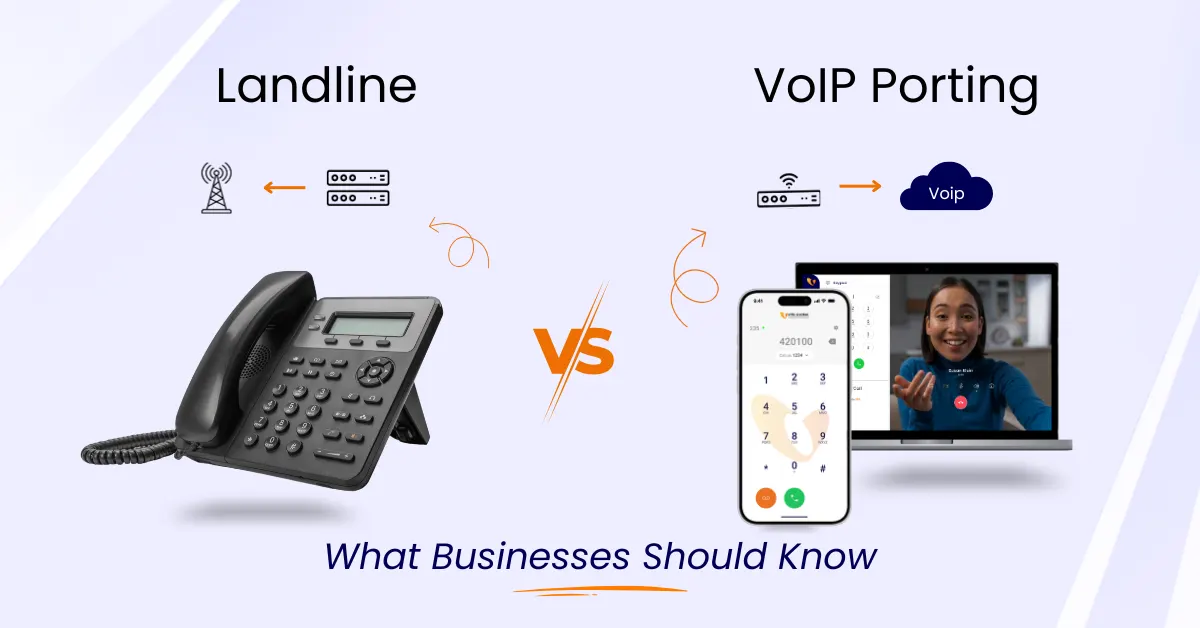

Table of Contents
Businesses evaluating landline vs VoIP porting are not just comparing technologies. They are deciding how their communication system will function, scale, and support customer interactions over time.
A phone number is tied to brand identity. It appears on websites, ad campaigns, customer records, and years of communication history. Any change to that number can create confusion, missed calls, and operational gaps. That is why businesses focus on different landline and VoIP porting options before making a transition.
Below this, companies also compare landline and VoIP porting processes to understand timelines, risks, and long-term impact before moving forward.
The decision is rarely about replacing one system with another. It is about transferring an existing number into a system that better supports how teams operate today.
This guide explains how landline and VoIP porting differ, how the process works in each case, and what businesses should evaluate before initiating a number transfer.
What Is Landline vs VoIP Porting
Landline vs VoIP porting refers to transferring an existing business phone number between traditional landline systems and internet-based communication platforms.
In a landline setup, numbers are tied to physical infrastructure and regional carrier networks. In a VoIP environment, numbers operate through internet-based routing, allowing access across devices and locations.
When businesses evaluate different landline and VoIP porting, they are essentially comparing:
- How are numbers transferred?
- How quickly does activation happen?
- How are calls routed after migration?
- How flexible does the system become after porting?
The number itself remains unchanged. What changes is the system that manages incoming and outgoing communication.
How Landline Systems Work Before Porting
Traditional landline systems operate through fixed copper-wire infrastructure connected to carrier networks.
Businesses using landlines typically rely on:
- On-site PBX systems
- Fixed desk phone connections
- Location-based call routing
Calls travel through physical lines, which limits flexibility. Expanding or relocating requires new installations, additional hardware, and coordination with service providers.
When companies initiate landline and VoIP porting, they are moving away from this fixed setup toward a more adaptable system.
How VoIP Systems Handle Number Porting
VoIP systems operate through internet-based routing instead of physical phone lines.
When businesses move through landline vs VoIP porting, VoIP platforms receive the number and activate it within a cloud-based environment.
After porting:
- Calls can be answered from multiple devices
- Teams can operate from different locations
- Call routing becomes configurable through software
The number stays the same, but the way it functions changes completely.
Key Differences in Landline vs VoIP Porting
Businesses comparing different landline and VoIP porting often look at operational differences rather than just technical details.
Infrastructure Dependency
Landline porting depends on physical carrier infrastructure and regional limitations. VoIP porting relies on internet connectivity and digital routing.
Transfer Complexity
Landline transfers may involve multiple carrier approvals and legacy system checks.
VoIP transfers are typically more streamlined once account verification is complete.
Activation Flexibility
Landline systems activate numbers tied to specific locations.
VoIP systems activate numbers across devices and user accounts.
Post-Porting Capabilities
Landline systems maintain basic call functionality.
VoIP systems introduce features such as call routing, call queues, and multi-device access.
Comparison: Landline vs VoIP Porting
| Factor | Landline Porting | VoIP Porting |
| Technology | Copper-wire PSTN | Internet-based routing |
| Setup Requirement | Physical infrastructure | Software-based activation |
| Porting Speed | Moderate to slow | Faster in most cases |
| Flexibility | Limited to the location | Accessible across devices |
| Expansion | Requires hardware changes | Configured digitally |
| Cost Structure | Higher maintenance costs | Lower operational cost |
| Call Handling | Basic routing | Advanced routing options |
| Remote Access | Not supported | Fully supported |
This comparison helps businesses understand how landline vs VoIP porting impacts operations beyond just transferring a number.
Why Businesses Move from Landline to VoIP Porting
Organizations evaluating landline and VoIP porting often do so because their communication needs have outgrown traditional systems.
Need for Multi-Location Communication
Teams working across cities or regions require a system that supports distributed access.
Reducing Infrastructure Costs
Maintaining landline systems involves hardware, installation, and service costs.
Improving Call Management
Businesses want better control over call routing, Call handling, and Call monitoring.
Supporting Remote Work
VoIP allows employees to handle calls without being tied to a physical desk.
These factors drive the shift toward VoIP-based number porting.
How to Transfer Your Existing Number: A Guide to Number Porting
Businesses planning landline vs VoIP porting often begin with a simple objective: move the number without disrupting communication.
The process follows a structured flow:
Submit Port Request
The new provider initiates the transfer using account details from the current carrier.
Verify Ownership Details
Carrier records must match exactly to approve the request.
Coordinate Transfer Window
Both providers agree on a scheduled time for activation.
Activate Number on New System
The number begins routing through the new network.
This process remains consistent whether transferring from landline or VoIP systems.
Switch to Vitel Global Smoothly
How to Port a Phone Number to VoIP (Step-by-Step Guide)
Companies transitioning from landlines often focus on different landline and VoIP porting steps specific to VoIP systems.
Choose a VoIP Provider
Select a provider that supports number porting and offers the required communication features.
Submit Authorization
Provide documentation allowing the new provider to initiate the transfer.
Validate Account Information
Ensure billing details and account numbers match existing records.
Prepare Devices and Users
Set up phones, apps, and routing configurations before activation.
Complete Activation
Once porting finishes, calls will route through the VoIP platform.
How Long Does It Take to Port a Business Phone Number?
One of the most common concerns in landline vs VoIP porting is the timeline.
- Mobile numbers: a few hours to 1 day
- VoIP numbers: 1 to 3 business days
- Landline numbers: 3 to 10 business days
The timeline depends on:
- Carrier response time
- Accuracy of submitted information
- Number type and service configuration
- Proper preparation reduces delays significantly.
Top 7 Phone Number Porting Mistakes Businesses Make
Businesses evaluating landline vs VoIP porting often focus on the outcome but overlook execution details. Most delays and disruptions occur due to avoidable mistakes during the process.
Submitting Incorrect Account Information
Even small mismatches in billing name, address, or account number can cause rejection and restart the process.
Not Keeping the Existing Service Active
Cancelling the current service before port completion can result in permanent number loss.
Ignoring Porting Timelines
Assuming immediate transfer without planning can disrupt communication during peak business hours.
Overlooking Dependencies
Numbers linked with internet, fax, or bundled services may require additional steps before transfer.
Lack of Internal Coordination
Teams unaware of porting schedules may face confusion during activation.
Not Testing After Activation
Failing to validate inbound and outbound calls can delay issue resolution.
Choosing the Wrong Provider
Inexperienced providers can extend timelines and increase failure rates.
Avoiding these mistakes ensures a smooth, different landline and VoIP porting experience.
Risks to Consider in Landline vs VoIP Porting
Every transition carries operational considerations. Understanding these risks helps businesses prepare effectively.
Temporary Call Routing Issues
Short transition windows may cause brief inconsistencies in call routing.
Carrier Rejections
Requests may be rejected due to mismatched data or service restrictions.
Downtime Due to Poor Planning
Lack of fallback routing can affect customer communication.
Regulatory Limitations
Some geographic numbers may have restrictions based on regional policies.
Data and System Misalignment
CRM, IVR, and routing systems must align with the new platform post-porting.
When managed correctly, these risks remain minimal and controlled.
Conclusion
Choosing between landline vs VoIP porting is a strategic decision that shapes how a business communicates, scales, and supports its customers.
The number itself remains constant, but the system behind it defines flexibility, accessibility, and long-term efficiency. Landline systems provide familiarity but limit adaptability. VoIP systems enable mobility, centralized management, and advanced communication control.
When businesses evaluate different landline and VoIP porting, the focus should be on continuity during transition and capability after activation.
With proper planning, accurate documentation, and the right execution framework, number porting becomes a predictable and low-risk process. The transition allows businesses to retain their identity while moving toward a communication system that supports modern operations.
Why Vitel Global Is a Trusted Partner for Landline vs VoIP Porting
Vitel Global works with businesses that require a structured and reliable approach when managing landline vs VoIP porting. The transition is handled with a clear focus on maintaining communication continuity while enabling a shift toward scalable, cloud-based systems.
The porting process is executed through defined workflows that prioritize accuracy, carrier coordination, and controlled activation. Each transfer is managed to minimize delays and ensure that business operations remain uninterrupted throughout the transition.
The approach combines operational expertise, platform capability, and execution frameworks designed to support both small teams and enterprise environments.
Key advantages include:
- dedicated support for landline and VoIP porting requests and validation
- structured coordination with carriers to reduce rejection cycles
- parallel routing setup to maintain call continuity during transition
- unified communication platform across voice, video, and messaging
- secure and reliable cloud infrastructure with high availability
- scalable configuration aligned with business growth
By combining process-driven execution with a reliable communication platform, Vitel Global ensures that every porting request contributes to long-term operational efficiency.
Organizations gain a communication system that retains their existing number while enabling modern, flexible communication capabilities.
Upgrade Your Communication Without Changing Your Number
Keep your business number while moving to a flexible, scalable VoIP system designed for modern operations.
Frequently Asked Questions
1. What is the difference between landline vs VoIP porting?
Landline vs VoIP porting refers to transferring a phone number between traditional PSTN systems and internet-based VoIP platforms, changing how calls are managed without changing the number.
2. Can I switch from landline to VoIP without losing my number?
Yes, businesses can port their existing landline number to a VoIP system while keeping the same number active.
3. How long does landline vs VoIP porting take?
Landline transfers usually take 3 to 10 business days, while VoIP transfers may complete faster depending on provider coordination.
4. Is VoIP porting more reliable than landline porting?
VoIP porting is generally more flexible and faster once validation is complete, though reliability depends on execution and provider support.
5. Do I need to cancel my landline before porting?
No, the existing service should remain active until the porting process is fully completed.
6. What happens after porting to VoIP?
After porting, the number operates through a cloud-based system, allowing calls to be managed across devices and locations.
Published: April 14th, 2026
Subscribe to Our Latest Updates
Get monthly product and feature updates, the latest industry news, and more!