



Understanding Outbound Calls: Types, Tips, and How Software Can Help
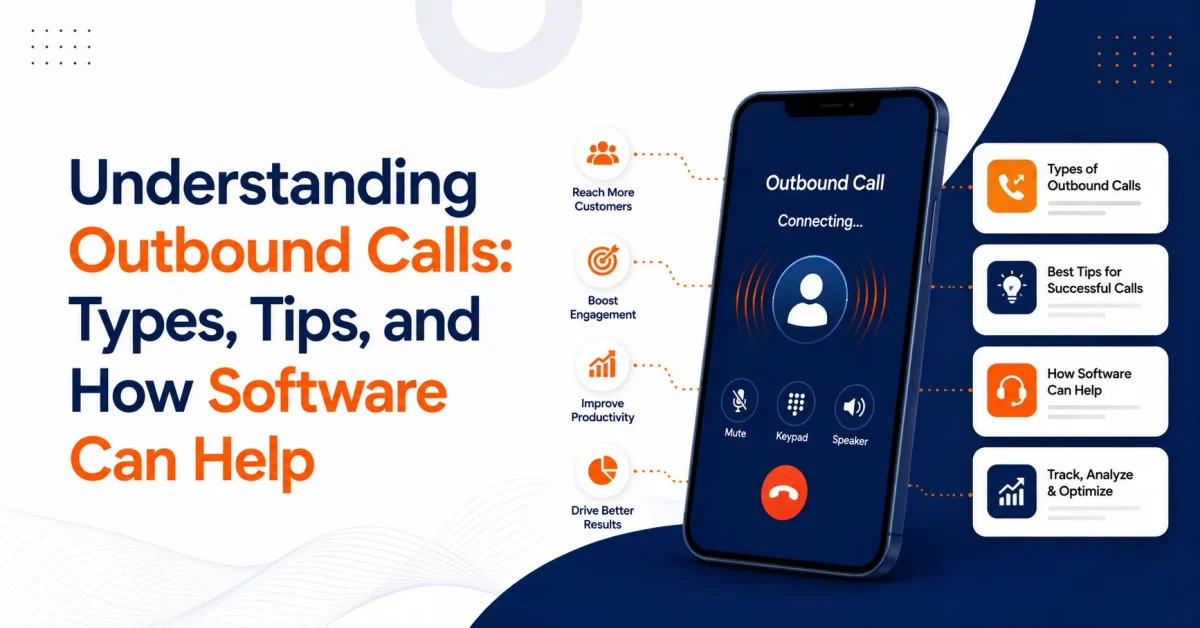

Table of Contents
These days, businesses can reach customers through many channels such as email, SMS, chat, and social media. However, nothing can move a conversation forward as fast as a timely phone call.
Various teams use outbound calls for different purposes. Sales teams use outbound calling to qualify leads. Support teams use it to update customers. Service teams use it for reminders, renewals, surveys, and follow-ups.
However, outbound calls only work when they are planned well. A modern outbound call center needs the right strategy, trained agents, CRM visibility, call analytics, and outbound call software that helps teams call smarter instead of just calling more.
This blog explains what outbound calls are, the main types, best practices, common mistakes, and how software can improve outbound communication.
What are Outbound Calls?
An outgoing phone call made by the business to a customer, prospect, lead, vendor or stakeholder is an outbound call. That’s a call made by the company’s internal teams, like marketing, customer service, or sales – not the other way around.
Some examples of outbound calls are:
- A sales rep gets in touch with a new lead
- The support team calls a customer about a service issue
- Healthcare offices remind patients about upcoming appointments
- Real estate agents follow up with potential buyers
Outbound calling isn’t just about making cold calls. It’s also about warm follow-ups, renewal calls, service updates, reminders, customer success outreach, and proactive support.
Outbound Calls vs Inbound Calls: What Is the Difference?
| Factor | Inbound Calls | Outbound Calls |
| Who starts the call? | Customer or prospect | Business or agent |
| Main purpose | Support, inquiry, service help | Sales, follow-up, reminders, surveys |
| Caller intent | Usually high | May be cold, warm, or existing |
| Agent challenge | Solve the issue quickly | Create interest and trust |
| Common tools | IVR, call routing, helpdesk | CRM, outbound dialer, call scripts |
Inbound calls usually come from people who already need help. Outbound calls require stronger timing, targeting, and conversation skills because the recipient may not be expecting the call.
That is why outbound calling needs preparation.
What are the Main Types of Outbound Calls?
Outbound calls can serve different business goals. The approach depends on the audience, intent, and stage of the customer journey.
1. Outbound Sales Calls
Outbound sales calls are the calls made by sales teams to create revenue opportunities with prospects, leads, or existing customers.
For example:
- Cold calling new prospects
- Following up on website inquiries
- Calling demo requests
- Reaching out to old leads
- Upselling existing customers
- Cross-selling related services
- Following up with people who attended trade shows or marketing campaigns
The key is for sales teams to understand the prospect’s pain point before making the call. A generic pitch rarely works. A relevant conversation has a much better chance of getting attention.
For instance, a business phone system provider shouldn’t just launch into a feature list. They need to start talking about real pain points like missed calls, high phone bills, poor call routing, or weak call visibility.
2. Cold Calling
Cold calling is a type of outbound call where the business contacts someone who hasn’t requested a call recently.
Cold calling can still be effective, but only if it’s done right – taking into account timing, relevance, and compliance. A cold call should never sound like a script being read to a stranger.
A better cold calling approach is:
- Research the prospect before making the call
- Start with a specific business reason
- Keep the first few seconds clear
- Ask permission to continue
- Focus on one problem
- Offer a useful next step
- Respect opt-out requests
Cold calling is not about forcing a sales pitch. It’s about starting a conversation with the right person at the right time.
3. Lead Qualification Calls
Lead qualification calls are used by sales or marketing teams to understand if a lead is ready for the next step.
These calls usually check things like:
- Business need
- Budget fit
- Decision timeline
- Current challenge
- Team size
- Existing tools
- Buying authority
- Urgency
For example, a SaaS company might call a trial user to ask what they are trying to solve and how their team currently handles the process.
This type of communication helps sales teams focus on the leads that are most likely to convert.
4. Appointment and Reminder Calls
Many industries use outbound calls for reminders and scheduling.
These types of calls are common in:
- Healthcare
- Dental clinics
- Real estate
- Education
- Financial services
- Field service businesses
- Consulting firms
- Home service companies
Examples include appointment confirmations, consultation reminders, payment reminders, renewal alerts, and service visit updates.
These calls can help improve attendance, reduce no-shows and keep customers informed.
5. Outbound Customer Service Calls
Outbound customer service calls are proactive calls made to help existing customers.
For instance:
- Service issue updates
- Product change notifications
- Delivery updates
- Renewal reminders
- Feedback calls
- Onboarding check-ins
- Customer success follow-ups
- Complaint resolution calls.
Outbound customer service can really make a difference because customers do not have to initiate every interaction. When you call before a small problem becomes a really big issue, you can turn around and improve the customer experience in a big way.
For example, if a service outage is taking out all your customers, a quick call or message can help cut down on frustration and support requests.
Why Do Outbound Calls Still Matter?
Outbound calls still matter because they create a real human connection. In a real-time phone conversation, you get a lot more out of the conversation than you do from a website or an email.
In B2B sales, complex buying decisions require a chat. A buyer might look around online, compare different options, and download some information, but a phone call can get to the real details that might get lost in the noise.
Outbound calling helps you:
- Catch high-value prospects faster
- Figure out if a lead is actually worth your time
- Follow up on leads before they lose interest
- Make sure you don’t miss out on any opportunities
- Support your customers directly
It all comes down to quality over quantity though. Just making a lot of calls doesn’t always mean you’ll get good results. Better lists, better timing, better scripts, and better follow-ups usually make a much bigger difference.
What Makes an Outbound Call Successful?
| Call Stage | What the Agent Should Do |
| Opening | Introduce name, company, and reason for calling |
| Relevance | Connect the call to the customer’s need or context |
| Discovery | Ask short questions to understand the situation |
| Value | Explain how the solution or update helps |
| Next Step | Book a meeting, send details, confirm action, or close the loop |
| Follow-up | Log notes and trigger the next activity |
The best calls sound prepared but not robotic. Scripts help with consistency, but agents should still listen and respond naturally.
Best Practices for Better Outbound Calling
1. Define the Goal Before Calling
Every outbound calling campaign should have one clear goal in mind.
The goal might be:
- To book a demo
- To confirm an appointment
- To qualify a lead
- To update a customer
- To get some feedback
- To renew a contract
- To get an inactive customer back on track
- To confirm payment details
Without a clear goal, agents might end up talking too much, asking the wrong questions, or just not getting anything useful out of the call.
2. Segment the Call List
You shouldn’t be going after everyone with the same message. Segment your contact list by things like:
- Industry
- Company size
- Location
- Where they are in the buying cycle
- What they’ve interacted with you about before
- What features they seem to be interested in
- Where they are in their customer journey
- When their contract is up for renewal
- What support they’ve needed in the past
A contact who’s already shown some interest in your product doesn’t need to be treated the same way as a completely cold lead.
3. Use Scripts as Guides, Not Rules
A script should help you stay on track, be sure to follow the rules and be clear, but it shouldn’t make you sound like a robot. A good outbound script should include things like:
- A short opening line
- A clear reason for calling
- Some discovery questions to figure out what’s going on
- Some value points to explain how you can help
- Objection responses to handle any concerns
- Compliance language to keep you out of trouble
- Some closing options and follow-up instructions
The agent should know when to stick to the script and when to adapt to what the conversation is telling them.
4. Train Agents on Listening
The thing that usually kills outbound calls is that the agent is talking too much. Strong agents listen for things like:
- What’s causing them pain
- When they’re hesitant
- What’s holding them back budget-wise
- When they’re running out of time
- What’s going wrong with their current vendor
- Who the decision-maker is
- Any objections they might have
- If they’ve already expressed an interest in buying
Listening helps you move from just pitching something to actually solving a problem for the customer. That’s where trust starts to build.
5. Track the Right Metrics
You shouldn’t just be looking at call volume when it comes to outbound calling. Important metrics for an outbound call center should include things like:
- How many calls you actually get through to the right person
- What percentage of calls you get answered
- How long people end up talking to you on average
- How many of those calls actually lead to something
- How many demos you end up booking
- How often you’re able to follow up with people
Call volume is important, but call quality is way more important.
A team that’s making fewer targeted calls might actually outperform a team that’s just making a high volume of untargeted calls.
6. Follow Up Quickly
Follow up is often just as important as the call itself. After a call, agents should:
- Log the notes in the CRM
- Update the call outcome
- Send out any details that were promised
- Schedule the next step in the pipeline
- Assign any necessary tasks
- Share meeting links or links to send details
- Trigger any follow-up emails or SMS messages
- Make sure the right team member is in the loop
Manual follow-ups are all too easily missed. Outbound call software helps mitigate that risk.
What is Outbound Call Software?
Outbound call software is a business communications tool that makes it a whole lot easier for teams to get the most out of their outgoing calls.
It often includes features like calling, contact management, CRM integration, call recording, voicemail drop, call analytics, automated workflows, and outbound dialer capabilities.
Modern outbound call software helps teams:
- Place calls from a single platform
- Click to dial from CRM records
- Use automated dialing to save time
- Automatically log calls
- Record and review conversations
- See how calls are panning out
Instead of juggling between phone systems, spreadsheets, CRMs, and notes, teams can manage their outbound communication from a centralized workspace.
How Does an Outbound Dialer Help?
An outbound dialer helps agents place calls faster and more consistently.
Common dialer types include:
Preview Dialer
The agent sees contact details before placing the call.
Power Dialer
The system dials the next number when the agent is ready.
Progressive Dialer
The system dials contacts in sequence and connects agents when ready.
Predictive Dialer
The system uses calling patterns to dial multiple numbers and connect answered calls to available agents.
Features to Look for in Outbound Call Software
The best outbound call software should help teams improve speed, quality and visibility.
Look for features like:
- Click-to-call for faster outreach
- Outbound dialer options for different campaigns
- CRM integration so you can see customer context
- Call recording for training and quality checks
- Voicemail drop to speed up follow-ups
- Call notes and dispositions
- Automated follow-up tasks
- SMS and email follow-up workflows
Software should not just help increase call volume. It should help teams make better calls, track more useful data, and close the loop after every conversation.
Common Outbound Calling Mistakes to Avoid
Outbound calls can hurt results when teams focus only on speed.
Avoid these mistakes:
1. Calling without context
Agents should know who they are calling and why the call matters.
2. Using the same script for every audience
Different leads need different conversation paths.
3. Ignoring compliance rules
Teams must respect consent, calling-hour rules, opt-outs, and do-not-call requirements.
4. Overloading agents with poor lists
Bad data wastes time and lowers morale.
5. Tracking only call count
Call quality, conversion, and follow-up completion matter more.
6. Failing to log outcomes
Without clean call notes, sales and service teams lose visibility.
7. Not reviewing calls
Call recordings and analytics help improve training, scripts, and performance.
Compliance Matters in Outbound Calling
Outbound calls have to be handled responsibly.
Businesses should review applicable rules before launching any outbound calling campaign, especially for cold calling, automated calls, prerecorded messages, AI voice calls and consumer outreach.
In the US, teams may need to consider consent, the National Do Not Call Registry, calling hours, opt-out requests, caller identification and telemarketing disclosures.
For B2B calling, rules can vary by industry, location, call type and contact source. Companies should work with their legal or compliance teams before scaling outbound campaigns.
Good compliance isn’t just about avoiding penalties. It protects brand trust.
How AI Improves Outbound Calls
AI can help outbound teams work faster without losing the human element of selling and service.
AI-powered outbound communication tools can help with:
- Call summaries
- Sentiment analysis
- Action items
- Follow-up reminders
- Lead scoring
For example, after an outbound sales call, AI can summarize the discussion, identify objections, note the next step, and send the update to the CRM. This saves time and keeps the team on the same page.
How Vitel Global Supports Outbound Calling
Vitel Global helps businesses manage outbound calls, customer communication and team collaboration through a connected cloud communication platform.
With business calling, messaging, meetings, AI features and workflow support, teams can manage outbound sales calls, customer follow-ups, appointment reminders and service updates from one platform.
Transform Every Outbound Call Into a Business Opportunity
Empower your sales and support teams with intelligent calling, AI-powered insights, CRM integrations, and seamless customer communication—all from one platform.
Frequently Asked Questions
1. What are outbound calls?
Outbound calls are business-initiated calls made to customers, prospects, leads, or partners for sales, service, reminders, surveys, and follow-ups.
2. What is the difference between an outbound call and a cold call?
An outbound call is any call started by a business. A cold call is an outbound call made to someone who has not shown recent interest.
3. What is an outbound call center?
An outbound call center is a team that makes outgoing calls for sales, lead generation, customer service, reminders, collections, surveys, or follow-ups.
4. How does outbound call software help sales teams?
Outbound call software helps teams make calls faster, track outcomes, record conversations, automate follow-ups, connect CRM data, and review call performance.
5. What is an outbound dialer?
An outbound dialer helps agents place calls more efficiently using preview, power, progressive, or predictive dialing methods.
6. Are outbound sales calls still effective?
Yes. Outbound sales calls work when they are targeted, relevant, compliant, and supported by accurate customer data.
7. How can businesses improve outbound customer service?
Businesses can improve outbound customer service by proactively calling customers about updates, renewals, appointments, service issues, and feedback.
8. How can Vitel Global help with outbound calls?
Vitel Global helps teams manage outbound calls, SMS, meetings, AI summaries, and business communication in one organized cloud platform.
Published: July 13th, 2026
Subscribe to Our Latest Updates
Get monthly product and feature updates, the latest industry news, and more!