



How to Port a Phone Number to VoIP (Step-by-Step Guide)

Table of Contents
Businesses today cannot afford to lose their primary contact number during a system upgrade. Whether you plan to port phone number to VoIP, switch providers, or centralize communication, the ability to retain your existing number ensures uninterrupted customer engagement.
When companies port their numbers to a VoIP service, they preserve brand identity, avoid operational disruption, and unlock advanced communication capabilities. From startups to enterprise teams, organizations now rely on VoIP phone number porting to transition from legacy systems to flexible, cloud-based infrastructure.
If you’re planning to port mobile number to VoIP, port a landline number to VoIP, or even port a home phone to VoIP, this guide walks you through every step with clarity.
Before You Begin: Understanding VoIP Porting Requirements
To port phone number to VoIP, businesses need to ensure:
- Active service with the current provider
- Matching account details (name, address, PIN)
- Authorization for transfer (LOA)
- No pending service changes or restrictions
Whether you want to port a US number to VoIP or manage bulk migration, preparation defines success. Businesses in the United States follow regulated number portability standards, ensuring that phone numbers remain user-owned and transferable across providers under industry compliance frameworks.
What Does It Mean to Port a Phone Number to VoIP? (VoIP Phone Number Porting Explained)
Porting a phone number to VoIP means transferring your existing business number from a traditional carrier or another provider to a VoIP system.
Instead of replacing your number, you:
- Keep your existing contact identity
- Shift call routing to an internet-based system
- Enable advanced features like automation, routing, and analytics
This applies to multiple scenarios:
- Port cell phone number to VoIP for remote teams
- Port the landline number to VoIP for modernization
- Port home phone to VoIP for flexibility
- Porting a VoIP number to a cell phone when switching back
The number remains unchanged. Only the infrastructure powering it evolves.
Why Businesses Choose to Port Numbers to VoIP Service
Companies rarely change numbers. They change systems.
Keep Customer Trust Intact
When you port a phone number to VoIP, customers continue dialing the same number they already recognize.
Upgrade Communication Without Disruption
Businesses that port numbers to VoIP service gain access to:
- AI-powered call routing
- Multi-device accessibility
- Unified communication dashboards
Reduce Operational Costs
Switching from traditional systems while keeping your number reduces:
- Infrastructure costs
- Maintenance expenses
- Long-distance charges
Studies show that businesses switching to VoIP can reduce communication costs by up to 30-50%, especially when moving from hardware-based systems to cloud infrastructure.
Enable Remote and Distributed Teams
When you port a mobile number to VoIP, employees can:
- Take calls from anywhere
- Use laptops, apps, or desk phones
- Maintain consistent communication
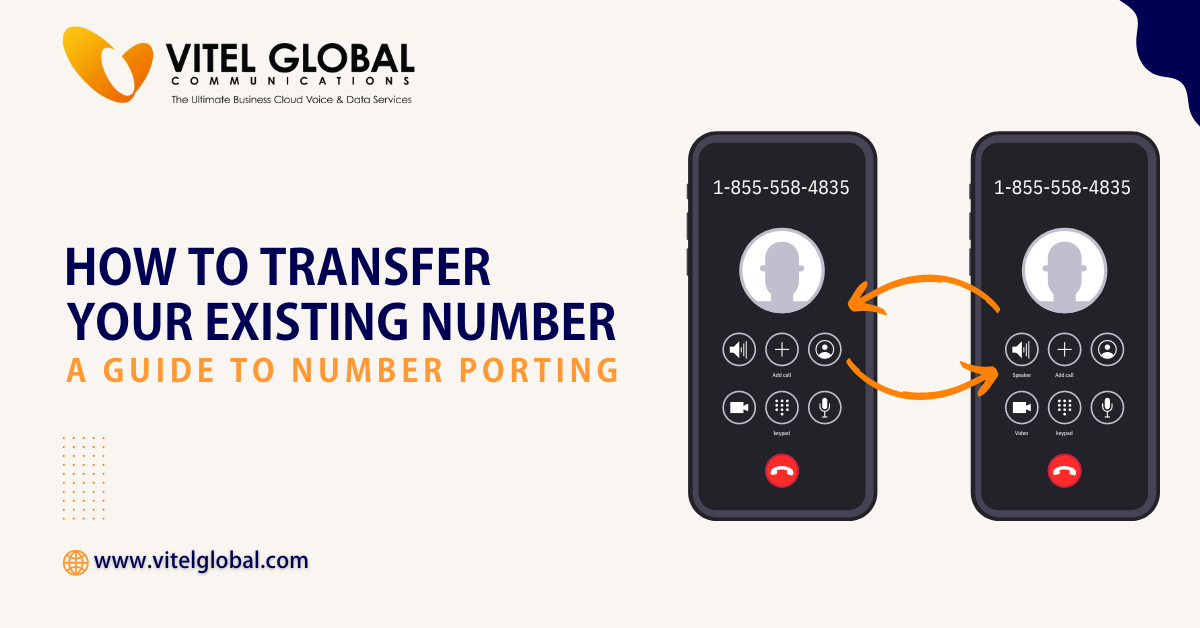
How to Transfer Your Existing Number: A Guide to Number Porting
Businesses exploring how to port phone number to VoIP often start with one goal: keep their number while upgrading systems.
The number porting process ensures:
- No need to update marketing materials
- No disruption to inbound calls
- No loss of customer communication
Explore the complete framework here: How to Transfer Your Existing Number: A Guide to Number Porting
This pillar explains ownership transfer, carrier coordination, and system activation in detail.
Step-by-Step Process to Port Phone Number to VoIP
To port a phone number to VoIP, choose a provider, submit a port request, verify account details, and complete carrier approval. The process takes 3–10 business days. Understanding the exact workflow helps avoid delays. The actual steps are:
Step 1: Choose a VoIP Provider
Select a provider that supports:
- VoIP phone port number requests
- Scalability for business growth
- Integration with CRM and tools
Step 2: Submit Port Request
Your provider initiates the request using:
- Account number
- Billing details
- List of numbers
Step 3: Provide Authorization (LOA)
A signed document confirms:
- Ownership of the number
- Permission to transfer
Step 4: Carrier Verification
The existing carrier checks:
- Account accuracy
- Authorization validity
Step 5: Schedule Port Date
Once approved:
- A transfer window is assigned
- Calls remain active until migration
Step 6: Activation on VoIP Network
After completion:
- Calls are routed via VoIP
- Your number becomes fully operational
At this stage, you have successfully completed VoIP phone number porting.
How Long Does It Take to Port a Business Phone Number?
Timelines depend on the number, type, and provider coordination.
Mobile numbers: 3–7 business days
Standard VoIP ports: 5–10 business days
Landline ports: Up to 2 weeks
Bulk migrations: May take longer
Businesses planning to port numbers to a VoIP service should align migration with low-traffic hours.
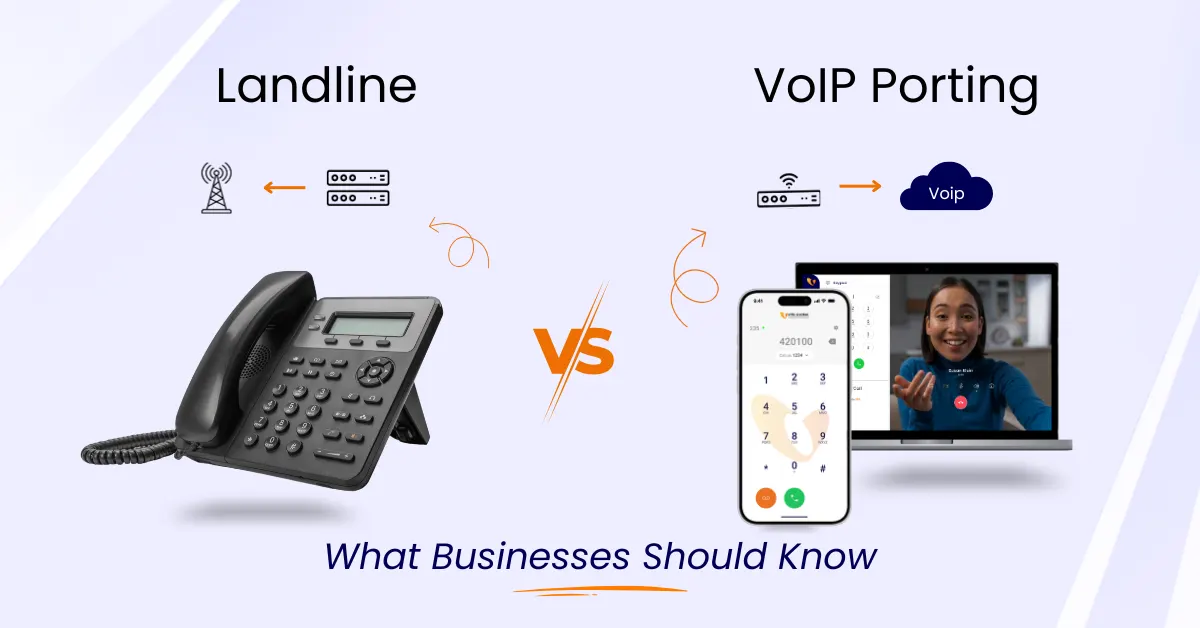
Landline vs VoIP Porting: What Businesses Should Know
Not all porting processes are identical.
Port Landline Number to VoIP
- May take longer due to legacy systems
- Requires additional validation
- Often tied to physical infrastructure
VoIP to VoIP Transfers
- Faster processing
- Minimal complexity
- Fully digital workflow
Port Cell Phone Number to VoIP
- Ideal for distributed teams
- Supports mobile-first operations
Detailed Info- Landline vs VoIP Porting: What Businesses Should Know
Types of Numbers You Can Port to VoIP
Most business numbers qualify for transfer.
- Local business numbers
- Toll-free numbers
- Mobile numbers
- Virtual numbers
- Legacy landlines
If you’re planning to port US number to VoIP, eligibility depends on:
- Geographic coverage
- Carrier agreements
- Regulatory compliance
Preparing Before You Port Number to VoIP
Preparation reduces rejection risks.
Verify Account Information
Name and address must match records
Keep Service Active
Do not cancel before the transfer completes
Remove Port Locks
Disable security restrictions
Gather Required Documents
- Billing statement
- Account number
- PIN or authorization
Accurate data ensures faster VoIP phone port number processing.
Top 7 Phone Number Porting Mistakes Businesses Make
Mistakes delay migration and impact operations.
- Canceling service before port completion
- Incorrect account details
- Unauthorized request submission
- Ignoring port-out PIN requirements
- Not checking number eligibility
- Poor internal planning
- Choosing the wrong provider
Challenges When You Port Number to VoIP Service
Even structured processes can face obstacles.
- Carrier delays
- Documentation errors
- Geographic restrictions
- Inactive numbers
- Pending account changes
These challenges are avoidable with proper planning.
Can You Port Mobile, Landline, and VoIP Numbers Easily?
Yes. Most providers support:
- Port mobile number to VoIP
- Port landline number to VoIP
- Porting VoIP number to cell phone
- Flexibility depends on:
- Provider capability
- Compliance rules
- Service coverage
How to Avoid Downtime During VoIP Phone Number Porting
Business continuity is critical. To avoid disruptions:
- Run parallel systems during transition
- Enable call forwarding
- Set temporary backup numbers
- Inform internal teams
Many organizations complete VoIP phone number porting without customers noticing any change.
Advanced Benefits After You Port Phone Number to VoIP
Once businesses successfully port phone number to VoIP, the real transformation begins. This is where communication shifts from basic connectivity to intelligent business enablement.
AI-Powered Call Intelligence
Modern VoIP platforms deliver:
- Real-time call transcription
- AI-generated call summaries
- Sentiment analysis for customer conversations
This helps teams make faster, data-driven decisions.
Smart Call Routing and Automation
After you port number to VoIP service, calls can be:
- Routed based on availability
- Directed using IVR systems
- Automated for repetitive workflows
This ensures no opportunity is missed.
Unified Communication Across Channels
VoIP integrates:
- Voice calls
- Video meetings
- Business messaging
- CRM systems
This creates a centralized communication ecosystem similar to UCaaS platforms, where everything operates from one interface
Scalability for Growing Businesses
With VoIP:
- Add or remove users instantly
- Expand to global markets
- Manage multiple locations from one system
This flexibility is a key reason businesses port phone number to VoIP instead of upgrading traditional systems.
How VoIP Phone Number Porting Fits Into Modern Business Communication
Porting is not just a technical process. It is a strategic upgrade. Businesses moving toward cloud communication ecosystems benefit from:
- Centralized data management
- Seamless integrations with CRM tools
- Enhanced reporting and analytics
For example, integrating communication with CRM allows:
- Call tracking
- Customer interaction history
- Faster response times
This aligns with how CRM integration platforms unify communication and customer data for better decision-making
Real-World Use Cases of Porting Phone Number to VoIP
1. Growing Startups Scaling Operations
Startups often port mobile number to VoIP to:
- Manage calls from one dashboard
- Avoid multiple phone systems
- Scale without infrastructure investment
2. Enterprises Moving from PBX to Cloud
Organizations that port landline number to VoIP:
- Eliminate hardware dependency
- Reduce maintenance costs
- Enable remote workforce
3. Sales Teams Managing High Call Volumes
Sales teams benefit from:
- Call analytics
- Performance tracking
- Automated follow-ups
This improves conversion rates and team productivity.
4. Customer Support Teams Enhancing Experience
Support teams using VoIP after porting can:
- Route calls intelligently
- Access customer history instantly
- Reduce resolution time
Choosing the Right Provider for VoIP Phone Number Porting
Not all providers deliver the same experience. The success of your VoIP phone port number depends on the provider’s capabilities.
What to Look For:
1. Porting Support & Expertise
- Dedicated porting team
- Clear timelines
- End-to-end assistance
2. System Reliability
- High uptime (99.99%)
- Multiple carrier support
- Backup infrastructure
Reliable VoIP systems ensure uninterrupted communication even during outages
3. Integration Capabilities
- CRM integration
- API connectivity
- Unified communication tools
4. Security & Compliance
- End-to-end encryption
- Data protection standards
- Secure access controls
5. Scalability & Flexibility
- Easy user addition
- Multi-location support
- Global communication capability
Start Your VoIP Migration Without Disruption- Keep your existing number while upgrading your communication infrastructure. Move to a VoIP system designed for reliability, scalability, and business continuity.
Traditional Phone System vs VoIP After Porting (Business Impact Comparison)
| Factor | Traditional Phone System | After You Port Phone Number to VoIP |
| Infrastructure | Physical hardware required | Fully cloud-based |
| Scalability | Limited, expensive upgrades | Instant scaling |
| Remote Access | Restricted to the office | Access from any device |
| Call Routing | Manual or limited | AI-powered routing |
| Cost | High maintenance and setup | Lower operational cost |
| Features | Basic calling | Advanced analytics, automation |
| Integration | Minimal | CRM, API, UCaaS integrations |
| Flexibility | Fixed location | Work-from-anywhere enabled |
This clearly shows why businesses are increasingly port number to VoIP services instead of upgrading legacy systems.
Expert Insight: What Most Businesses Get Wrong About VoIP Porting
Many businesses assume that porting a number is a simple provider switch. In reality, delays and failures are rarely technical; they are operational.
The most common issue is mismatched account data between the current carrier and the port request. Even small differences in business name formatting, address structure, or missing PIN details can result in rejection.
Another overlooked factor is timing. Businesses often initiate porting during peak operational periods without backup routing, which creates unnecessary pressure during the transition window.
A structured porting approach focuses on three things:
- Data accuracy before submission
- Controlled transition planning
- Provider coordination with clear timelines
When these are handled correctly, VoIP phone number porting becomes a predictable and disruption-free process.
Future of VoIP and Number Porting
Businesses that port phone number to VoIP are aligning with future-ready communication systems.
Key Trends:
- AI-driven communication analytics
- 5G-enabled VoIP performance
- Cloud-first communication infrastructure
- API-driven integrations for custom workflows
As communication evolves, VoIP becomes the backbone of digital business operations.
Final Takeaway: Porting Your Number Is a Strategic Move, Not Just a Technical Step
Porting your number to VoIP is not about switching providers. It is about upgrading how your business communicates without losing what already works.
You retain your existing number, maintain customer continuity, and move to a system that supports scalability, flexibility, and performance. Calls continue without interruption, teams operate across locations, and communication becomes easier to manage and improve.
The process itself is structured and governed by clear standards. With the right preparation and execution, businesses can transition smoothly and start benefiting from advanced communication capabilities immediately.
Keeping your number protects your business identity. Moving to VoIP ensures your communication system is built for long-term growth.
Why Vitel Global Is a Trusted Partner for VoIP Phone Number Porting
Vitel Global works with businesses that require a structured and reliable transition when they port phone number to VoIP. The process is designed to maintain communication continuity while enabling a shift toward scalable, cloud-based systems.
VoIP phone number porting is handled with a clear focus on accuracy, carrier coordination, and seamless activation. Each request is managed through a defined workflow that minimizes delays and ensures that business operations remain uninterrupted during the transition.
The approach combines operational expertise, platform capability, and structured execution frameworks to support businesses of all sizes.
Key advantages include:
- dedicated support for VoIP phone number porting and validation
- structured port request management with carrier coordination
- zero-disruption transition with parallel routing during migration
- unified communication environment across voice, video, and messaging
- secure cloud infrastructure with high availability and reliability
- scalable communication setup aligned with business growth
By combining process-driven execution with a reliable communication platform, Vitel Global ensures that every number porting request supports long-term operational efficiency and system scalability. Upgrade Your Business Communication Today Ready to port phone number to VoIP and transform your communication system? Experience seamless migration, zero downtime, and advanced VoIP capabilities.
Organizations gain a communication foundation that maintains number continuity while enabling advanced capabilities required for modern business environments.
Frequently Asked Questions
1. How to Port a Phone Number to VoIP?
To port a phone number to VoIP, choose a VoIP provider, submit a port request with your account details, verify ownership through a Letter of Authorization (LOA), and complete carrier approval. The process typically takes 3 to 10 business days, and your existing service remains active until the transfer is complete.
2. Can I port my existing business number to VoIP?
Yes, most business numbers can be ported to VoIP without changing the number. This includes landline, mobile, and toll-free numbers, provided they are active and eligible for transfer.
3. How long does it take to port a phone number to VoIP?
Porting typically takes 3 to 10 business days. Landline numbers may take up to 2 weeks, depending on the current carrier and verification process.
4. Will I lose service during number porting?
No, your existing service remains active until the port is completed. Once the transfer is finalized, calls automatically route through the VoIP system.
5. What details are required to port a number to VoIP?
You need the account number, registered business name and address, billing details, and in some cases a port-out PIN or a recent bill copy.
6. Can I port a mobile or landline number to VoIP?
Yes, both mobile and landline numbers can be ported to VoIP as long as they are active and supported by the provider.
7. Why do number porting requests get rejected?
Rejections usually happen due to incorrect account information, mismatched details, locked numbers, or pending changes with the current provider.
8. Can I port my VoIP number to another provider later?
Yes, you can port your VoIP number to another provider or even back to a mobile carrier at any time.
9. Can I port international numbers to VoIP?
Yes, but it depends on regional regulations and provider support. Not all international numbers are eligible for porting.
Published: April 20th, 2026
Subscribe to Our Latest Updates
Get monthly product and feature updates, the latest industry news, and more!