




Elevate Your Business Operations with AI: What You Need to Know 2026


Table of Contents
Artificial intelligence is no longer experimental. In 2026, it will be operational.
Across industries, companies are moving beyond curiosity and into execution. AI is fundamentally changing how business operations run, how teams make decisions, and how organizations scale. The conversation has shifted from “Should we use AI?” to “How do we use AI for real value?”
At Vitel Global, we work with organizations that want to elevate their business operations with AI in a practical, measurable way. This guide explains what you need to know in 2026—from AI tools and agentic AI to workflow automation, governance, and measurable outcomes.
This is not hype. This is about using AI to solve real problems.
AI in Business Operations (2026)
Artificial intelligence helps businesses automate repetitive tasks, analyze complex datasets, improve decision-making, and enhance customer experience. In 2026, AI-powered tools, agentic AI, and predictive analytics enable organizations to improve efficiency, scale operations, and achieve measurable business outcomes.

Why AI Matters More Than Ever in 2026
The past year changed expectations.
Customers demand faster responses. Employees expect smarter tools. Leaders need clearer data. AI continues to move from innovation labs into daily workflows across marketing, operations, and customer experience.
What changed?
- AI capabilities matured rapidly
- Generative AI became mainstream
- AI agents entered real workflows
- Costs dropped while value increased
Most organizations now see AI as a competitive advantage, not a future experiment.
Understanding AI Beyond the Buzzwords
Artificial intelligence is often discussed as a single concept. In reality, it includes multiple technologies working together.
Core AI Building Blocks (Explained Simply)
| Technology | What It Does |
| Machine learning | Learns patterns from data |
| Deep learning | Handles complex datasets at scale |
| Generative AI | Creates content, ideas, and code |
| Predictive analytics | Forecasts outcomes and trends |
| Agentic AI | Acts autonomously within workflows |
Together, these technologies support AI-driven decision-making and operational efficiency.
AI’s Impact on Business Operations
AI is not limited to one department. Its impact spans the entire organization.
In 2026, AI improves:
- Operational efficiency across teams
- Decision-making using real-time data
- Customer satisfaction through personalization
- Regulatory compliance with automated checks
AI is no longer a support tool. It is a core operational layer.
From Automation to Intelligence: The New AI Shift
Early automation focused on speed. Modern AI focuses on intelligence.
Old Automation vs AI-Powered Operations
| Traditional Automation | AI-Powered Operations |
| Rule-based workflows | Adaptive learning systems |
| Manual updates | Self-improving models |
| Limited flexibility | Scalable programs |
| Task execution only | Problem-solving and insights |
This shift enables organizations to focus on higher-value work instead of repetitive tasks.
Key AI Use Cases Across Business Functions
AI adoption is no longer limited to IT teams. It touches every function.
1. Operations and Workflow Automation
AI automates approvals, routing, and repetitive tasks. This improves efficiency gains and reduces errors.
2. Marketing and Campaign Performance Management
Marketing teams use AI to optimize campaigns, personalize messaging, and track performance across different channels.
3. Knowledge Management and Idea Generation
AI organizes internal knowledge, supports creative work, and accelerates idea generation without replacing human judgment.
4. Customer Experience and Support
AI agents handle routine queries, freeing teams to focus on higher-value customer interactions.
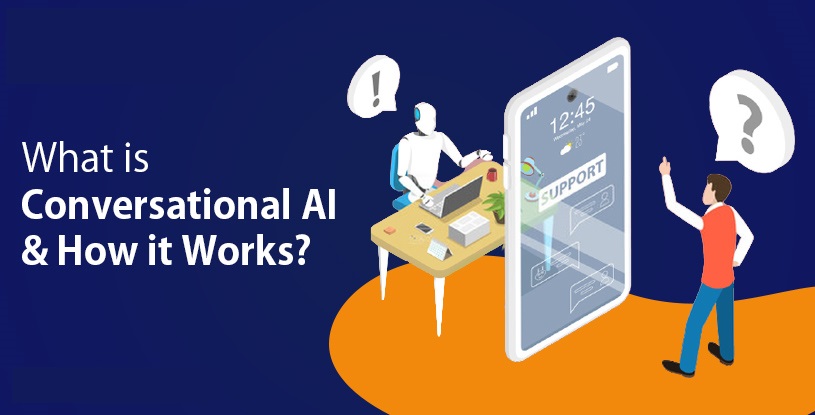
AI Agents and Agentic AI Explained
AI agents represent one of the most significant shifts in business AI adoption in 2026.
Unlike traditional tools, AI agents:
- Operate autonomously within rules to complete tasks without constant human supervision.
- Execute tasks across systems by connecting tools, data sources, and workflows seamlessly.
- Learn from outcomes to improve accuracy, efficiency, and future decision-making.
What AI Agents Can Do
- Handle repetitive operational tasks reliably without fatigue, delays, or manual intervention.
- Support decision making with recommendations based on real time data and predictive insights.
- Coordinate workflows across teams, ensuring tasks move smoothly between departments and systems.
- Scale programs without manual oversight by managing volume increases consistently and accurately.
Agentic AI transforms artificial intelligence from a passive tool into an active digital teammate that drives efficiency and scale.
Leveraging Generative AI for Real Business Value
Generative AI goes beyond content creation and supports core business operations.
In 2026, businesses use generative AI for:
- Drafting internal documents quickly while maintaining accuracy, clarity, and organizational standards.
- Creating marketing content aligned to brand voice across campaigns, channels, and audiences consistently.
- Supporting coding skills for faster development by assisting developers with clean, reusable code generation.
- Summarizing large data and reports to deliver insights without manual analysis or time-consuming reviews.
The value comes from saving time, ensuring consistency, and enabling faster, more reliable execution across teams.
AI Tools vs All-in-One Platforms
| Approach | Pros | Cons |
| Multiple AI tools | Specialized features | Fragmented workflows |
| All-in-one platform | Smooth integration | Requires planning |
At Vitel Global, we see the best results when AI is embedded into existing workflows instead of added as disconnected tools.
Embedding AI into Existing Workflows
AI adoption often fails when it disrupts established team workflows and routines.
1. What Successful Organizations Do
- Embed AI into current systems so teams continue working without changing familiar tools.
- Avoid forcing new processes overnight by introducing AI gradually and thoughtfully.
- Focus on measurable impact such as time savings, efficiency gains, and better outcomes.
2. Successful Embedding Principles
- Smooth integration with current tools ensures AI complements workflows rather than replacing them.
- Minimal training overhead so employees adopt AI quickly without long learning curves.
- Clear ownership and governance frameworks defining responsibility, oversight, and ethical AI usage.
AI works best when it feels invisible, supportive, and naturally woven into everyday work.
I prefer this response
AI Roadmap: How Organizations Should Plan for 2026
AI success does not happen by accident. It requires a clear, structured roadmap.
A Practical AI Roadmap
Phase 1: Identify Real Problems
Focus on genuine operational bottlenecks that slow teams and reduce efficiency.
Phase 2: Choose the Right Tools
Select AI tools aligned with business outcomes and existing workflows.
Phase 3: Pilot and Measure Impact
Track efficiency improvements, accuracy gains, time saved, and early measurable outcomes.
Phase 4: Scale AI Programs
Expand successful pilots across teams with governance, training, and performance monitoring.
This phased approach reduces risk, builds confidence, and accelerates long-term business value.

Measuring AI Efficiency and Business Outcomes
AI investments must deliver measurable outcomes that directly support business growth.
Metrics That Matter
- Time saved on repetitive tasks shows reduced manual effort and faster workflow completion.
- Improvement in operational efficiency is measured through smoother processes and fewer operational delays.
- Increased customer satisfaction driven by faster responses and more personalized customer experiences.
- Better campaign performance management using AI insights to optimize reach, engagement, and conversions.
- Faster decision-making is enabled by real-time data analysis and predictive recommendations.
Vanity metrics do not matter. Measurable impact drives sustainable AI success.
Data, AI, and Decision Making
AI thrives on data.
In 2026:
- AI processes complex datasets faster
- Predictive analytics improve forecasting
- AI-driven insights support leadership decisions
This transforms decision-making from intuition to intelligence.
Regulatory Compliance and AI Governance
As AI adoption grows across industries, regulatory expectations continue to increase as well.
Organizations must address:
- Data privacy and security to protect sensitive information and prevent unauthorized access.
- Auditability of AI decisions to explain outcomes, actions, and automated recommendations clearly.
- Clear governance frameworks defining ownership, accountability, risk controls, and ethical AI usage.
Responsible AI is not optional. It protects organizational trust, ensures compliance, and safeguards long-term brand reputation.
Common AI Adoption Mistakes to Avoid
Many companies struggle with AI not because of technological limits, but because of avoidable planning and execution errors.
Frequent Mistakes
- Adopting AI without clear goals
Implementing AI without defined objectives leads to wasted investment and unclear business outcomes. - Over-automating creative work
Replacing human creativity with automation reduces originality, brand voice consistency, and strategic thinking. - Ignoring governance and compliance
Skipping governance frameworks creates risks around data privacy, regulatory compliance, and decision accountability. - Expecting instant results
Assuming AI delivers immediate impact ignores the need for training, iteration, and gradual performance improvement.
AI delivers real value only when it is aligned with business strategy, supported by governance, and scaled thoughtfully.
Why Vitel Global Focuses on Practical AI
At Vitel Global, we focus on leveraging AI to deliver real value, not experimentation.
Our approach emphasizes:
- AI-powered workflow automation that eliminates repetitive tasks and improves operational efficiency across teams.
- Agentic AI for scalable operations, enabling autonomous task execution and consistent performance at scale.
- AI driven decision making using real-time data, predictive insights, and measurable business outcomes.
- Smooth integration with business systems ensures AI fits existing workflows without disrupting daily operations.
We help organizations move confidently from pilot projects to full-scale AI production.
Conclusion
AI is no longer optional. In 2026, it is a core driver of efficiency, growth, and competitive advantage.
Organizations that use AI thoughtfully can improve efficiency, enhance customer experience, and focus teams on higher-value tasks. Those who delay risk falling behind.
At Vitel Global, we help companies embed AI into business operations in a way that delivers real value, measurable outcomes, and long-term success.
The future of business is AI-powered. The time to act is now.
Transform Business Operations with AI in 2026
Adopt AI that improves efficiency, drives measurable outcomes, and integrates smoothly into your existing workflows with Vitel Global.
Frequently Asked Questions (FAQs)
1. How does AI elevate business operations in 2026?
AI elevates business operations by automating repetitive tasks, improving decision-making through predictive analytics, and enhancing customer experience. In 2026, AI agents and workflow automation help organizations scale efficiently while delivering measurable business outcomes.
2. What AI tools are most valuable for businesses today?
The most valuable AI tools support workflow automation, campaign performance management, predictive analytics, and knowledge management. Businesses see the best results when these tools integrate smoothly into existing workflows rather than operating in isolation.
3. Is generative AI safe for business use?
Generative AI is safe when used with proper governance frameworks. Organizations must manage data access, protect brand voice, and ensure compliance. When implemented responsibly, generative AI saves time and supports higher-value work.
4. What is agentic AI and why does it matter?
Agentic AI refers to AI agents that act autonomously within defined workflows. These agents can execute tasks, coordinate systems, and learn from outcomes, enabling scalable programs and improved operational efficiency.
5. How should companies start using AI in 2026?
Companies should start by identifying real operational problems, selecting the right AI tools, running small pilots, measuring measurable impact, and then scaling successful use cases across teams and departments.
Published: November 7th, 2023
Subscribe to Our Latest Updates
Get monthly product and feature updates, the latest industry news, and more!